
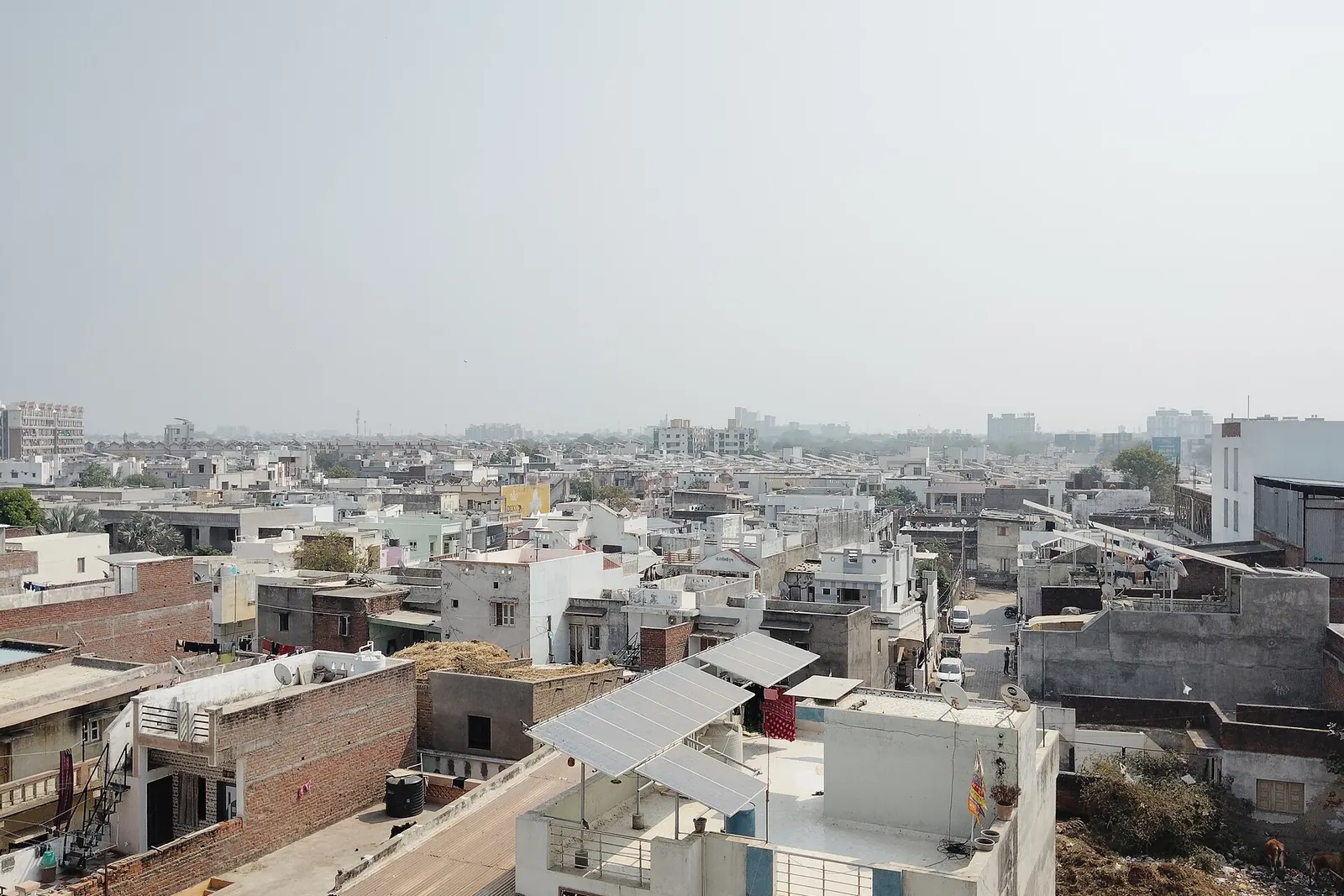
On 29 February 2024 India's Union Cabinet approved PM-Surya Ghar: Muft Bijli Yojana, a rooftop solar programme with a total outlay of Rs 75,021 crore. The scheme, launched by Prime Minister Narendra Modi on 13 February, aims to install rooftop systems on one crore households, ten million homes, and to give each of them up to 300 units of free electricity a month. The government estimates that it will add 30 GW of residential rooftop capacity, generate 1,000 billion units over the 25-year life of the systems and avoid 720 million tonnes of CO2 equivalent.
India has tried to scale residential rooftop solar before and fallen well short. The target of 40 GW of rooftop solar by 2022 was missed by a wide margin: by December 2022 only about 7.4 GW had been installed, according to Mercom's tally, and the Parliamentary Standing Committee on Energy had warned years earlier that the goal was highly unlikely to be met. The new scheme is better designed than its predecessors, chiefly because the subsidy is larger, simpler and paid through a national portal. Our view is that it will succeed in raising household installations substantially, but that its real test lies with India's state distribution companies, which will lose some of their most valuable customers' revenue and must absorb a large volume of daytime power on networks never built for it.
How the subsidy works
The Central Financial Assistance is generous by Indian standards. It covers 60 per cent of system cost for the first 2 kW and 40 per cent of the additional cost between 2 and 3 kW, capped at 3 kW. At benchmark prices that means Rs 30,000 for a 1 kW system, Rs 60,000 for 2 kW and Rs 78,000 for 3 kW or more. Households apply through a national portal, choose a vendor using information on system sizes and vendor ratings, and can access collateral-free loans at around 7 per cent for systems up to 3 kW.
The Cabinet note says a 3 kW system will generate more than 300 units a month on average, which is how the free electricity promise is met. Households can also sell surplus power to distribution companies. The scheme includes a model solar village in each district, incentives for urban local bodies and panchayats, a payment security component for renewable energy service company models, and a fund for innovative projects. The government estimates around 17 lakh direct jobs.
Why earlier efforts underperformed
Previous rooftop programmes relied on distribution companies to process applications, approve connections and install net meters. Many had little reason to cooperate. A household that generates its own power buys less from the utility, and residential customers in the higher consumption slabs are often the ones who cross-subsidise agricultural and low-income users. Rooftop solar on those homes erodes the utility's best revenue.
Subsidy delivery was also slow and complex, routed through state agencies with varying capacity. Vendors faced delayed payments, and households faced long waits for net meters. The result was a market concentrated in commercial and industrial rooftops, where the economics worked without subsidy, rather than in homes.
PM Surya Ghar addresses some of these weaknesses. A single national portal, direct subsidy payment and access to cheap loans remove friction for households and vendors. But the scheme cannot remove the underlying conflict of interest for distribution companies.
The distribution company problem
The arithmetic for a state utility is uncomfortable. Each household that installs a 3 kW system and receives 300 free units a month reduces its purchases from the utility. If that household was in a high tariff slab, the utility loses revenue that exceeds its cost of supply. At scale, across ten million households, this is a material shift in utility revenue, concentrated among the customers who matter most to its finances.
At the same time, rooftop systems export power at midday, when many networks already have surplus solar from utility-scale plants. Distribution transformers and low-voltage feeders in residential areas were designed for one-way flows. High penetration in a neighbourhood can cause voltage rise and transformer overloading. Upgrading those networks costs money that utilities do not have.
The way states handle net metering will determine whether the scheme scales smoothly. States that move from full net metering to net billing or gross metering, paying less for exported power than the retail tariff, will protect utility finances but reduce household returns. States that keep generous net metering will see faster uptake and greater utility losses.
Why it can still work
There are good reasons to be optimistic. The subsidy makes a 2 to 3 kW system affordable for middle-income households, and the free electricity framing is politically attractive. India's solar manufacturing capacity is growing under production-linked incentives, which should keep equipment costs falling. Daytime residential generation also coincides with rising daytime air conditioning loads in many cities, which can absorb local output.
The scheme also builds a constituency. Ten million households with a stake in solar power is a powerful political force for grid modernisation and fair net metering rules. Over time that constituency can push states to invest in the distribution networks the scheme requires.
What to watch
Three indicators will show whether the scheme is on track. First, applications and installations reported on the national portal, which should give a near real-time view of uptake by state. Second, state regulatory decisions on net metering and export tariffs, which will reveal whether utilities are pushing back. Third, the speed of subsidy disbursement to households and vendors, which has been the downfall of earlier schemes.
A fourth indicator is less visible but equally important: distribution network investment. Utilities will need to upgrade transformers and feeders in residential areas with high uptake. Funding for that under existing distribution reform schemes should be linked explicitly to rooftop penetration.
Our position
PM Surya Ghar is the best-designed residential solar programme India has launched, and its subsidy structure and national portal remove most of the obstacles that undermined earlier efforts. It should produce a substantial increase in household installations over the next two to three years.
Its limiting factor is not demand or equipment. It is the financial and technical capacity of state distribution companies to accommodate millions of prosumers. Unless the central government pairs the scheme with support for distribution network upgrades and a clear framework for compensating utilities for lost revenue, the most enthusiastic states will soon face pressure to slow approvals. The target of ten million households is achievable. Meeting it without weakening utilities requires as much attention to the wires as to the panels.