The Department of Energy issued Order No. 202-26-51 on November 13 to keep Michigan's Campbell coal plant available into February 2027. A reading of the department's 2026 docket shows how section 202(c) has split into short weather orders and rolling 90-day retention orders for named fossil units.
NYSERDA launched New York's second Bulk Energy Storage solicitation on 12 November, seeking about one gigawatt through Index Storage Credits. Step One eligibility applications are due on 15 December.
NRG Energy will sell six gas-fired plants totalling just under 4.9 GW to LS Power for $4 billion, around eight times expected 2027 adjusted EBITDA, Power Engineering reported. The deal is due to close in the second quarter of 2027.
PJM has asked FERC to approve disturbance ride-through requirements for Large Computational Loads from January 16, 2027, alongside a separate Fast Energization proposal meant to cut interconnection study time from two years to one.
The Department of Energy has ordered MISO and Consumers Energy to keep the J.H. Campbell coal plant in Michigan available from 15 November to 12 February 2027, its seventh such order after an appeals court vacated an earlier one.
Stem lowered its 2026 revenue guidance to $132 million to $142 million from $140 million to $190 million as it drops battery hardware resales and managed services to focus on its PowerTrack software, Mercom India reported.
Comparing EIA's November and October Short-Term Energy Outlooks series by series, the largest revisions run in opposite directions. Retail diesel for 2027 rose from $4.49 to $5.03 a gallon while the winter Henry Hub price fell from $3.43 to $2.87. By our calculation the retail diesel margin over Brent widens by about 49 cents a gallon and oil's premium over gas on an energy basis rises to about 5.1 times in 2027.
Preliminary results from ERCOT's Data Center State and Community Impact RFI cover 433 loads and about 177 GW of requested interconnection capacity. By our calculation, loads of 500 MW or more are 25% of respondents but 72% of requested capacity, and the average West Texas request is about 575 MW, twice the average in the North and Houston zones.
ERCOT's 2026 biennial report on its operating reserve and ancillary service demand curves shows scarcity pricing fading from the market. By our normalisation, intervals with less than 3,000 MW of on-line dispatchable capacity fell from about 1,184 a month to 116, and under real-time co-optimisation nearly all unmet reserve volume sits in Non-Spin, where a $15 floor sets the price most of the time.
ISO New England and its transmission owners are due to file large-load tariff changes with FERC on 16 November, 151 days after the show-cause order. The proposal defines large loads at 50 MW and above 60 kV and would not start taking applications until 1 June 2027.
ERCOT's monthly DC tie report shows 181,129 MWh of imports and 94,063 MWh of exports across its four asynchronous ties in September 2026. By our calculation, net imports were 87,066 MWh, all of them through the East and North ties.
ERCOT has asked every transmission and distribution utility in its region to report interconnection requests from loads of 10 MW to under 75 MW. Separate survey data show about 11 GW of requested medium-load capacity, an average of roughly 59 MW per project by our calculation.
ERCOT's Batch Zero eligibility review has worked through about 5,140 questions from 257 developers, roughly 20 each, and is now sending tailored second-round requests to about 80% of them. The verification report is due on 10 December.
ERCOT told Texas regulators on 5 November that the last open protocol violations from its real-time co-optimisation launch are resolved. By our count, the proxy ancillary-service offer breach lasted 202 days, from 5 December 2025 to 25 June 2026.
EIA's weekly data put US commercial crude inventories at 409.8 million barrels on 30 October, with the Strategic Petroleum Reserve at 282.2 million. Our calculation shows the reserve 127.4 million barrels lower than a year earlier.
EIA's November outlook cuts US coal consumption by 7% this year and a further 5% in 2027. Its capacity data show coal-fired capacity falling 13 GW by the end of 2027, with 7.4 GW of that in the last quarter of next year, by our calculation.
EIA's November outlook puts the average US residential electricity price at 18.17 cents per kilowatthour this year and 18.68 cents in 2027. By our calculation that is an 8.4% rise over two years from 17.24 cents in 2025.
Utility-scale solar capacity rises from 150.4 GW at the end of 2025 to 221.9 GW at the end of 2027 in EIA's November outlook. Our calculation from the monthly series shows more than half of next year's build arriving between October and December.
The November Short-Term Energy Outlook has utility-scale battery capacity at 66.0 GW by December 2026 and 91.7 GW a year later. By our calculation, nearly half of next year's additions are scheduled for the final quarter.
The November Short-Term Energy Outlook, released on 10 November 2026, raises the end-November US storage forecast to 3,840 billion cubic feet, 67 Bcf above the October outlook, and cuts the winter Henry Hub average to $2.87 per million British thermal units.
The November Short-Term Energy Outlook expects the US electric power sector to generate almost 4,390 billion kilowatthours in 2026, 2.7% more than in 2025, before growth slows to 1.2% in 2027 as milder weather reduces residential demand.
On 10 November 2026 ERCOT said its enhanced Texas Advisory and Notification System will send grid notices by text as well as email, including Energy Emergency Alert Level 1 when operating reserves fall below 2,500 MW.
ERCOT was tracking 1,874 active generation interconnection requests totalling 453,782 MW at the end of September. Batteries are 162,580 MW, and the battery energy figure implies an average duration of about 2.4 hours.
FERC accepted ISO-NE's Asset Condition Reviewer on 16 October, effective 1 January 2027. New England owners expect about $5 billion of asset condition spending through 2034, and $1.3 billion of it next year alone. The review is advisory, and its thresholds decide how much of that spending is ever looked at.
FERC accepted ISO New England's Asset Condition Reviewer role on 16 October, effective 1 January 2027. The review is advisory and applies to projects of $25 million or more.
EIA's October Short-Term Energy Outlook puts the US average wholesale price at $52/MWh for 2026, with PJM up 41% and Mid-Columbia down 23%. Henry Hub is forecast to fall 9% to $3.16/MMBtu in 2027.
EIA-930 data show ERCOT batteries averaging 8,555 MW at the daily net-load peak in July to September 2026, against 4,818 MW a year earlier. Gas output in the same hour was flat.
A 77 Bcf injection left inventories 35 Bcf above the five-year average overall, but the fast-cycling salt facilities in the South Central region are well short.
Operating guide changes NOGRR226 and NOGRR247 add anti-stall stages and set relief in 5 per cent steps; separate market changes for congestion and firm fuel take effect on 29 October.
PJM will validate the submissions by 14 November and post final parameters for the 2029/30 capacity auction on 19 November, with bidding opening on 9 December.
The Energy Department granted PJM a Section 202(c) emergency order for October 13 to 16 after the grid operator forecast demand near 111,500 MW with 61,591 MW of generation out for autumn maintenance.
For most of the past decade, the story of U.S. natural gas demand growth was written on the Gulf Coast. Every new liquefaction train meant another billion cubic feet a day leaving the country, and the 2026 run of final investment decisions extended that pipeline well into the 2030s.
Virginia now has an official count of the machines that keep its data centers running when the grid fails. A report delivered to the General Assembly's money committees on October 1, 2026 by the staff of the State Corporation Commission (SCC), compiled with the Department of Environmental Quality (DEQ), lists 10,290 permitted Tier 2 (or earlier) generator sets at data centers with a combined capacity of 26,718 MW, and 3,477 Tier 4 or Tier 4-equivalent sets with 6,414 MW.
According to Business Recorder, IAEA chief Rafael Grossi said the planned US-Saudi nuclear deal is 'very satisfactory' on inspections, even without the Additional Protocol.
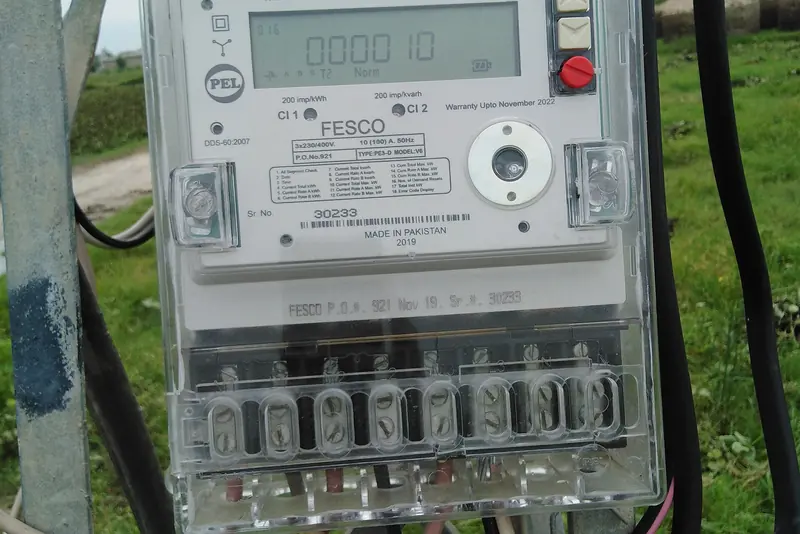
NEPRA heard the distribution companies' July-September quarterly adjustment request on 17 November. The FESCO and GEPCO petitions filed with the regulator show capacity costs running above the tariff reference and large offsets from incremental sales, the item industrial consumers disputed at the hearing.
Asian energy importers are speeding up nuclear plans after the Iran war exposed their dependence on Gulf oil and gas, The National reported, with Asia accounting for 66 GW of the 91 GW being built worldwide.
Pakistan and Turkmenistan agreed in Islamabad on 17 November to convene the steering committee for the TAPI gas pipeline, Dawn reported. The 1,800-kilometre line is designed to carry 33 billion cubic metres of gas a year.
Dubai-based engineering company Kent expects to finish 2026 with a record order backlog and about $1.5 billion of revenue, its chief executive told The National, as Gulf producers commission repairs and new export routes.
Pakistan cut the petrol price by Rs3 to Rs325 a litre from 18 November and held diesel at Rs358, according to Dawn, citing an Ogra notification. It was the eleventh cut in a row.
Sindh's environment secretary told COP31 sessions that four brick kilns converted to zigzag technology cut air pollution by 53 percent and fuel use by 24 percent, and listed 13 carbon market initiatives, Business Recorder reported.
NEPRA has raised the incremental consumption package rate to Rs25.30/kWh on a split vote. Using the regulator's own ISMO-based estimates for December 2025 to May 2026, we calculate that serving 3,969 GWh of package units cost about Rs26.5 billion more than the Rs22.98 rate recovered, with April and May accounting for most of the shortfall.
Ex-WAPDA distribution companies have asked NEPRA for a net Rs23,326 million third-quarter adjustment. By our calculation, a Rs29,252 million credit for incremental units offsets 56% of the other cost items, and two companies, FESCO and IESCO, account for 90% of the net claim.
NEPRA's September fuel charges decision records 170.389 GWh bought by distribution companies from net-metering and net-billing consumers. By our calculation that is about 1.3% of the month's 13.22 billion kWh of grid generation and roughly one and a half times the output of grid-connected solar plants.
NEPRA has accepted Saif Power's reply to a show-cause notice over delayed synchronisation during the 23 January 2023 national blackout and closed the matter without a fine. By our count, the order came 1,376 days after the collapse.
CPPA-G again claimed a Rs10,617 million negative adjustment for local gas supplied to RLNG power plants without plant-wise details. NEPRA's own workings came to Rs9,356 million; it used the larger figure because it benefits consumers, a difference of Rs1.26 billion by our calculation.
In its September fuel charges decision, NEPRA counted 338.401 GWh of transmission losses on NGC's own network rather than the 376.028 GWh reported. By our calculation, 37.6 GWh of losses were left out of the adjustment, pending NGC's year-end performance.
On 6 November 2026 NEPRA approved a September 2026 fuel charges adjustment of Rs.2.3673 per kWh for Ex-WAPDA distribution companies, against the Rs.2.5624 per kWh sought by CPPA-G, and said the same charge will apply to K-Electric consumers.
NEPRA notified a fuel charges adjustment of Rs1.1086/kWh for August 2026, against Rs1.7267 claimed by CPPA-G. It applies to October bills for XWDISCO and K-Electric consumers.
CPPA-G's base case puts the 2027 power purchase price at Rs27.309/kWh, with capacity charges at 53.9% of the Rs3.552 trillion bill. Its own demand-sensitivity case shows that each kWh of lost sales cuts total cost by only about Rs11.9, leaving the rest to be spread over remaining consumers.
Brent eased to about $109 a barrel early on 20 October as traders weighed a US executive order waiving key Russia-related sanctions and tariffs against renewed Houthi claims of attacks on Saudi energy sites, which kept prices above $100.
Government sponsors would pay for the schemes and the areas would be carved out of the host distribution company's licence, with comments due within 30 days.
September fuel cost came in at Rs10.0220 per unit against a reference of Rs7.4596, and the uniform-FCA policy would carry the adjustment to K-Electric consumers as well.
In May 2025 Pakistan's finance ministry announced that the government had allocated 2,000 MW of electricity in the first phase of a national initiative to power bitcoin mining and AI data centres. The pitch was simple.
The 31st UN climate conference, COP31, will be held in Antalya, Türkiye, from 9 to 20 November 2026. Under an arrangement agreed at COP30 in Belém, Türkiye holds the COP presidency, hosts the World Leaders' Summit and leads the action agenda, while Australia serves as President of Negotiations, with authority over the negotiated outcomes.
Monsoon-related incidents in Pakistan killed 199 people and injured 552 between 26 June and 29 September 2026, according to the National Disaster Management Authority's daily situation reports. The NDMA's report number 97, covering 29 to 30 September, is among the last of the season, as monsoon activity retreats from the country in late September and October.
Pakistan still runs two electricity systems that touch at a handful of points. K-Electric generates, buys and distributes power for Karachi, while the National Grid Company and its DISCOs serve almost everyone else.
Profit by Pakistan Today reported on 18 September 2026 that a National Assembly committee on privatisation was told the approved structure for the first DISCO sales would divest between 51 and 100 per cent of each company together with management control. The same terms appear in the commission's May invitation for expressions of interest, so the committee briefing confirmed a design rather than changing one.
The Department for Energy Security and Net Zero published the final report for the only Stream 1 Phase 2 project of its Longer Duration Energy Storage Demonstration Programme on 17 November. Invinity's flagship flow battery ended up smaller, relocated and later than first announced.
The final report of the H2-to-Site project, one of six Phase 2 projects in the £33 million Red Diesel Replacement programme, shows hydrogen bowsers and tube trailers covering more than 3,000 road miles to supply working construction sites.
Siemens Energy reported fourth-quarter orders of €14.8bn and a record €164bn backlog, according to Siemens Energy, with Gas Services revenue up 31.2% and a gas backlog of €74bn.
Statutory social and environmental guidance to GEMA on electricity network growth came into force on 17 November, asking Ofgem to work with network owners towards a 10% minimum social value weighting in procurement.
Poland's Energy Regulatory Office awarded about 1.81 GW of solar in auctions held on 9 and 10 November, according to pv magazine, with winning large-project bids as low as PLN 180/MWh against a PLN 389/MWh reference price.
Cambridge-based HoriZn, which develops water-based zinc batteries, has closed a £5 million bridge round and won a £300,000 Innovate UK grant for a data centre deployment in early 2027, according to Mercom India.
ENTSO-E's Winter Outlook 2026-2027 finds Europe has enough electricity resources for the winter, with renewable capacity up about 134 GW and battery capacity more than doubled to 38 GW, and the EU Electricity Coordination Group agreed on 12 November.
The European Commission has approved changes to two German schemes for energy-intensive industry, letting companies combine indirect ETS cost compensation with temporary electricity price relief for the first time and raising budgets.
The average UK pump price of petrol fell to 167.07 pence a litre in the week of 16 November and diesel to 196.77p, according to weekly statistics from the Department for Energy Security and Net Zero. Both remain far above 2025 levels.
Italy had 1,004,661 battery systems attached to renewable installations at the end of October, with 12.84 GWh of capacity and 6.5 GW of power, according to Terna data reported by pv magazine.
Blue Elephant Energy reached financial close on three agri-photovoltaic projects of nearly 96 MW in Mecklenburg-Western Pomerania, with Commerzbank lending and commissioning set for the third quarter of 2027, according to Mercom India.
The European Commission has approved a €9.5 billion Dutch State aid scheme for the 2 GW IJmuiden Ver Gamma-A and Gamma-B offshore wind farms, with aid offered only if no developer bids to build them subsidy-free.
Ofgem is minded to approve a second early construction funding request from National Grid and SP Transmission for the 2GW Eastern Green Link 4, adding 1.5% of project cost and lifting the total to 14.6%. Consultation closes on 20 December.
The Commission's 2026 Carbon Market Report shows near-record ETS revenue in 2025 alongside a sharp shift in where the money goes. By our calculation, the share paid directly to national budgets fell from 81% in 2021 to 56% in 2025, and the 2027 cap for power, industry and shipping is already about 1 million allowances below those sectors' 2025 emissions.
Ofgem's direction modifying the Sizewell C price control model sets cost of debt adjustment values that, by our calculation, sum to £700.9 million in 2024/25 prices for 2025-26 to 2027-28, with the 2027-28 value 28% below 2026-27.
Ofgem has extended the ban on acquisition-only tariffs and its market-wide derogation for a further 12 months. By our count, the temporary rule introduced in April 2022 will have been in force for six years by the new expiry date.
With 1,023 million allowances in circulation at the end of 2025, the Market Stability Reserve will absorb 190 million allowances between September 2026 and August 2027. By our calculation that is about 15.8 million a month, worth roughly €14 billion at the 2025 average auction price.
The Commission's 2026 Climate Action Progress Report projects effort-sharing emissions about 38.5% below 2005 by 2030, against the 40% target. Nine countries, one in three member states, will be asked for corrective action plans.
Shipping companies reported 87.4 MtCO2 under the EU ETS for 2025 and owe 60.8 million allowances under the 70% phase-in. By our calculation that obligation was worth about €4.5 billion at the 2025 average auction price.
Carbon Market Report data show aviation emissions under the EU ETS rose 0.2% in 2025. By our calculation, free allowances to airlines covered about 17% of those emissions, and the ETS support for sustainable aviation fuel came to roughly €330 per tonne of CO2 saved.
The European Commission has approved a 20-year, €2.04 billion Belgian two-way contract for difference for an offshore wind farm of up to 735 MW. By our calculation, the budget equals at most about €39 per MWh of the expected 2.6 TWh a year, and the output figure implies a capacity factor of about 40%.
On 10 November 2026 the European Commission said the EU has joined a global geothermal pledge at COP31 that seeks to raise supply to 12 times 2025 levels by 2050, with power capacity rising from 15.6 GW to 193 GW.
Ministers of the Central and South-East European Energy Connectivity group met in Zagreb on 6 November 2026, welcomed Czechia and Poland, and discussed infrastructure against an EU aim to raise electrification from 23% today to 46% by 2040.
The European Commission launched the first Biomethane Mechanism matching round on 4 November 2026. Buyers can submit demand until 23 December, suppliers can respond from 21 January to 4 March 2027, and results are due on 18 March 2027.
In a decision published on 10 November 2026, Ofgem confirmed that heat-network authorised persons will start paying regulatory fees from April 2028 at the earliest, after 17 responses to its February consultation on how those costs will be recovered.
The CMA has confirmed Ofgem's rejection of CMP344, which would have moved approved offshore transmission repair costs from generators to consumers. On GEMA's own figures the effect on a CfD strike price was about £0.06/MWh, roughly £0.2 million a year for a 1 GW wind farm by our estimate.
SMARD data show 463 negative day-ahead hours from January to September 2026, against 525 a year earlier, while solar output rose from 63.0 TWh to 76.2 TWh.
The decision confirms January's minded-to position on the East Anglia reinforcement, one of 26 projects in the accelerated strategic transmission programme.
CRE proposes an 82 GW target volume for the long-term capacity auction for winter 2030-31, of which 3 GW may take multi-year contracts, and keeps price caps at 72 and 15 euros per kW.
BP's 13 October trading statement expects post-tax impairment charges of $3.0 to 4.5 billion, mainly in gas and low carbon energy, and net debt of $13.5 to 14.5 billion at quarter-end.
NESO called on emergency assistance from France on Monday evening, its largest such request since at least 2024, after a delayed return to service cut available capacity.
Britain's electricity system operator put the market on notice for a thin evening margin on Tuesday, then stood the warning down once generation and imports closed the gap. The National Energy System Operator issued an Electricity Margin Notice overnight on 5 October for the period from 15:00 to 23:00 on 6 October, citing a system margin shortfall of 1,840 MW.
The European Commission has adopted a delegated regulation establishing a common EU rating scheme for data centres under the Energy Efficiency Directive. The scheme will use data that operators report on energy and water performance, including power usage effectiveness and water usage effectiveness, to generate electronic labels on an A to G scale for energy and for water.
China's National Bureau of Statistics reported on 16 November that industrial power generation fell 2.1% year on year in October, with thermal down 7.3% and hydro down 18.9%. Read alongside National Energy Administration capacity data, the figures show how much of the fossil decline wind and solar are now absorbing.
Satellite analysis of the 21 GW Gonghe Talatan solar cluster in Qinghai found vegetation index values averaged 28.4% above pre-construction levels in years two to five after building, pv magazine reported on a Hohai University study.
China used 1,033.2 TWh of electricity in August and set a record peak load of 1,560 GW, while internet data services and vehicle charging grew more than 40 per cent over January to August.
Trading centres cleared 5,180 TWh in January to August, up 19.2 per cent, but green-power contracts covered only 218.2 TWh, about one-eighth of wind and solar output.
Shandong's revised grid-connection and ancillary-service rules took effect on 1 October with discounted charges during transition, while the NEA's draft national regulation is open for comment until about 30 October.
For four years China has tried to solve the power problem of computing with geography. Its Eastern Data, Western Compute programme, launched nationwide in 2022, designated eight national computing hubs and ten data centre clusters, steering power-hungry workloads to the western provinces where land and renewable energy are abundant.
Chinese President Xi Jinping announced China's 2035 nationally determined contribution in video remarks to the UN Climate Summit in New York on 24 September 2025. It is the first time China has set an absolute emissions reduction target for its whole economy, rather than targets for carbon intensity or the timing of a peak.
India had about 175 GW of solar capacity at the end of October 2026, the Press Information Bureau said, with rooftop systems making up 34.97 GW and 24.29 GW added in the current financial year.
Amazon said it will invest $7 billion in renewable projects in India by 2030 and announced 934 MW of new wind and solar contracts, including 434 MW from Sunsure in Karnataka, according to pv magazine and Mercom India.
September consumption rose 11% to 162 BU while hydro output fell 16%. Thermal generation of 118 BU drew plant coal stocks down to 19 Mt, which by our estimate is roughly seven to eight days of burn at September rates.
Power plant coal stocks were 19 Mt at the end of September, down from 47 Mt a year earlier, as thermal plants covered a 16% fall in hydro output and an 11% rise in consumption.
Tamil Nadu's distribution utility has signed the costliest short-term power deals in its history to get through the rest of October. The Tamil Nadu Power Distribution Corporation Limited finalised purchases from 12 to 31 October that put roughly 2,000 MW into the evening peak at rates up to Rs 37 per unit, including 181 MW of gas-fired supply at that ceiling, The New Indian Express and ET Energyworld reported on 13 October.
India's peak electricity demand reached a new all-time high of 270.82 GW on 21 May 2026, the fourth consecutive day of record demand, the Power Ministry said. The peak was met at 15:45 during solar hours.
India installed a record 37.9 GW of solar and 6.3 GW of wind in calendar year 2025, according to Ministry of New and Renewable Energy data reported by pv magazine India on 13 January 2026. Solar additions were 54.7 per cent higher than in 2024, and wind additions 85.3 per cent higher.
India's electricity demand peaked at about 242 gigawatts in June 2025, according to the power ministry, and was met with no shortage. That is below the all-time record of about 250 GW set on 30 May 2024 during a severe heatwave, and well below the 277 GW that the Central Electricity Authority had projected for the 2025 summer.
Egypt plans to replace its 545MW Zaafarana wind farm, the country's first utility-scale wind site, with a 5.2GW hybrid wind and solar plant, with phases split between Alcazar and a TAQA Arabia-Voltalia consortium, according to ESI Africa.
Iraq has resumed crude exports through the 960km Kirkuk-Ceyhan pipeline to Turkey at an initial 120,000 barrels per day and plans to raise flows to 500,000 bpd, The National reported, citing the oil minister.
A JV of Elsewedy Electric and Sinohydro has signed the EPC contract for the 2,313.5 MW Rabigh 2 IPP expansion in Saudi Arabia, targeting commercial operation in May 2029. The contract value works out to about $950 per kW.
When the presidents of the United Arab Emirates and the United States unveiled a 5 GW AI campus in Abu Dhabi on 15 May 2025, the pitch was simple: abundant power, deep capital and a location within 3,200 km of nearly half the world's population. Sixteen months later, the war that closed the Strait of Hormuz has added a requirement nobody had priced in.
Iraq is ending another summer of long power cuts, with the gap between demand and supply wider than in recent years. The main new factor is the collapse of Iranian gas supplies.
For three years the Gulf states have pitched themselves as the natural home for the next generation of AI infrastructure. The argument rested on three pillars: abundant and cheap energy, deep sovereign capital, and political alignment with Washington.
Eskom's year-to-date energy availability factor reached 68.2% by 15 October, up 5.57 points. Unplanned outages in the latest week were 2,939 MW lower than a year earlier, and OCGT output has fallen to about 152 GWh from roughly 1,020 GWh by our back-calculation.
Eskom's year-to-date energy availability factor reached 68.2% by 15 October. In the latest week unplanned outages averaged 7,707 MW, 2,939 MW below a year earlier.
ZRA data show 22.40 BCM of usable water in Lake Kariba on 26 October, against about 6.7 BCM a year earlier. Next year's allocation for ZESCO and ZPC is 36% lower than this year's.
PURC's tariff publication effective 1 October 2026 sets GRIDCo transmission service charge TSC 1 at 15.8925 GHp/kWh and a composite bulk generation charge of 118.0280 GHp/kWh.
Shell Petroleum B.V. has signed an agreement to transfer Shell Nigeria Gas Group, including about 170 kilometres of pipelines serving more than 130 industrial customers, to Nigerian firm Vaaris Energy.
NLNG's chief executive told a Lagos energy conference that gas suppliers to power plants are owed about N3.3 trillion, undermining generation despite proven reserves of about 215 trillion cubic feet.
GW Mozambique Investments and EDM have opened prequalification through 24 November for a 460-kilometre transmission package linking central and northern Mozambique, valued at about USD 450 million.
The Zambezi River Authority, which manages Lake Kariba on behalf of Zambia and Zimbabwe, has allocated 13.5 billion cubic metres of water to ZESCO, Zambia's state utility, for power generation at the Kariba North Bank station in 2025. That compares with 8 billion cubic metres in 2024, according to reports in the Zambian press in early March.
The Electricity Regulation Amendment Act, signed by President Cyril Ramaphosa in August 2024 as Act 38 of 2024, came into force on 1 January 2025, apart from amendments to the definitions of reticulation and distribution power systems. It is the most important change to the structure of South Africa's power sector since Eskom was corporatised.
The Department for Energy Security and Net Zero will release official statistics on average road fuel sales and deliveries for the week ending Sunday 27 December 2026 on 14 January 2027 at 9:30am.
According to Mercom India, the Rajasthan Electricity Regulatory Commission (RERC) has upheld the cross-subsidy surcharge and additional surcharge on electricity supplied to a metal company from a third-party-owned rooftop solar project. The Commission ruled that concessions under the Rajasthan Solar Energy Policy, 2019, cannot be applied retrospectively.
Three Vietnamese provinces are moving floating solar projects forward, including a 35 MW array at Bau Can lake due to break ground this week and a proposed 304 MW plant on the Srepok 3 reservoir, according to pv magazine.
The 103 MW Huatacondo solar plant in northern Chile and its 98 MW/312 MWh battery remain disconnected after an August cyberattack, with the grid coordinator listing both at 0% availability on 14 November, according to pv magazine.
Ballard Power Systems reported third-quarter revenue of $22.5 million, down 31% from a year earlier, as customers pushed fuel cell deliveries into 2027 and 2028, and narrowed its quarterly loss to $21.1 million, Mercom India reported.
The Intergovernmental Panel on Climate Change (IPCC) has announced the Expert Review of the First Order Draft (FOD) of its Working Group III contribution to the Seventh Assessment Report (AR7).
EMRA amended five electricity market regulations in the 19 October Official Gazette. Consumer storage above contracted power must not export, and good payers' collateral is capped at one times the base rate.
Japan's electricity planners have two problems that are starting to overlap. The first is forecasting how much power new data centres will need and when.
Japan has a geography problem. Its data centres sit almost entirely around its two biggest cities, while its large renewable projects and nuclear plants are concentrated hundreds of kilometres away.
Argentina's oil and gas production is close to the highest levels in its history. In September 2024 the country produced 738,000 barrels a day of crude, 15 per cent more than a year earlier and the most in any month since 2003.
In August 2024, Mexico shipped its first cargo of liquefied natural gas. New Fortress Energy produced it aboard a floating liquefaction vessel off Altamira, in Tamaulipas, and sent it through the Panama Canal to Mexico's own import terminal in Baja California Sur.
Five years after first oil, Guyana produces about 645,000 barrels a day, all of it from a single offshore licence, the Stabroek block. Between 2020 and 2023 the country added an average of 98,000 barrels a day each year, making it the third-fastest growing oil producer outside OPEC over that period according to the US Energy Information Administration.
The Department for Energy Security and Net Zero will release official statistics on average road fuel sales and deliveries for the week ending Sunday 27 December 2026 on 14 January 2027 at 9:30am.
According to Mercom India, the Rajasthan Electricity Regulatory Commission (RERC) has upheld the cross-subsidy surcharge and additional surcharge on electricity supplied to a metal company from a third-party-owned rooftop solar project. The Commission ruled that concessions under the Rajasthan Solar Energy Policy, 2019, cannot be applied retrospectively.
According to Business Recorder, IAEA chief Rafael Grossi said the planned US-Saudi nuclear deal is 'very satisfactory' on inspections, even without the Additional Protocol.
China's National Bureau of Statistics reported on 16 November that industrial power generation fell 2.1% year on year in October, with thermal down 7.3% and hydro down 18.9%. Read alongside National Energy Administration capacity data, the figures show how much of the fossil decline wind and solar are now absorbing.
The Department for Energy Security and Net Zero published the final report for the only Stream 1 Phase 2 project of its Longer Duration Energy Storage Demonstration Programme on 17 November. Invinity's flagship flow battery ended up smaller, relocated and later than first announced.
NEPRA heard the distribution companies' July-September quarterly adjustment request on 17 November. The FESCO and GEPCO petitions filed with the regulator show capacity costs running above the tariff reference and large offsets from incremental sales, the item industrial consumers disputed at the hearing.
The Department of Energy issued Order No. 202-26-51 on November 13 to keep Michigan's Campbell coal plant available into February 2027. A reading of the department's 2026 docket shows how section 202(c) has split into short weather orders and rolling 90-day retention orders for named fossil units.
The final report of the H2-to-Site project, one of six Phase 2 projects in the £33 million Red Diesel Replacement programme, shows hydrogen bowsers and tube trailers covering more than 3,000 road miles to supply working construction sites.
India had about 175 GW of solar capacity at the end of October 2026, the Press Information Bureau said, with rooftop systems making up 34.97 GW and 24.29 GW added in the current financial year.
Siemens Energy reported fourth-quarter orders of €14.8bn and a record €164bn backlog, according to Siemens Energy, with Gas Services revenue up 31.2% and a gas backlog of €74bn.
NYSERDA launched New York's second Bulk Energy Storage solicitation on 12 November, seeking about one gigawatt through Index Storage Credits. Step One eligibility applications are due on 15 December.
NRG Energy will sell six gas-fired plants totalling just under 4.9 GW to LS Power for $4 billion, around eight times expected 2027 adjusted EBITDA, Power Engineering reported. The deal is due to close in the second quarter of 2027.
Statutory social and environmental guidance to GEMA on electricity network growth came into force on 17 November, asking Ofgem to work with network owners towards a 10% minimum social value weighting in procurement.
PJM has asked FERC to approve disturbance ride-through requirements for Large Computational Loads from January 16, 2027, alongside a separate Fast Energization proposal meant to cut interconnection study time from two years to one.
The Department of Energy has ordered MISO and Consumers Energy to keep the J.H. Campbell coal plant in Michigan available from 15 November to 12 February 2027, its seventh such order after an appeals court vacated an earlier one.
Egypt plans to replace its 545MW Zaafarana wind farm, the country's first utility-scale wind site, with a 5.2GW hybrid wind and solar plant, with phases split between Alcazar and a TAQA Arabia-Voltalia consortium, according to ESI Africa.
Poland's Energy Regulatory Office awarded about 1.81 GW of solar in auctions held on 9 and 10 November, according to pv magazine, with winning large-project bids as low as PLN 180/MWh against a PLN 389/MWh reference price.
Three Vietnamese provinces are moving floating solar projects forward, including a 35 MW array at Bau Can lake due to break ground this week and a proposed 304 MW plant on the Srepok 3 reservoir, according to pv magazine.
Satellite analysis of the 21 GW Gonghe Talatan solar cluster in Qinghai found vegetation index values averaged 28.4% above pre-construction levels in years two to five after building, pv magazine reported on a Hohai University study.
Asian energy importers are speeding up nuclear plans after the Iran war exposed their dependence on Gulf oil and gas, The National reported, with Asia accounting for 66 GW of the 91 GW being built worldwide.
The 103 MW Huatacondo solar plant in northern Chile and its 98 MW/312 MWh battery remain disconnected after an August cyberattack, with the grid coordinator listing both at 0% availability on 14 November, according to pv magazine.
Pakistan and Turkmenistan agreed in Islamabad on 17 November to convene the steering committee for the TAPI gas pipeline, Dawn reported. The 1,800-kilometre line is designed to carry 33 billion cubic metres of gas a year.
Dubai-based engineering company Kent expects to finish 2026 with a record order backlog and about $1.5 billion of revenue, its chief executive told The National, as Gulf producers commission repairs and new export routes.
Iraq has resumed crude exports through the 960km Kirkuk-Ceyhan pipeline to Turkey at an initial 120,000 barrels per day and plans to raise flows to 500,000 bpd, The National reported, citing the oil minister.
Cambridge-based HoriZn, which develops water-based zinc batteries, has closed a £5 million bridge round and won a £300,000 Innovate UK grant for a data centre deployment in early 2027, according to Mercom India.
ENTSO-E's Winter Outlook 2026-2027 finds Europe has enough electricity resources for the winter, with renewable capacity up about 134 GW and battery capacity more than doubled to 38 GW, and the EU Electricity Coordination Group agreed on 12 November.
The European Commission has approved changes to two German schemes for energy-intensive industry, letting companies combine indirect ETS cost compensation with temporary electricity price relief for the first time and raising budgets.
The average UK pump price of petrol fell to 167.07 pence a litre in the week of 16 November and diesel to 196.77p, according to weekly statistics from the Department for Energy Security and Net Zero. Both remain far above 2025 levels.
Amazon said it will invest $7 billion in renewable projects in India by 2030 and announced 934 MW of new wind and solar contracts, including 434 MW from Sunsure in Karnataka, according to pv magazine and Mercom India.
Italy had 1,004,661 battery systems attached to renewable installations at the end of October, with 12.84 GWh of capacity and 6.5 GW of power, according to Terna data reported by pv magazine.
Stem lowered its 2026 revenue guidance to $132 million to $142 million from $140 million to $190 million as it drops battery hardware resales and managed services to focus on its PowerTrack software, Mercom India reported.
Ballard Power Systems reported third-quarter revenue of $22.5 million, down 31% from a year earlier, as customers pushed fuel cell deliveries into 2027 and 2028, and narrowed its quarterly loss to $21.1 million, Mercom India reported.
Blue Elephant Energy reached financial close on three agri-photovoltaic projects of nearly 96 MW in Mecklenburg-Western Pomerania, with Commerzbank lending and commissioning set for the third quarter of 2027, according to Mercom India.
Pakistan cut the petrol price by Rs3 to Rs325 a litre from 18 November and held diesel at Rs358, according to Dawn, citing an Ogra notification. It was the eleventh cut in a row.
Sindh's environment secretary told COP31 sessions that four brick kilns converted to zigzag technology cut air pollution by 53 percent and fuel use by 24 percent, and listed 13 carbon market initiatives, Business Recorder reported.
The European Commission has approved a €9.5 billion Dutch State aid scheme for the 2 GW IJmuiden Ver Gamma-A and Gamma-B offshore wind farms, with aid offered only if no developer bids to build them subsidy-free.
Ofgem is minded to approve a second early construction funding request from National Grid and SP Transmission for the 2GW Eastern Green Link 4, adding 1.5% of project cost and lifting the total to 14.6%. Consultation closes on 20 December.
The Intergovernmental Panel on Climate Change (IPCC) has announced the Expert Review of the First Order Draft (FOD) of its Working Group III contribution to the Seventh Assessment Report (AR7).
The Commission's 2026 Carbon Market Report shows near-record ETS revenue in 2025 alongside a sharp shift in where the money goes. By our calculation, the share paid directly to national budgets fell from 81% in 2021 to 56% in 2025, and the 2027 cap for power, industry and shipping is already about 1 million allowances below those sectors' 2025 emissions.
Comparing EIA's November and October Short-Term Energy Outlooks series by series, the largest revisions run in opposite directions. Retail diesel for 2027 rose from $4.49 to $5.03 a gallon while the winter Henry Hub price fell from $3.43 to $2.87. By our calculation the retail diesel margin over Brent widens by about 49 cents a gallon and oil's premium over gas on an energy basis rises to about 5.1 times in 2027.
Preliminary results from ERCOT's Data Center State and Community Impact RFI cover 433 loads and about 177 GW of requested interconnection capacity. By our calculation, loads of 500 MW or more are 25% of respondents but 72% of requested capacity, and the average West Texas request is about 575 MW, twice the average in the North and Houston zones.
ERCOT's 2026 biennial report on its operating reserve and ancillary service demand curves shows scarcity pricing fading from the market. By our normalisation, intervals with less than 3,000 MW of on-line dispatchable capacity fell from about 1,184 a month to 116, and under real-time co-optimisation nearly all unmet reserve volume sits in Non-Spin, where a $15 floor sets the price most of the time.
NEPRA has raised the incremental consumption package rate to Rs25.30/kWh on a split vote. Using the regulator's own ISMO-based estimates for December 2025 to May 2026, we calculate that serving 3,969 GWh of package units cost about Rs26.5 billion more than the Rs22.98 rate recovered, with April and May accounting for most of the shortfall.
Ofgem's direction modifying the Sizewell C price control model sets cost of debt adjustment values that, by our calculation, sum to £700.9 million in 2024/25 prices for 2025-26 to 2027-28, with the 2027-28 value 28% below 2026-27.
Ofgem has extended the ban on acquisition-only tariffs and its market-wide derogation for a further 12 months. By our count, the temporary rule introduced in April 2022 will have been in force for six years by the new expiry date.
With 1,023 million allowances in circulation at the end of 2025, the Market Stability Reserve will absorb 190 million allowances between September 2026 and August 2027. By our calculation that is about 15.8 million a month, worth roughly €14 billion at the 2025 average auction price.
The Commission's 2026 Climate Action Progress Report projects effort-sharing emissions about 38.5% below 2005 by 2030, against the 40% target. Nine countries, one in three member states, will be asked for corrective action plans.
Shipping companies reported 87.4 MtCO2 under the EU ETS for 2025 and owe 60.8 million allowances under the 70% phase-in. By our calculation that obligation was worth about €4.5 billion at the 2025 average auction price.
Carbon Market Report data show aviation emissions under the EU ETS rose 0.2% in 2025. By our calculation, free allowances to airlines covered about 17% of those emissions, and the ETS support for sustainable aviation fuel came to roughly €330 per tonne of CO2 saved.
The European Commission has approved a 20-year, €2.04 billion Belgian two-way contract for difference for an offshore wind farm of up to 735 MW. By our calculation, the budget equals at most about €39 per MWh of the expected 2.6 TWh a year, and the output figure implies a capacity factor of about 40%.
Ex-WAPDA distribution companies have asked NEPRA for a net Rs23,326 million third-quarter adjustment. By our calculation, a Rs29,252 million credit for incremental units offsets 56% of the other cost items, and two companies, FESCO and IESCO, account for 90% of the net claim.
NEPRA's September fuel charges decision records 170.389 GWh bought by distribution companies from net-metering and net-billing consumers. By our calculation that is about 1.3% of the month's 13.22 billion kWh of grid generation and roughly one and a half times the output of grid-connected solar plants.
NEPRA has accepted Saif Power's reply to a show-cause notice over delayed synchronisation during the 23 January 2023 national blackout and closed the matter without a fine. By our count, the order came 1,376 days after the collapse.
CPPA-G again claimed a Rs10,617 million negative adjustment for local gas supplied to RLNG power plants without plant-wise details. NEPRA's own workings came to Rs9,356 million; it used the larger figure because it benefits consumers, a difference of Rs1.26 billion by our calculation.
In its September fuel charges decision, NEPRA counted 338.401 GWh of transmission losses on NGC's own network rather than the 376.028 GWh reported. By our calculation, 37.6 GWh of losses were left out of the adjustment, pending NGC's year-end performance.
ISO New England and its transmission owners are due to file large-load tariff changes with FERC on 16 November, 151 days after the show-cause order. The proposal defines large loads at 50 MW and above 60 kV and would not start taking applications until 1 June 2027.
ERCOT's monthly DC tie report shows 181,129 MWh of imports and 94,063 MWh of exports across its four asynchronous ties in September 2026. By our calculation, net imports were 87,066 MWh, all of them through the East and North ties.
ERCOT has asked every transmission and distribution utility in its region to report interconnection requests from loads of 10 MW to under 75 MW. Separate survey data show about 11 GW of requested medium-load capacity, an average of roughly 59 MW per project by our calculation.
ERCOT's Batch Zero eligibility review has worked through about 5,140 questions from 257 developers, roughly 20 each, and is now sending tailored second-round requests to about 80% of them. The verification report is due on 10 December.
ERCOT told Texas regulators on 5 November that the last open protocol violations from its real-time co-optimisation launch are resolved. By our count, the proxy ancillary-service offer breach lasted 202 days, from 5 December 2025 to 25 June 2026.
EIA's weekly data put US commercial crude inventories at 409.8 million barrels on 30 October, with the Strategic Petroleum Reserve at 282.2 million. Our calculation shows the reserve 127.4 million barrels lower than a year earlier.
EIA's November outlook cuts US coal consumption by 7% this year and a further 5% in 2027. Its capacity data show coal-fired capacity falling 13 GW by the end of 2027, with 7.4 GW of that in the last quarter of next year, by our calculation.
EIA's November outlook puts the average US residential electricity price at 18.17 cents per kilowatthour this year and 18.68 cents in 2027. By our calculation that is an 8.4% rise over two years from 17.24 cents in 2025.
Utility-scale solar capacity rises from 150.4 GW at the end of 2025 to 221.9 GW at the end of 2027 in EIA's November outlook. Our calculation from the monthly series shows more than half of next year's build arriving between October and December.
The November Short-Term Energy Outlook has utility-scale battery capacity at 66.0 GW by December 2026 and 91.7 GW a year later. By our calculation, nearly half of next year's additions are scheduled for the final quarter.
The November Short-Term Energy Outlook, released on 10 November 2026, raises the end-November US storage forecast to 3,840 billion cubic feet, 67 Bcf above the October outlook, and cuts the winter Henry Hub average to $2.87 per million British thermal units.
The November Short-Term Energy Outlook expects the US electric power sector to generate almost 4,390 billion kilowatthours in 2026, 2.7% more than in 2025, before growth slows to 1.2% in 2027 as milder weather reduces residential demand.
On 10 November 2026 ERCOT said its enhanced Texas Advisory and Notification System will send grid notices by text as well as email, including Energy Emergency Alert Level 1 when operating reserves fall below 2,500 MW.
On 6 November 2026 NEPRA approved a September 2026 fuel charges adjustment of Rs.2.3673 per kWh for Ex-WAPDA distribution companies, against the Rs.2.5624 per kWh sought by CPPA-G, and said the same charge will apply to K-Electric consumers.
On 10 November 2026 the European Commission said the EU has joined a global geothermal pledge at COP31 that seeks to raise supply to 12 times 2025 levels by 2050, with power capacity rising from 15.6 GW to 193 GW.
Ministers of the Central and South-East European Energy Connectivity group met in Zagreb on 6 November 2026, welcomed Czechia and Poland, and discussed infrastructure against an EU aim to raise electrification from 23% today to 46% by 2040.
The European Commission launched the first Biomethane Mechanism matching round on 4 November 2026. Buyers can submit demand until 23 December, suppliers can respond from 21 January to 4 March 2027, and results are due on 18 March 2027.
In a decision published on 10 November 2026, Ofgem confirmed that heat-network authorised persons will start paying regulatory fees from April 2028 at the earliest, after 17 responses to its February consultation on how those costs will be recovered.
Eskom's year-to-date energy availability factor reached 68.2% by 15 October, up 5.57 points. Unplanned outages in the latest week were 2,939 MW lower than a year earlier, and OCGT output has fallen to about 152 GWh from roughly 1,020 GWh by our back-calculation.
Eskom's year-to-date energy availability factor reached 68.2% by 15 October. In the latest week unplanned outages averaged 7,707 MW, 2,939 MW below a year earlier.
ERCOT was tracking 1,874 active generation interconnection requests totalling 453,782 MW at the end of September. Batteries are 162,580 MW, and the battery energy figure implies an average duration of about 2.4 hours.
The CMA has confirmed Ofgem's rejection of CMP344, which would have moved approved offshore transmission repair costs from generators to consumers. On GEMA's own figures the effect on a CfD strike price was about £0.06/MWh, roughly £0.2 million a year for a 1 GW wind farm by our estimate.
EMRA amended five electricity market regulations in the 19 October Official Gazette. Consumer storage above contracted power must not export, and good payers' collateral is capped at one times the base rate.
September consumption rose 11% to 162 BU while hydro output fell 16%. Thermal generation of 118 BU drew plant coal stocks down to 19 Mt, which by our estimate is roughly seven to eight days of burn at September rates.
Power plant coal stocks were 19 Mt at the end of September, down from 47 Mt a year earlier, as thermal plants covered a 16% fall in hydro output and an 11% rise in consumption.
A JV of Elsewedy Electric and Sinohydro has signed the EPC contract for the 2,313.5 MW Rabigh 2 IPP expansion in Saudi Arabia, targeting commercial operation in May 2029. The contract value works out to about $950 per kW.
FERC accepted ISO-NE's Asset Condition Reviewer on 16 October, effective 1 January 2027. New England owners expect about $5 billion of asset condition spending through 2034, and $1.3 billion of it next year alone. The review is advisory, and its thresholds decide how much of that spending is ever looked at.
FERC accepted ISO New England's Asset Condition Reviewer role on 16 October, effective 1 January 2027. The review is advisory and applies to projects of $25 million or more.
NEPRA notified a fuel charges adjustment of Rs1.1086/kWh for August 2026, against Rs1.7267 claimed by CPPA-G. It applies to October bills for XWDISCO and K-Electric consumers.
CPPA-G's base case puts the 2027 power purchase price at Rs27.309/kWh, with capacity charges at 53.9% of the Rs3.552 trillion bill. Its own demand-sensitivity case shows that each kWh of lost sales cuts total cost by only about Rs11.9, leaving the rest to be spread over remaining consumers.
EIA's October Short-Term Energy Outlook puts the US average wholesale price at $52/MWh for 2026, with PJM up 41% and Mid-Columbia down 23%. Henry Hub is forecast to fall 9% to $3.16/MMBtu in 2027.
Brent eased to about $109 a barrel early on 20 October as traders weighed a US executive order waiving key Russia-related sanctions and tariffs against renewed Houthi claims of attacks on Saudi energy sites, which kept prices above $100.
ZRA data show 22.40 BCM of usable water in Lake Kariba on 26 October, against about 6.7 BCM a year earlier. Next year's allocation for ZESCO and ZPC is 36% lower than this year's.
Government sponsors would pay for the schemes and the areas would be carved out of the host distribution company's licence, with comments due within 30 days.
SMARD data show 463 negative day-ahead hours from January to September 2026, against 525 a year earlier, while solar output rose from 63.0 TWh to 76.2 TWh.
EIA-930 data show ERCOT batteries averaging 8,555 MW at the daily net-load peak in July to September 2026, against 4,818 MW a year earlier. Gas output in the same hour was flat.
A 77 Bcf injection left inventories 35 Bcf above the five-year average overall, but the fast-cycling salt facilities in the South Central region are well short.
September fuel cost came in at Rs10.0220 per unit against a reference of Rs7.4596, and the uniform-FCA policy would carry the adjustment to K-Electric consumers as well.
Operating guide changes NOGRR226 and NOGRR247 add anti-stall stages and set relief in 5 per cent steps; separate market changes for congestion and firm fuel take effect on 29 October.
PJM will validate the submissions by 14 November and post final parameters for the 2029/30 capacity auction on 19 November, with bidding opening on 9 December.
The decision confirms January's minded-to position on the East Anglia reinforcement, one of 26 projects in the accelerated strategic transmission programme.
CRE proposes an 82 GW target volume for the long-term capacity auction for winter 2030-31, of which 3 GW may take multi-year contracts, and keeps price caps at 72 and 15 euros per kW.
PURC's tariff publication effective 1 October 2026 sets GRIDCo transmission service charge TSC 1 at 15.8925 GHp/kWh and a composite bulk generation charge of 118.0280 GHp/kWh.
BP's 13 October trading statement expects post-tax impairment charges of $3.0 to 4.5 billion, mainly in gas and low carbon energy, and net debt of $13.5 to 14.5 billion at quarter-end.
China used 1,033.2 TWh of electricity in August and set a record peak load of 1,560 GW, while internet data services and vehicle charging grew more than 40 per cent over January to August.
Trading centres cleared 5,180 TWh in January to August, up 19.2 per cent, but green-power contracts covered only 218.2 TWh, about one-eighth of wind and solar output.
Shandong's revised grid-connection and ancillary-service rules took effect on 1 October with discounted charges during transition, while the NEA's draft national regulation is open for comment until about 30 October.
Shell Petroleum B.V. has signed an agreement to transfer Shell Nigeria Gas Group, including about 170 kilometres of pipelines serving more than 130 industrial customers, to Nigerian firm Vaaris Energy.
NLNG's chief executive told a Lagos energy conference that gas suppliers to power plants are owed about N3.3 trillion, undermining generation despite proven reserves of about 215 trillion cubic feet.
GW Mozambique Investments and EDM have opened prequalification through 24 November for a 460-kilometre transmission package linking central and northern Mozambique, valued at about USD 450 million.
Tamil Nadu's distribution utility has signed the costliest short-term power deals in its history to get through the rest of October. The Tamil Nadu Power Distribution Corporation Limited finalised purchases from 12 to 31 October that put roughly 2,000 MW into the evening peak at rates up to Rs 37 per unit, including 181 MW of gas-fired supply at that ceiling, The New Indian Express and ET Energyworld reported on 13 October.
The Energy Department granted PJM a Section 202(c) emergency order for October 13 to 16 after the grid operator forecast demand near 111,500 MW with 61,591 MW of generation out for autumn maintenance.
NESO called on emergency assistance from France on Monday evening, its largest such request since at least 2024, after a delayed return to service cut available capacity.
Britain's electricity system operator put the market on notice for a thin evening margin on Tuesday, then stood the warning down once generation and imports closed the gap. The National Energy System Operator issued an Electricity Margin Notice overnight on 5 October for the period from 15:00 to 23:00 on 6 October, citing a system margin shortfall of 1,840 MW.
For most of the past decade, the story of U.S. natural gas demand growth was written on the Gulf Coast. Every new liquefaction train meant another billion cubic feet a day leaving the country, and the 2026 run of final investment decisions extended that pipeline well into the 2030s.
Virginia now has an official count of the machines that keep its data centers running when the grid fails. A report delivered to the General Assembly's money committees on October 1, 2026 by the staff of the State Corporation Commission (SCC), compiled with the Department of Environmental Quality (DEQ), lists 10,290 permitted Tier 2 (or earlier) generator sets at data centers with a combined capacity of 26,718 MW, and 3,477 Tier 4 or Tier 4-equivalent sets with 6,414 MW.
In May 2025 Pakistan's finance ministry announced that the government had allocated 2,000 MW of electricity in the first phase of a national initiative to power bitcoin mining and AI data centres. The pitch was simple.
The 31st UN climate conference, COP31, will be held in Antalya, Türkiye, from 9 to 20 November 2026. Under an arrangement agreed at COP30 in Belém, Türkiye holds the COP presidency, hosts the World Leaders' Summit and leads the action agenda, while Australia serves as President of Negotiations, with authority over the negotiated outcomes.
PJM Interconnection's Reliability Backstop Procurement was designed to buy about 6.8 GW of new generation to close a capacity shortfall driven by data center demand. It did not open on September 30 as planned.
The war that closed the Strait of Hormuz at the end of February 2026 sent gas prices in Asia and Europe to their highest levels since the 2022 crisis. In the United States, gas got cheaper.
Monsoon-related incidents in Pakistan killed 199 people and injured 552 between 26 June and 29 September 2026, according to the National Disaster Management Authority's daily situation reports. The NDMA's report number 97, covering 29 to 30 September, is among the last of the season, as monsoon activity retreats from the country in late September and October.
Texas is about to test how much new demand its gas fields can serve at once. On one side are liquefied natural gas (LNG) export plants along the Gulf Coast, several of which started up or reached final investment decision in 2026.
The European Commission has adopted a delegated regulation establishing a common EU rating scheme for data centres under the Energy Efficiency Directive. The scheme will use data that operators report on energy and water performance, including power usage effectiveness and water usage effectiveness, to generate electronic labels on an A to G scale for energy and for water.
Amsterdam has long been one of Europe's main data centre hubs. In 2026 it has become the clearest example in Europe of a market closed by two separate limits at once: planning rules that forbid new facilities and a transmission grid with no room left to connect them.
Pakistan still runs two electricity systems that touch at a handful of points. K-Electric generates, buys and distributes power for Karachi, while the National Grid Company and its DISCOs serve almost everyone else.
Two of the biggest stories in American energy this year draw on the same resource. Between March and June, three large LNG export projects reached final investment decision: Phase 2 of Venture Global's CP2 LNG on March 13, Caturus's 9.5 million metric ton per year Commonwealth LNG on May 15, and Delfin Midstream's first floating liquefaction vessel on June 3.
Profit by Pakistan Today reported on 18 September 2026 that a National Assembly committee on privatisation was told the approved structure for the first DISCO sales would divest between 51 and 100 per cent of each company together with management control. The same terms appear in the commission's May invitation for expressions of interest, so the committee briefing confirmed a design rather than changing one.
EIA's Short-Term Energy Outlook released on 9 September 2026 states that the United States uses record amounts of electricity in the forecast. Electricity sales are expected to total 4,135 billion kilowatthours in 2026 and 4,211 billion kilowatthours in 2027, driven by data-centre development and increased manufacturing in the commercial and industrial sectors.
When the presidents of the United Arab Emirates and the United States unveiled a 5 GW AI campus in Abu Dhabi on 15 May 2025, the pitch was simple: abundant power, deep capital and a location within 3,200 km of nearly half the world's population. Sixteen months later, the war that closed the Strait of Hormuz has added a requirement nobody had priced in.
Winter Storm Fern swept across large parts of the United States in late January 2026, bringing ice, snow and extreme cold from Texas to the Mid-Atlantic. The storm caused more than 1 million customer power outages, mainly from ice accumulation, falling trees and damage to local distribution lines, according to post-event assessments.
August 2026 was the warmest August on record and tied with July 2023 as the warmest month in the Copernicus Climate Change Service's ERA5 dataset, the service said on 10 September 2026. The global average surface air temperature was 16.96°C, 0.85°C above the 1991 to 2020 average and 1.65°C above the estimated 1850 to 1900 pre-industrial level.
Energy Update reported on 10 September 2026 that ISMO had started collecting project data for IGCEP 2027-37, with returns due from stakeholders by 14 September. NEPRA has not yet approved IGCEP 2025-35.
The site of what was Pennsylvania's largest coal-fired power plant is now one of the busiest construction projects in the country. Homer City Generation said on September 4 that more than 1,800 tradespeople are working on the Homer City Energy Campus, nearly double the 1,000 it reported in March.
On 6 September 2026 ProPakistani reported that the federal government had cleared 11,695 pending net-metering applications on the instructions of Power Minister Awais Leghari, out of 16,654 cases caught in the move to net billing. PITC began contacting cleared applicants by text and WhatsApp and warned them not to pay intermediaries.
Arab News reported in late August 2026 that the Power Division had told distribution companies and PITC to clear rooftop solar connections that were already in motion before the net-billing cutoff. The directive covers applicants who, before 9 February 2026, had paid demand notices, received licences, had meters changed and executed connection orders.
Japan's electricity planners have two problems that are starting to overlap. The first is forecasting how much power new data centres will need and when.
Iraq is ending another summer of long power cuts, with the gap between demand and supply wider than in recent years. The main new factor is the collapse of Iranian gas supplies.
EIA's 16 April 2026 Today in Energy analysis, drawing on the Short-Term Energy Outlook, forecasts that United States net natural gas exports will grow 18 percent to 18.7 billion cubic feet per day in 2026 and another 10 percent to 20.5 billion cubic feet per day in 2027. Current United States peak export capacity is given as 18.3 billion cubic feet per day.
Global insured losses from natural catastrophes totalled an estimated $42 billion in the first half of 2026, the lowest first-half figure since 2020 and 16% below the 2016 to 2025 average, Swiss Re Institute said on 11 August 2026. Severe convective storms, which bring hail, tornadoes and damaging winds, remained the largest driver, with insured losses of about $28 billion, though that was below the long-term trend.
A drought stretching from the Rhine delta to the lower Danube cut hydropower output across seven European countries by about one fifth between April and July 2026, according to an analysis of river flow, generation and price data published by pv magazine on 10 August. Nuclear plants on the Danube also reduced output as river flows fell to their lowest levels in seven years, while wholesale power prices rose steadily through the summer.
The IGU's World LNG Report 2026, released 7 July 2026, prints a record: global LNG trade at 437 million tonnes in 2025, up 6.3%, the strongest growth since 2022. Detailed graphics put the figure at 436.98 million tonnes from 24 exporting markets to 50 importing markets, with re-exports stable near 4.91 million tonnes.
The first test of how Texas will treat data centers that sit behind an existing power plant has ended with a firm answer: in a grid emergency, the load goes, regardless of how much the paired generator produces. On July 24 the Public Utility Commission of Texas approved a net metering arrangement between the Goodnight wind farm in Armstrong County and a proposed AI data center, and agreed with ERCOT that the two data centers behind the wind farm's single interconnection must together be able to curtail 525.5 MW within 30 minutes.
The Eaton fire, which killed 19 people and destroyed or damaged more than 9,000 homes and businesses in the Altadena area in January 2025, was caused by electrical arcing on an out-of-service Southern California Edison transmission tower, according to investigative reports released by the Los Angeles County Fire Department on August 4, 2026. The investigation was conducted jointly with CAL FIRE over 18 months, with retained electrical and metallurgical experts.
For four years China has tried to solve the power problem of computing with geography. Its Eastern Data, Western Compute programme, launched nationwide in 2022, designated eight national computing hubs and ten data centre clusters, steering power-hungry workloads to the western provinces where land and renewable energy are abundant.
Amazon's total carbon emissions rose 16% in 2025, to 80.85 million metric tons of CO2 equivalent from 69.55 million metric tons in 2024, according to the company's 2025 Sustainability Report, published in July 2026. Carbon intensity, measured as emissions per dollar of revenue, rose 3% to 112.8 grams of CO2 equivalent per dollar.
ERCOT's update to the Texas Senate on July 29 contained a number that will be quoted for months: approximately 474 GW of large loads seeking interconnection to the grid, about 90% of them data centers, as of June 2026. For context, ERCOT's all-time peak demand record is 85,508 MW, set on August 10, 2023.
The new wave of US liquefied natural gas (LNG) projects and the rush to power AI data centers are usually discussed as separate stories. At Baker Hughes, they arrive in the same order book.
On 28 July 2026 the Privatisation Commission Board recommended that the Cabinet Committee on Privatisation approve restructuring plans and schemes of arrangement for FESCO, GEPCO and IESCO, the first batch of distribution companies up for sale. The plans are built on the three companies' audited accounts for the period ended 31 March 2026.
PJM Interconnection's capacity market has cleared at its price cap for the third auction running, and for the second time in a row it has failed to buy enough. The base residual auction for the 2028/2029 delivery year, whose results PJM announced on July 14, 2026, cleared at the cap of $325/MW-day across the whole footprint and procured less capacity than PJM's reliability standard requires.
Microsoft's total greenhouse gas emissions rose 25% in its 2025 fiscal year, to 20.29 million metric tons of CO2 equivalent from 16.21 million metric tons the year before, according to the company's 2026 Environmental Sustainability Report, released on Friday, July 10. The company said the increase was primarily driven by the expansion of its data center infrastructure and by its decision to stop using non-additional, unbundled renewable energy certificates.
By July 2026 the Cape of Good Hope has been a primary Asia-Europe energy diversion route for well over two years. What began in November 2023 as an emergency response hardened into an operating assumption for many owners.
In July 2026 the United States Department of Energy released a draft National Transmission Needs Study for consultation and public comment under section 216(a)(1) of the Federal Power Act. The study identifies present or expected transmission capacity constraints or congestion that harm or may harm consumers and that transmission solutions could alleviate.
The Fund for responding to Loss and Damage, created at the COP27 climate conference in 2022, has deferred its first project funding approvals to December 2026, Climate Home News reported on 10 July. The fund's board, meeting for the ninth time in July, did not approve any proposals under its initial funding window, known as the Barbados Implementation Modalities, and instead set its tenth meeting in December as the target for a first package.
PJM Interconnection, the grid operator for 13 states and the District of Columbia, set a preliminary all-time peak load of about 168,158 megawatts between 5 and 6 p.m. on July 2, 2026, according to a PJM update published on July 10. The previous record, 165,563 MW, was set on August 2, 2006.
Google's electricity demand rose 37% in 2025, the largest load growth in the company's history, according to its 2026 Environmental Report released on June 30, 2026. Despite that growth, Google said its operational emissions, covering Scope 1 and market-based Scope 2, fell 2% year on year.
The Ohio Power Siting Board on June 26 approved construction of a 250 MW natural gas plant in Licking County that will serve a single customer: a data center owned by Sidecat LLC, an affiliate of Meta Platforms. The Socrates the Younger Power Generation Facility will operate behind the meter and will not be physically connected to the electric grid, the board said.
EDF has temporarily shut down nuclear reactors at the Nogent-sur-Seine plant on the Seine and the Bugey plant on the Rhône as river temperatures rose during a record heatwave, Euronews reported on 25 June 2026. A reactor at the Golfech plant on the Garonne in south-western France had been taken offline earlier in the week, and output was reduced at several other sites across EDF's 57-reactor fleet.
Germany wrote some of the world's toughest efficiency rules for data centres into law in 2023. On 24 June 2026, a week before the strictest of them was due to apply, the federal cabinet approved an amendment that loosens them.
Southwest Power Pool has quietly built the most complete set of large load rules of any US grid operator. In January the Federal Energy Regulatory Commission accepted SPP's High Impact Large Load study process, known as HILL, and the companion High Impact Large Load Generation Assessment, or HILLGA.
Lake Mead, the largest reservoir on the Colorado River, is expected to fall below an elevation of 1,035 feet above sea level within the next 12 months, possibly as early as late August, according to reporting by Circle of Blue published by Inside Climate News on June 12, 2026. At that level, generating capacity at Hoover Dam would be cut by 70%, because 12 of the dam's 17 turbines are not designed to operate in such low-water conditions.
After four years of de facto restriction, Ireland now has a formal route for new data centres to connect to the grid. On 12 December 2025 the Commission for Regulation of Utilities published its decision on a new electricity connection policy for data centres.
India's peak electricity demand reached a new all-time high of 270.82 GW on 21 May 2026, the fourth consecutive day of record demand, the Power Ministry said. The peak was met at 15:45 during solar hours.
Every major U.S. grid operator now has to forecast demand from data centers and other very large customers. ISO New England has done so for the first time, and its answer stands out: almost nothing is coming.
Middle East LNG sits at the hinge of two 2025-26 facts. First, global LNG trade set records: IGU reported 436.98 million tonnes in 2025, up to a rounded 437 million tonnes, +6.3%, the strongest growth since 2022, with Middle East exports up 3.8 million tonnes and North America up 25.3 million tonnes.
The International Monetary Fund has published its staff report on Pakistan's third review under the Extended Fund Facility and second review under the Resilience and Sustainability Facility, IMF Country Report No. 26/101, dated 23 April 2026 and released on 14 May. The RSF is the IMF's climate-focused lending window, which provides longer-term financing tied to reforms that build resilience to climate shocks.
The Public Service Commission of Wisconsin unanimously approved We Energies' tariff for data center-scale customers on April 24, but only after rewriting the parts that would have shifted costs onto everyone else. The commission removed an option under which data centers would have paid 75% of the cost of new generation, lengthened the minimum contract to 15 years and cut the size threshold for the tariff from 500 MW to 100 MW.
Pakistan's Power Minister Awais Leghari has confirmed that the country is experiencing six to seven hours of load management a day, nearly three times the duration the government had previously announced, Dawn reported on 17 April 2026. He cited a sudden surge in demand, the unavailability of imported liquefied natural gas because of the Middle East crisis, and lower water discharges from dams.
Emissions covered by the EU Emissions Trading System fell by 1.3% in 2025 compared with 2024, the European Commission said on 10 April 2026. The figures are based on verified emissions data reported by member states by the 31 March deadline and cover stationary installations, aviation and maritime transport.
For three years the Gulf states have pitched themselves as the natural home for the next generation of AI infrastructure. The argument rested on three pillars: abundant and cheap energy, deep sovereign capital, and political alignment with Washington.
The WMO, the UN agency for weather and climate, published its State of the Global Climate 2025 report in March 2026. The report finds that 2025 was 1.43°C, plus or minus 0.13°C, above the 1850 to 1900 average, making it the second or third warmest year on record depending on the dataset.
The European Union's 2040 climate target has become law. Regulation (EU) 2026/667, which amends the European Climate Law to add an intermediate target for 2040, was adopted by the European Parliament and the Council on 11 March 2026 and published in the Official Journal on 18 March.
The North American Electric Reliability Corporation's annual 10-year outlook, released in January, has a simple headline: demand is rising faster than the resources planned to meet it, and data centers are the main reason. The 2025 Long-Term Reliability Assessment forecasts that summer peak demand across its assessment areas will rise by more than 224 GW over the next decade, 69% higher than last year's 10-year growth projection of 132 GW.
India installed a record 37.9 GW of solar and 6.3 GW of wind in calendar year 2025, according to Ministry of New and Renewable Energy data reported by pv magazine India on 13 January 2026. Solar additions were 54.7 per cent higher than in 2024, and wind additions 85.3 per cent higher.
PJM's Board of Managers has decided how the grid will handle the data centers it cannot yet supply. In a decisional letter dated January 16, closing the Critical Issue Fast Path process on large load additions, the Board set out a package that keeps new large loads inside the capacity market, encourages them to bring their own new generation, and makes those that do not subject to curtailment before pre-emergency demand response when the system is short.
The politics of data center power in the mid-Atlantic changed on January 15, 2026. The National Energy Dominance Council, chaired by Interior Secretary Doug Burgum with Energy Secretary Chris Wright as vice chair, signed a Statement of Principles Regarding PJM with the governors of the states in the PJM Interconnection region.
The Copernicus Climate Change Service, operated by the European Centre for Medium-Range Weather Forecasts on behalf of the European Commission, has ranked 2025 as the third warmest year in its records. In its Global Climate Highlights 2025 report, published in January 2026, Copernicus said the global average surface air temperature for the year was 14.97°C, which is 1.47°C above the 1850 to 1900 pre-industrial level.
Few questions in US power regulation have been argued as hard over the past two years as this one: when a data center is built next to a power plant and takes electricity directly from it, what does it owe the grid? On December 18, 2025, the Federal Energy Regulatory Commission gave PJM Interconnection its answer.
Meta announced agreements on January 9 with Vistra, TerraPower and Oklo that it says will support up to 6.6 GW of new and existing nuclear capacity by 2035. Together with its 2025 contract with Constellation Energy for the Clinton plant in Illinois, the company said the deals make it "one of the most significant corporate purchasers of nuclear energy in American history." The package spans every stage of the nuclear pipeline: operating reactors, upgrades to squeeze more output from them, and two advanced reactor designs that have yet to produce commercial power.
Georgia has approved one of the largest single utility build-outs tied to data centers in the country, with a condition aimed squarely at the fear that the data centers might not show up. On December 19 the Georgia Public Service Commission voted 5-0 to approve a stipulated agreement allowing Georgia Power to add 9,885 MW of new resources.
PJM Interconnection's capacity market has now produced the result its critics and its defenders both feared. The 2027/2028 Base Residual Auction, published on December 17, cleared 134,479 MW of unforced capacity at the cap of $333.44 per megawatt-day across the whole footprint.
December 2025 is contracting season with an unusually wide European demand cone. ACER warned that EU LNG demand outlook faces up to 90 bcm of uncertainty between Fit for 55 and REPowerEU scenarios, and that without stronger decarbonisation beyond Fit for 55 the EU could need up to 30 bcm more LNG by 2030 than in 2024.
EIA's 25 February 2025 inventory showed generators planning 12.3 gigawatts of 2025 retirements, a 65 percent increase compared with 2024, after only 7.5 gigawatts retired in 2024, the least since 2011. Coal accounted for 66 percent of planned exits, or 8.1 gigawatts, equal to 4.7 percent of the coal fleet at the end of 2024.
Negotiators for the Council of the EU and the European Parliament reached a provisional political agreement in early December 2025 on the first omnibus simplification package, known as Omnibus I. The deal substantially narrows the scope of two flagship sustainability laws: the Corporate Sustainability Reporting Directive, or CSRD, and the Corporate Sustainability Due Diligence Directive, or CSDDD. Under the agreement, as summarised by law firms including Linklaters and A&O Shearman, the CSRD will apply to companies with more than 1,000 employees and net annual turnover above €450 million.
The IMF Executive Board completed the second review of Pakistan's Extended Fund Facility on 8 December 2025. The staff report behind that decision, completed on 20 November, contains the clearest official picture yet of what a year of energy reform has done to circular debt, and it is better on power than most domestic commentary allows and worse on gas.
The 30th UN climate conference in Belém, Brazil, closed with the adoption of a consensus package that the Brazilian presidency called the Belém Package. Its central text, the Global Mutirão decision, takes its name from an Indigenous Brazilian word for collective work.
New York's grid operator found no actionable reliability needs in its latest ten-year plan. It also said that result "should not be mistaken for long-term system adequacy." The New York Independent System Operator's 2025-2034 Comprehensive Reliability Plan describes a system where the margin for error is extremely narrow and most plausible futures point to significant shortfalls within a decade.
Federal energy messaging in 2025 returned emphatically to domestic production, exports and reliability. DOE's 20 January 2025 announcement ending the LNG export pause and restoring regular-order review of non-FTA applications is the clearest administrative marker.
China's 2024-25 energy import pattern is a lesson in fuel competition inside one industrial system. Coal imports hit a record 548 million tonnes in 2024 before the IEA expected a 2025 retreat toward 489 million tonnes on high stocks and soft demand.
The UN Environment Programme published its Emissions Gap Report 2025, titled Off Target, on 4 November, days before COP30 opens in Belém. The annual report assesses whether national pledges and policies put the world on course to meet the Paris Agreement's temperature goals.
Reuters reported on 4 November 2025 that Pakistan LNG Limited had agreed to cancel 21 cargoes under its long-term contract with Eni. The 2017 contract commits Eni to one cargo a month until 2032.
The federal government has agreed to become a partner in the largest U.S. nuclear construction program in decades. On October 28 Brookfield Asset Management and Cameco, which jointly own Westinghouse Electric, said they had signed a binding term sheet with the Department of Commerce.
NextEra Energy and Google announced on October 27 that they will restart the Duane Arnold Energy Center, the 615 MW nuclear plant near Cedar Rapids that closed in 2020 after 45 years of operation. Google signed a 25-year agreement to buy the plant's output once it returns, and NextEra expects Duane Arnold to be delivering electricity onto the grid by the first quarter of 2029, pending regulatory approvals.
The usual way a corporation buys clean power is to sign a contract for the output of a plant someone else has financed. Amazon and Google are now doing something different with nuclear: paying for the studies, permits and site work that come before anyone knows whether a reactor will be built.
The equipment that steps electricity up and down between power plants, transmission lines and customers has become one of the tightest bottlenecks in the U.S. power build. Wood Mackenzie has warned that the country faces supply deficits of 30% for power transformers and 10% for distribution transformers in 2025, as demand from data centers, factories and new generation outruns domestic production.
The power problem in AI is usually described at the scale of the grid: gigawatts of new load, years-long interconnection queues, gas turbines and nuclear deals. Nvidia's latest push is about the last few meters.
National generation plans are only as honest as the rooftop, captive, and feeder-level forecasts distribution companies supply, or fail to supply. In Pakistani planning language, distributed energy resources span net-metered and behind-the-meter solar, captive generation, small cogeneration, demand response, and eventually distribution-connected storage and electric-vehicle chargers.
Late 2025 oil balances sit at the intersection of three forces. First, OPEC+ is part-way through restoring 2.2 million barrels per day of voluntary cuts on an April 2025 to September 2026 path averaging about 137 thousand barrels per day per month, with pause rights retained.
Large loads co-located with generation have moved from niche arrangements to a central market-design problem. Technology firms want speed and firm power.
On September 4, 2025, the US Department of Justice filed two civil lawsuits against Southern California Edison, the utility subsidiary of Edison International, seeking damages for wildfires it alleges were caused by the company's equipment. The first complaint concerns the Eaton fire, which began on January 7, 2025, in the hills above Altadena and Pasadena during an extreme Santa Ana wind event.
The Midcontinent grid has opened its own express lane for power plants, and the first users have made clear what they want to build. MISO's Expedited Resource Addition Study, approved by the Federal Energy Regulatory Commission in July, drew 47 applications across 12 states with more than 26,500 MW of proposed capacity, according to the American Public Power Association.
Xcel Energy announced in late September 2025 that it had reached agreements in principle to resolve all litigation related to the Marshall fire, the wind-driven fire that swept through Boulder County, Colorado, on December 30, 2021. The settlement, which also involves the telecommunications companies Qwest and Teleport, totals about $640 million, according to Xcel and the Associated Press.
Chinese President Xi Jinping announced China's 2035 nationally determined contribution in video remarks to the UN Climate Summit in New York on 24 September 2025. It is the first time China has set an absolute emissions reduction target for its whole economy, rather than targets for carbon intensity or the timing of a peak.
Pakistan's 2025 monsoon has been the deadliest since the floods of 2022. In its update of 21 September, the National Disaster Management Authority reported that rains and floods had claimed 1,006 lives across the country since 26 June, and that more than 3.02 million people had been rescued or evacuated in relief operations, according to Pakistan Today's account of the update.
California Governor Gavin Newsom signed SB 254 on September 19, 2025. The bill, authored by state Senator Josh Becker, is a broad energy affordability package.
EIA's January 2025 Short-Term Energy Outlook materials projected that renewable energy sources would contribute one-quarter of United States electricity generation in 2025 for the first time, rising to 27 percent in 2026 in that forecast vintage. Natural gas remained the largest single share in the same table, with nuclear holding about a fifth.
A credit-rating release from PACRA on Thar Energy, published around the close of FY2025, gives a compact picture of how Pakistan generated its electricity that year. It reports total generation of 127,160 GWh, about 6 per cent below the reference target.
September 2025 is a year on from the summer when European power markets proved that high renewable shares and lower wholesale averages can coexist with a growing flexibility deficit. Full-year 2024 data from the European Commission showed renewables at 47% of the mix, +93 TWh of renewable generation, solar +38 TWh, hydro +43 TWh, +59 GW of renewable capacity, fossil generation -10%, coal -27% (-54 TWh), gas generation -25% (-30 TWh), and a Power Benchmark at 74 euros per MWh (-22%).
Three and a half years after the full-scale invasion of Ukraine, the outcome of Western energy sanctions on Russia can be read in a few numbers. Russian crude exports are only modestly lower than before the war.
India's electricity demand peaked at about 242 gigawatts in June 2025, according to the power ministry, and was met with no shortage. That is below the all-time record of about 250 GW set on 30 May 2024 during a severe heatwave, and well below the 277 GW that the Central Electricity Authority had projected for the 2025 summer.
For two years, estimates of how much electricity a single AI query uses have ranged widely, because the companies running the models would not say. On August 21 Google became the first major AI developer to publish its own figure.
ISMO submitted its revised Indicative Generation Capacity Expansion Plan for 2025-35 to NEPRA in August 2025, as part of the Integrated System Plan. The revision updates the 2024-34 plan filed in April 2024.
The first commercial contract for power from an advanced Gen IV reactor in the United States is small in megawatts and large in precedent. On August 18 Google, Kairos Power and the Tennessee Valley Authority announced a power purchase agreement under which TVA will buy up to 50 MW from Kairos's Hermes 2 plant in Oak Ridge, Tennessee.
Electricity demand growth has returned to the United States planning conversation. EIA's January 2025 Short-Term Energy Outlook press materials described 2 percent demand growth in 2024 and similar growth expected in 2025 and 2026, the first three-year stretch since 2005 to 2007, with industrial and data-centre commercial loads leading.
By August 2025 OPEC+ has been in unwind mode for several months under the April schedule, yet the strategic fact of Middle East spare capacity remains the core insurance of the oil system. EIA data for 2023 still frame the region's weight: Saudi crude and condensate output averaged 9.5 million barrels per day; Hormuz carried 20.9 million barrels per day of oil; Iranian liquids averaged 4.0 million barrels per day under sanctions constraints.
Japan has a geography problem. Its data centres sit almost entirely around its two biggest cities, while its large renewable projects and nuclear plants are concentrated hundreds of kilometres away.
Global insured losses from natural catastrophes reached an estimated $80 billion in the first half of 2025, according to the Swiss Re Institute, the second-highest first-half total on record. The figure was published on 6 August.
On July 29, 2025, the Environmental Protection Agency released a proposed rule to rescind the 2009 endangerment finding, the determination under Section 202 of the Clean Air Act that greenhouse gas emissions from new motor vehicles contribute to air pollution that may reasonably be anticipated to endanger public health and welfare. The proposal would also repeal all federal greenhouse gas emission standards for light-, medium- and heavy-duty vehicles and engines.
On 23 July 2025 the International Court of Justice delivered its advisory opinion on the obligations of states in respect of climate change. The opinion responds to two questions put by the UN General Assembly in a resolution adopted in March 2023, after a campaign led by Vanuatu and supported by a large group of states.
Governor Greg Abbott signed Senate Bill 6 on June 20, 2025, and it took effect immediately. A month on, the Public Utility Commission has opened its implementation project.
Dawn reported on 21 July 2025 that Prime Minister Shehbaz Sharif had, for the third time, stopped the Power Division from pursuing a revision of net-metering terms before a formal summary reached his office. The Pakistan Economic Survey 2023-24 counted 117,807 net-metered installations with 1,822 MW as of March 2024.
Eighteen months after Houthi attacks began in November 2023, energy shipping still carries the scar tissue. EIA measured Bab el-Mandeb oil flows at 4.0 million barrels per day through August 2024 versus 8.7 million in 2023, with Cape flows up to 9.2 from 6.0 million barrels per day.
A year after the 9 July 2024 signing of the ADVANCE Act, celebrated by Senate and House leaders after votes of 88 to 2 and 393 to 13, the United States nuclear conversation remains bifurcated. On one side sits licensing and institutional reform at the Nuclear Regulatory Commission.
Pakistan built two coal fleets for different reasons. The coastal and Punjab plants that burn imported coal were built quickly under CPEC to end load-shedding.
In April 2025 ERCOT published two load forecasts for Texas and told its board it would plan with the smaller one. The transmission service providers' forecast, built from the loads utilities say are coming, reaches a 2031 summer peak of 218 GW.
By mid-2025 the IEA's Coal 2025 trade assessment is the reference frame. International coal trade grew 3% in 2024 to a record 1,544 million tonnes, with thermal coal at 1,176 million tonnes (+26 Mt) and met coal at 368 million tonnes (+21 Mt).
Seven months after federal regulators blocked an expanded behind-the-meter arrangement at the Susquehanna nuclear plant, Talen Energy and Amazon Web Services have found another way to do much the same thing. On June 11 Talen announced a 1,920 MW power purchase agreement to supply AWS data centers in Pennsylvania from its majority-owned Susquehanna plant, the 2,475 MW station in Salem Township.
The World Bank's annual State and Trends of Carbon Pricing report, published on 10 June 2025, counts 80 carbon pricing instruments in operation around the world, covering about 28% of global greenhouse gas emissions. The instruments include both carbon taxes and emissions trading systems at national and subnational levels.
For most of the past decade, the Clinton Clean Energy Center in central Illinois survived on state support. On June 3, 2025, Constellation Energy announced that a technology company would take over that role.
No country has lived with the data centre boom as intensely as Ireland, and the Central Statistics Office's latest release shows how far it has gone. Metered electricity consumption by data centres rose by 10 per cent in 2024, from 6,335 GWh in 2023 to 6,969 GWh.
Microsoft published its 2025 Environmental Sustainability Report on May 29. The report covers the company's fiscal year 2024, which ended in June 2024, and measures progress against a 2020 baseline.
On 9 May 2025 the Executive Board of the International Monetary Fund completed the first review of Pakistan's 37-month Extended Fund Facility and approved a separate arrangement under the Resilience and Sustainability Facility, the IMF's lending window for long-term structural challenges such as climate change. The RSF arrangement gives Pakistan access to about $1.4 billion, equivalent to SDR 1 billion.
PJM has picked the projects it will rush through its interconnection process to meet demand that is arriving faster than new generation. On May 2 the grid operator said it had selected 51 projects under its Reliability Resource Initiative, a one-time opportunity for shovel-ready resources with short lead times.
The European Commission has set a target that would reshape electricity demand in parts of the continent, and it has done so in an industrial policy document. The AI Continent Action Plan, published on 9 April, says the Commission will propose a Cloud and AI Development Act with the goal of at least tripling the EU's data centre capacity in the next five to seven years, prioritising highly sustainable data centres.
The forecast that Texas transmission utilities handed ERCOT this year would more than double the grid's size in six years. In materials for its April board meeting, ERCOT showed a utility-provided long-term load forecast that climbs to 218 GW by 2031.
The International Energy Agency's Global Energy Review 2025, published on 24 March, is the first comprehensive assessment of energy trends in 2024, and its central finding is simple: electricity is now driving global energy demand. World energy demand rose by 2.2 per cent last year, below GDP growth of 3.2 per cent but considerably faster than the average annual increase of 1.3 per cent between 2013 and 2023.
Two months after OpenAI, SoftBank, Oracle and MGX announced Stargate with a pledge of $500 billion, the project's first physical footprint has a size. On March 18 Crusoe said it had begun the second phase of its AI data center at the Lancium Clean Campus in Abilene, Texas, taking the site to eight buildings, about 4 million square feet, and a total power capacity of 1.2 GW.
The Zambezi River Authority, which manages Lake Kariba on behalf of Zambia and Zimbabwe, has allocated 13.5 billion cubic metres of water to ZESCO, Zambia's state utility, for power generation at the Kariba North Bank station in 2025. That compares with 8 billion cubic metres in 2024, according to reports in the Zambian press in early March.
Oil markets in 2024 had every ingredient for volatility. War in Gaza, Houthi attacks on Red Sea shipping, two direct exchanges of fire between Israel and Iran, repeated OPEC+ decisions on production and a sharp slowdown in Chinese fuel demand.
Most forecasts of data center electricity use come from utilities seeking approval to build, consultants selling advice, or companies selling chips. The report that Lawrence Berkeley National Laboratory released in December, and summarized in a January 15 news release, comes from a federal laboratory with a long record of measuring the sector, and it was released by the Department of Energy.
The Electricity Regulation Amendment Act, signed by President Cyril Ramaphosa in August 2024 as Act 38 of 2024, came into force on 1 January 2025, apart from amendments to the definitions of reticulation and distribution power systems. It is the most important change to the structure of South Africa's power sector since Eskom was corporatised.
Argentina's oil and gas production is close to the highest levels in its history. In September 2024 the country produced 738,000 barrels a day of crude, 15 per cent more than a year earlier and the most in any month since 2003.
According to the United States Energy Information Administration, the United States exported 11.9 billion cubic feet per day of liquefied natural gas in 2024 and remained the world's largest LNG exporter. Australia and Qatar, the next-largest exporters, shipped between 10.2 and 10.7 billion cubic feet per day annually over 2020 to 2024.
December's OPEC+ decision was a study in postponement as policy. The gradual rollback of some 2.2 million barrels per day of voluntary cuts, previously aimed at January 2025, was pushed to April 2025 and stretched over eighteen months toward autumn 2026.
By early December 2024 the renegotiation of Pakistan's independent power producer contracts had moved from task force talk to signed terminations. The government ended power purchase agreements with Hub Power, Lalpir Power, Pakgen Power, Roush Power, Saba Power and Atlas Power with effect from 1 October 2024, according to the official record of installed capacity.
Working gas in storage in the Lower 48 states stood at 3,922 billion cubic feet when the injection season ended, according to Energy Information Administration estimates based on the November 7 storage report. That is the most at the start of a winter since 2016, and 6% above the 2019 to 2023 average.
The ADVANCE Act, signed in July after passing the Senate 88 to 2 and the House 393 to 13, was written mostly with new reactors in mind. The bigger near-term question for U.S. firm supply is how long the existing fleet keeps running, and that runs through a less publicized NRC process: subsequent license renewal, which extends a reactor's operating license from 60 to 80 years.
Global LNG trade in 2024 grew, but the map of who imported how much shifted. The International Gas Union's 2025 World LNG Report put 2024 trade at 411.24 million tonnes, up 2.4%, linking 22 exporting markets to 48 importing markets.
Within two weeks, Florida was struck by two major hurricanes. Helene made landfall on the eastern Florida Panhandle on September 26 as a Category 4 storm and caused major power outages and infrastructure damage along a path from Florida to the Appalachian Mountains.
In August 2024, Mexico shipped its first cargo of liquefied natural gas. New Fortress Energy produced it aboard a floating liquefaction vessel off Altamira, in Tamaulipas, and sent it through the Panama Canal to Mexico's own import terminal in Baja California Sur.
In October 2024 the Sindh government warned publicly that the expansion of the Sindh Engro Coal Mining Company's Block-II mine at Thar was stuck short of financial close. Business Recorder reported that the mine produced about 7.6 million tonnes a year for Engro Powergen Thar, Thar Energy and ThalNova, and that the expansion would take it to 11.4 million tonnes, partly to supply Lucky Electric.
On 11 October 2024 the US Energy Information Administration published a clean, quantitative picture of what the Red Sea crisis had done to oil logistics. Oil trade through Bab el-Mandeb averaged 4.0 million barrels per day in 2024 through August, against 8.7 million barrels per day in full-year 2023.
PJM's capacity auction for the 2025/2026 delivery year, held in July, was the clearest price signal any U.S. grid operator has sent about the gap between new demand and firm supply. The clearing price for most of the footprint was $269.92 per megawatt-day, against $28.92 a year earlier.
The IMF Executive Board approved Pakistan's 37-month Extended Fund Facility on 25 September 2024: SDR 5,320 million, about USD 7 billion and 262 per cent of quota, with SDR 760 million released immediately. By our arithmetic the first tranche is 14.3 per cent of the total, which leaves most of the money tied to reviews.
FERC's Order No. 2023, issued in July 2023, is now moving from rulebook to practice. Transmission providers had until 3 April 2024 to file compliance plans, extended to 16 May 2024 for the rehearing changes in Order No. 2023-A, and the Commission has been acting on those filings through the year.
There is a reassuring way to read the latest federal data on household electricity prices. Between 2013 and 2023, average US residential prices rose by less than 1% in inflation-adjusted terms.
The Pakistan Economic Survey 2023-24 gives the last official snapshot of net metering before the policy fight began in earnest. As of March 2024 there were 117,807 net-metered solar installations with a combined capacity of 1,822 MW, and more than 400 certified installers.
Henry Hub remains the reference point that ties United States power prices, industrial gas contracts and LNG netbacks into one conversation. In mid-2024 that conversation is about competition.
Coal units in the United States rarely retire only because a speech demanded it. They retire when competing gas combined-cycle energy, rising compliance costs, and poor capacity factors make continued operation a losing proposition.
Pakistan notified its FY2024-25 electricity tariff rebasing on 14 July 2024, two days after IMF staff announced a staff-level agreement on a 37-month Extended Fund Facility of about USD 7 billion. The two are linked.
On 9 July 2024 the president signed into law the Accelerating Deployment of Versatile, Advanced Nuclear for Clean Energy Act, the ADVANCE Act. According to the Senate Environment and Public Works Committee, the bipartisan bill (S.870) passed the Senate by a vote of 88 to 2 and the House by a vote of 393 to 13.
On June 11 the Federal Energy Regulatory Commission authorized the Mountain Valley Pipeline to begin service. The 303-mile line can carry up to 2.0 billion cubic feet per day from Wetzel County, West Virginia, to Transco's compressor station 165 in Pittsylvania County, Virginia, where the gas joins the largest interstate system in the country.
Five years after first oil, Guyana produces about 645,000 barrels a day, all of it from a single offshore licence, the Stabroek block. Between 2020 and 2023 the country added an average of 98,000 barrels a day each year, making it the third-fastest growing oil producer outside OPEC over that period according to the US Energy Information Administration.