
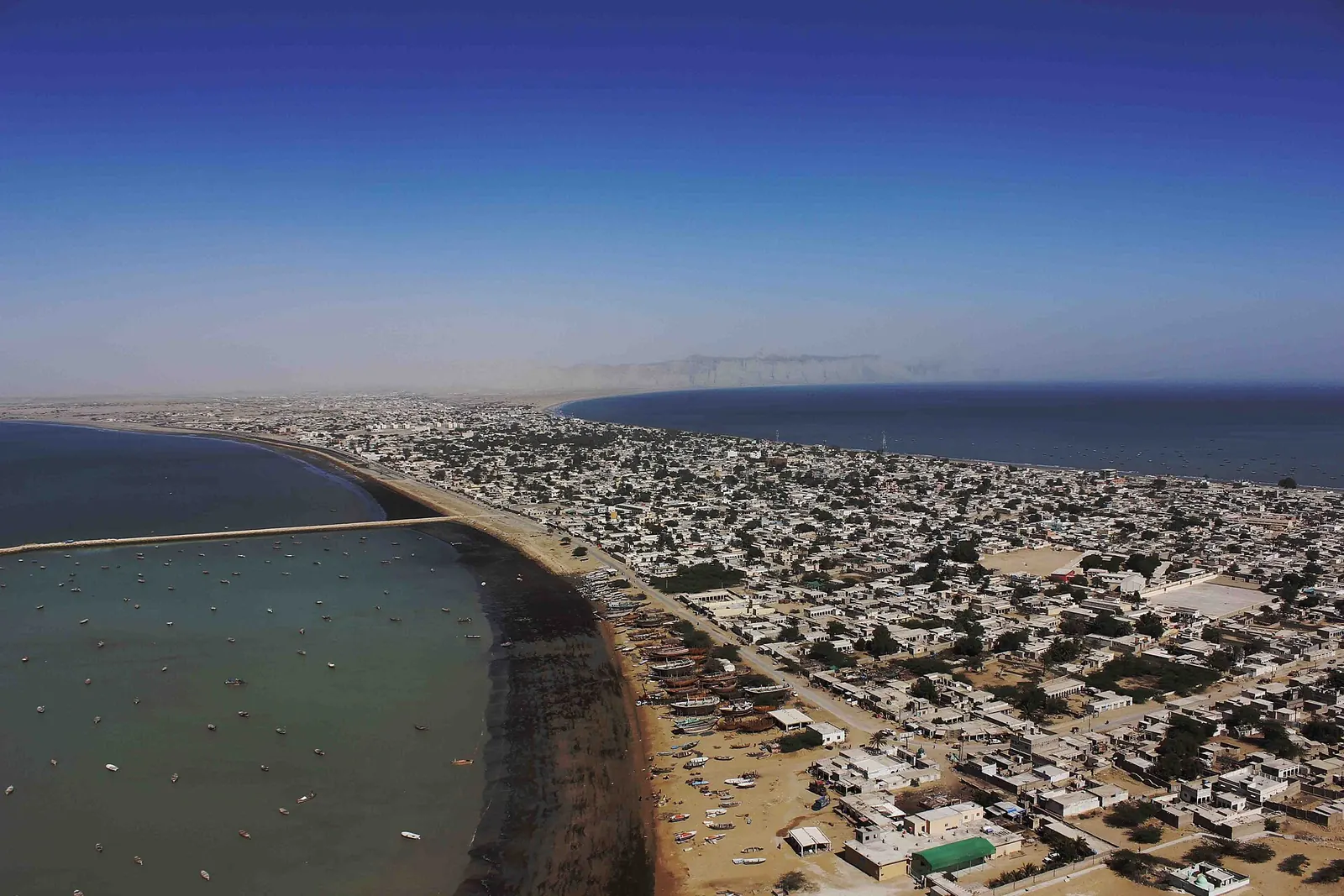
On 23 February 2024 Pakistan's Cabinet Committee on Energy approved construction of the first phase of the Iran-Pakistan gas pipeline on Pakistani soil: an 80 kilometre segment running from the Iranian border to Gwadar. The work is to be executed by Inter State Gas Systems, the state company responsible for cross-border gas projects, and funded through the Gas Infrastructure Development Cess, the levy collected from gas consumers for precisely this kind of project. At the same meeting the cabinet deferred a plan to seek a waiver from United States sanctions, citing the geopolitical situation. Officials have argued that the initial work lies entirely within Pakistan and is not connected to Iran.
The decision revives a project that has been stalled for more than a decade. The gas sales and purchase agreement was signed in 2009 and envisaged Iran supplying 750 million cubic feet a day to Pakistan. Iran says it has completed most of the pipeline on its side. Pakistan has not built its section. Our view is that the 80 kilometre segment is not really about receiving Iranian gas. It is about managing Pakistan's legal exposure under the 2009 agreement, which includes penalty provisions for failing to build and take gas, while keeping the project alive at the lowest possible cost and risk. That is a defensible tactic, but it is not an energy strategy, and it does not resolve the underlying problem.
The penalty problem
The agreement obliges each side to complete its section and begin deliveries by agreed dates. Pakistan has missed those dates by years. Iran has repeatedly pressed Pakistan to complete the pipeline and has warned of arbitration. Pakistani media have reported that Pakistan's potential penalty exposure under the agreement could run into billions of dollars, with figures as high as around USD 18 billion cited. Whatever the precise amount, a claim of that size against a country in an IMF programme with thin foreign exchange reserves would be very damaging.
Building a short segment from the border to Gwadar allows Pakistan to show that it is taking steps to fulfil its obligations. That could strengthen its position in any dispute and buy time for negotiation. The use of cess revenue means the cost does not fall directly on the federal budget, which matters under the IMF programme. And building only within Pakistani territory gives Islamabad a legal argument that it has not engaged in a transaction with Iran that would trigger US sanctions.
The sanctions problem
US sanctions on Iran's energy sector are the main reason the project has stalled. Any company, bank or insurer involved in buying Iranian gas risks losing access to the US financial system. For Pakistan, which depends on IMF and multilateral support in which the United States has a strong say, and on US markets for exports, the risk is serious. Business Recorder reported that US legal counsel had warned that proceeding could expose the company to sanctions. Pakistan's decision to defer a waiver request suggests it does not expect one to be granted.
That leaves the project in a strange position. Pakistan can build the 80 kilometre segment, but it cannot connect it to Iran or import gas through it without accepting sanctions risk. Even if the pipeline were completed, payment for Iranian gas would be extremely difficult to arrange through normal banking channels.
Does Pakistan need the gas?
There is a real case that Pakistan needs more gas. Domestic production has been falling for years, and Pakistan has relied increasingly on imported LNG since 2015, mainly from Qatar. LNG is expensive and its price is volatile. Pipeline gas from Iran, priced under the 2009 formula, could in principle be cheaper and more reliable than spot LNG, and it would arrive overland rather than by sea.
But the demand picture is changing. Pakistan's power sector has been using less gas than planned, partly because of high tariffs that have suppressed grid demand and partly because of the rapid growth of rooftop solar. Pakistan has at times struggled to absorb the LNG it has already contracted, diverting cargoes or reducing offtake. The country's energy problem is less a shortage of gas than an inability to pay for the energy it already buys and to recover costs from consumers. Additional long-term gas commitments would add to that burden unless demand recovers.
There is also a geographic point. Gwadar is far from Pakistan's main gas demand centres in Punjab and Sindh. The 80 kilometre segment connects to nothing of significance. To deliver gas to consumers, Pakistan would need hundreds of kilometres of additional pipeline, which the cess cannot fund quickly and which would face the same sanctions questions.
What a strategy would look like
A real strategy would start with Pakistan's demand. It would ask how much gas the economy needs over the next two decades, given the growth of solar and other renewables, and how much it can afford. It would compare Iranian pipeline gas with LNG, domestic exploration and demand reduction on cost and security. And it would engage with Washington directly on whether any arrangement for Iranian gas could be made compatible with sanctions, rather than relying on legal technicalities.
At the same time, Pakistan should negotiate with Iran on the penalty provisions. Both countries have an interest in avoiding a damaging arbitration. Iran wants a market for its gas and leverage in the region. Pakistan wants to avoid a large claim. A negotiated extension of deadlines, or a restructuring of the agreement, would be better for both than a legal battle.
Our assessment
The 80 kilometre segment is a clever holding move. It demonstrates good faith to Iran, limits the fiscal cost, and arguably stays within the bounds of sanctions law. But it does not deliver gas, and it does not resolve the fundamental conflict between Pakistan's commitments to Iran and its dependence on Western financial support. Pakistan should use the time it has bought to negotiate seriously with both Tehran and Washington, and to decide, based on its own demand outlook, whether it actually wants Iranian gas. Building pipeline to nowhere is not a substitute for that decision.