
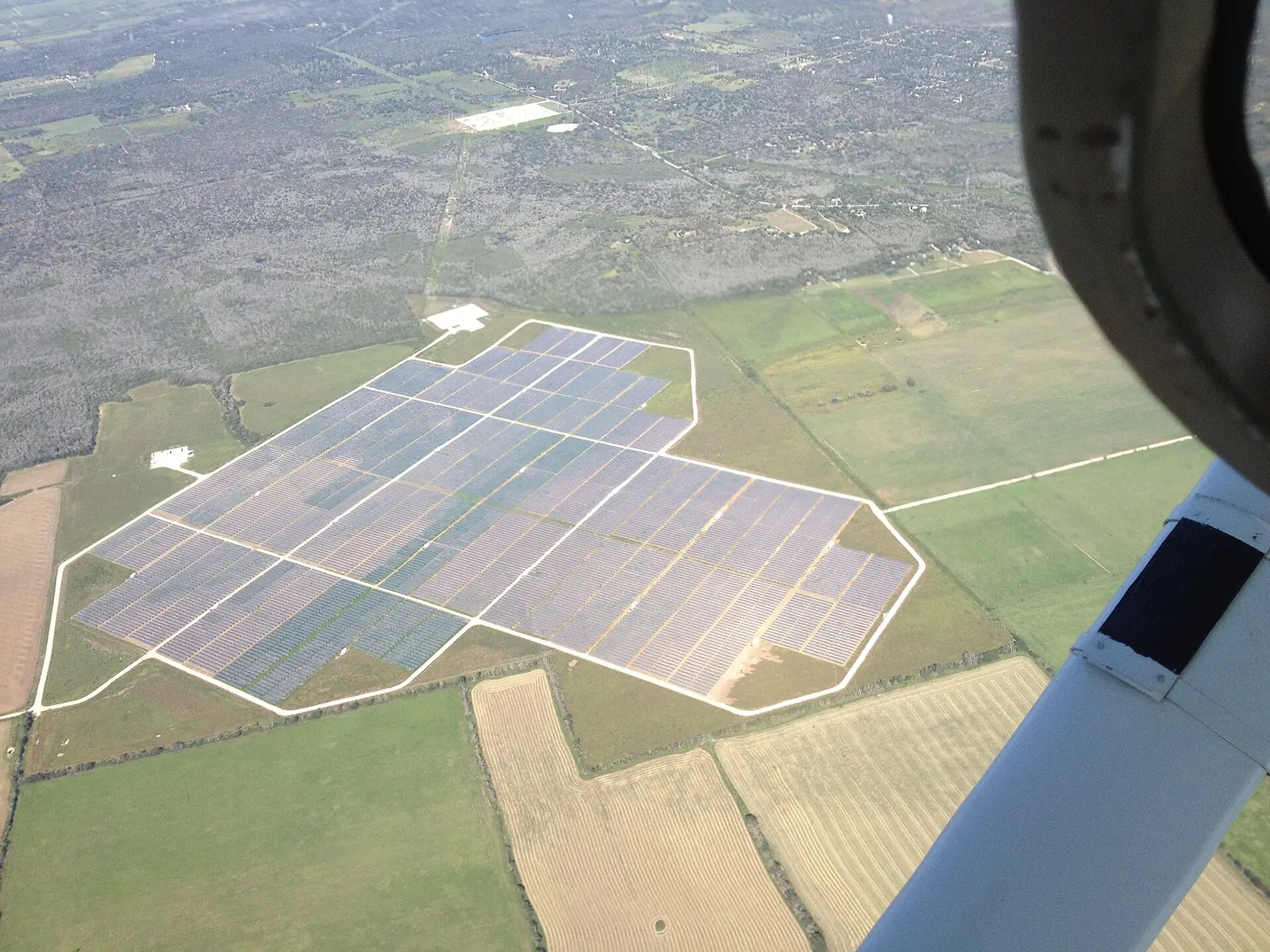
On April 8, the moon passed across the sun along a path from Texas to Maine, and for a few minutes the United States ran a controlled experiment on its solar fleet. The Energy Information Administration had estimated beforehand that the eclipse would fully block sunlight to 6.5 gigawatts of utility-scale solar in the path of totality and partly block it to 84.8 GW across a much wider area, close to the time of peak solar output. In the event, the Electric Reliability Council of Texas lost about 8.9 GW of solar capacity. Gas plants replaced roughly 80% of the lost output, and the lights stayed on.
It would be easy to call the episode a success and move on. It was a success. But the reasons it went smoothly are specific, and they say more about what ERCOT will need in the next few years than the result does.
A known event with a known shape
The defining feature of an eclipse is that it is perfectly predictable. Grid operators knew the date, the minute and the expected depth of the solar loss in each location. Several published plans in advance. Generators could be scheduled, reserves positioned and imports arranged hours or days ahead.
The EIA's account of the Texas response is straightforward. ERCOT five-minute data show solar generation falling from 12:20 p.m. central time, with the eclipse ending in the state at 3:07 p.m. Over the broader window recorded in the EIA's Hourly Electric Grid Monitor, natural gas plants generated an additional 6.2 GW. Solar is often ERCOT's second-largest source at that time of day, behind gas, so the drop was substantial in proportion to the system.
What made it manageable was not only the size of the gas fleet but the fact that it had been told exactly when to be ready.
The everyday version of the eclipse
The more demanding test happens every evening. As the sun sets, solar output in Texas falls from its midday level to zero over a few hours. That drop is also predictable in its timing, but its depth varies with cloud cover, and it coincides with rising household demand as people return home and, in summer, keep air conditioning running into the night.
The EIA's analysis of ERCOT's changing supply shows how quickly this evening ramp is growing. Hourly average solar generation in winter rose from 1.9 gigawatthours in 2022 to 2023 to 3.3 GWh in 2023 to 2024. In summer it rose from 3.6 GWh in 2022 to 5.1 GWh in 2023. Wind, by contrast, has been flat to slightly down: average hourly winter wind generation slipped from 13.8 GWh to 13.2 GWh over the same period, as new turbine construction slowed and solar, often co-located with batteries, took over as the main source of new capacity.
Gas plants in Texas already do what they did on April 8, but daily. The EIA describes a pattern similar to California's duck curve, with gas output often highest in the evening between about 6 p.m. and 9 p.m. as solar fades and demand stays high. The eclipse compressed that ramp into a midday window. Sunset delivers it every day of the year.
Why the evening is harder than the eclipse
There are three differences between the eclipse and the nightly ramp that matter for planning.
First, timing. The eclipse struck in early afternoon in spring, when demand in Texas is moderate. The evening ramp in August coincides with the system peak. Any shortfall then has much less margin to absorb it.
Second, duration. The eclipse loss lasted under three hours and solar returned. At sunset, solar is gone until the next morning. Resources that can cover a short dip, such as batteries with a few hours of storage, must be sized and scheduled with the whole evening in mind.
Third, uncertainty. On April 8, operators knew how much solar would disappear and when. On an ordinary day, the evening ramp interacts with uncertain wind output, forced outages at thermal plants, and demand forecasts that can be wrong by several gigawatts in extreme heat. The eclipse removed most of that uncertainty.
Batteries are the newer part of the answer
ERCOT has added battery storage rapidly, and its role in the evening is growing. Batteries charge at midday when solar is abundant and prices are low, then discharge into the ramp. That is precisely the service an eclipse also calls for, and as the fleet grows, a larger share of future solar dips will be filled by storage rather than gas.
The April 8 data show gas did most of the work this time. That reflects the fleet as it stood in spring 2024. It is not a statement about the future mix. For ERCOT, the useful exercise would be to look at how batteries dispatched during the eclipse, how quickly they responded, and whether price signals during the event rewarded them in the way market design intends.
There is a market design point here as well. In an energy-only market such as ERCOT's, resources are paid for being available in scarce hours through prices, not through a separate capacity payment. A predictable event like the eclipse tends to produce modest price movements, because supply has been arranged in advance. Unpredictable evening shortfalls are where scarcity pricing does its work. If batteries and flexible plants are to be built at the pace solar demands, the revenue they earn in those harder hours has to be large and reliable enough to finance them.
The planning lesson
The eclipse confirmed that ERCOT's thermal fleet can absorb a fast, deep, known loss of solar. That is good news. The planning lesson is that most of the solar risk the grid faces is not like an eclipse. It is a daily ramp that grows with every new solar farm, and an occasional bad day when clouds, low wind and high demand coincide without warning.
The resources that matter most for that risk are those available in the evening hours on short notice: flexible gas plants, batteries with enough duration to cover the ramp, demand response, and imports, of which ERCOT has very few because of its limited interconnection with neighboring grids. The eclipse showed that the system has enough of the first category today. The more important question is whether the rest are being built as fast as the solar.