
In 2023, two of the oldest pillars of US renewable power had a bad year at the same time. Wind generation declined for the first time since the mid-1990s, even though 6.2 gigawatts of new turbines were added. Hydropower in the West fell to its lowest level since at least 2001. Neither event was a crisis. Both were reminders that renewable output is a weather variable, and that weather has years, not just days.
The Energy Information Administration expects hydropower to recover by 6% in 2024. Wind may bounce back too. But the more useful lesson from 2023 is about how planners and investors think about annual output. Most long-term plans and many contracts treat a wind or hydro fleet as delivering a fairly stable amount of energy each year. The 2023 data show how far a single year can deviate from that expectation, and how expensive the deviation can be when the fleet is large.
The wind shortfall
US wind generation in 2023 totaled 425,235 gigawatthours, 2.1% less than the 434,297 GWh of 2022. Capacity, meanwhile, had grown from 47.0 GW in 2010 to 147.5 GW at the end of 2023. Until 2023, generation had risen in step with capacity. Last year it did not.
The reason was lower utilization. The fleet's average capacity factor fell to an eight-year low of 33.5%, from 35.9% in 2022. That 2.4-point drop is the whole story. More turbines spun less often, because wind speeds were weaker over much of the country.
A 2.1% fall in total output sounds modest. In practice, for a fleet of nearly 150 GW, it meant roughly 9,000 GWh of electricity that planners had reasonably expected and did not get. That energy had to come from somewhere, and in most of the country the marginal source was natural gas.
The hydro shortfall
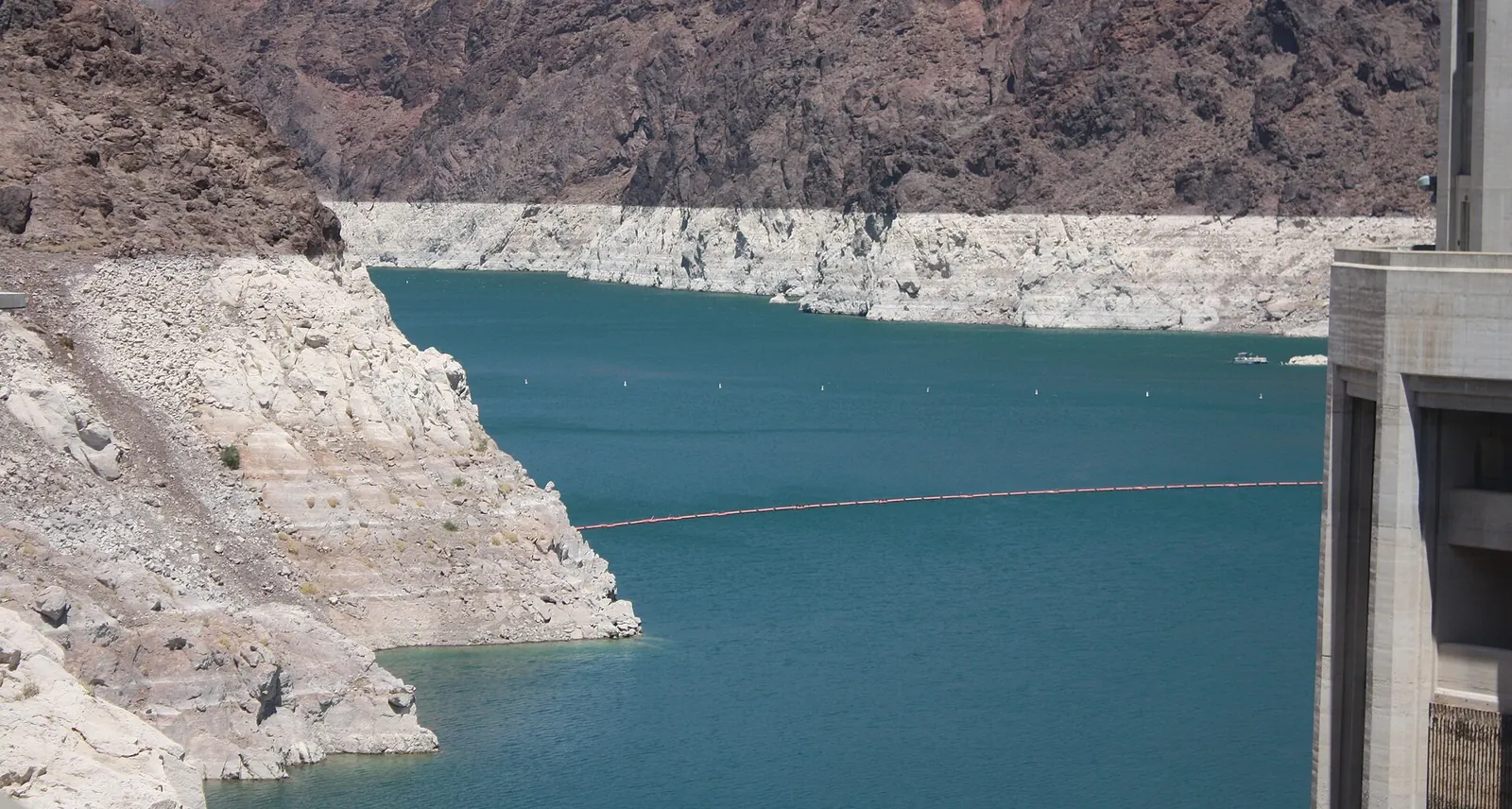
In the West, the problem was water. Hydropower generation in the 2022 to 2023 water year, which runs from October to September, was the lowest since at least 2001. Western output fell 11% from the previous water year, to 141.6 million megawatthours.
Western hydropower depends on snowpack, which accumulates in winter at high elevations and melts in spring and early summer. A poor snow year shows up months later in reservoir levels and turbine output. The Pacific Northwest, where hydro is the dominant source, is especially exposed. Earlier EIA analysis of wholesale prices showed the Northwest Mid-Columbia hub was the one major market where prices rose in many months of 2023, mostly because of drought, even as gas prices fell everywhere.
For 2024, the EIA expects US hydropower to rise 6% to 250 billion kilowatthours in the power sector, with increases in nearly every region and notable gains in the Southeast and the Northwest. That recovery depends, as always, on how the current water year turns out.
The common thread: correlated weather
Low wind and low water in the same year are not necessarily linked by a single cause. Wind patterns and precipitation are driven by different atmospheric processes, and the regions most affected differ. But they share an important property for planners: each is correlated across a large area. When wind is weak over the Great Plains, it tends to be weak over many plants at once. When snowpack is poor in the Cascades, it is poor for every dam on the river.
That correlation is what turns weather variability into a system risk. A single turbine having a bad year does not matter. A whole region having a bad year does. As wind and solar grow to larger shares of the generation mix, the question of how output varies from year to year becomes as important as the question of how it varies from hour to hour.
Why averages mislead
Long-term contracts for wind power are typically priced on expected annual output, often expressed as a P50 estimate, the level that output is expected to exceed half the time. Utility resource plans use similar averages. That is reasonable for a single project, where good and bad years balance out over the contract's life. It is less reasonable for a system that must meet demand in every year, including the bad ones.
A planning approach that treats renewable output as an average will tend to underestimate the need for backup energy in low years. In a system where gas is cheap and abundant, as in 2023, that cost is manageable. Gas filled the gap, and prices stayed low. In a system where gas is expensive or constrained, the same shortfall could be costly, and in a system with very little dispatchable backup, it could become a reliability problem.
Policy implications
Three practical changes would make US planning more robust to years like 2023.
The first is to plan for low-output years explicitly. Resource adequacy studies increasingly model hourly weather across many historical years. They should give similar weight to multi-month and annual shortfalls, especially for regions with large hydro or wind fleets.
The second is to value diversity across technologies and regions. Wind and solar output in a given year are not strongly linked, and wind in different regions can offset each other. Transmission that connects regions with different weather patterns reduces the cost of a bad year in any one place.
The third is to be honest about the role of gas as an energy reserve. In 2023, gas generation absorbed both the wind and hydro shortfalls without much strain. That is a real service, and as the gas fleet changes over the coming decades, something else will need to provide it, whether long-duration storage, firm low-carbon generation, or stronger interregional transmission.
Reading the 2024 recovery
If hydro rises 6% this year and wind capacity factors return to more typical levels, 2023 may look like a one-off. It would be a mistake to treat it that way. The variability of renewable output across years is not a defect that better forecasting will remove. It is a property of weather-driven resources that planning has to accommodate. The bigger the renewable fleet, the more it matters.