
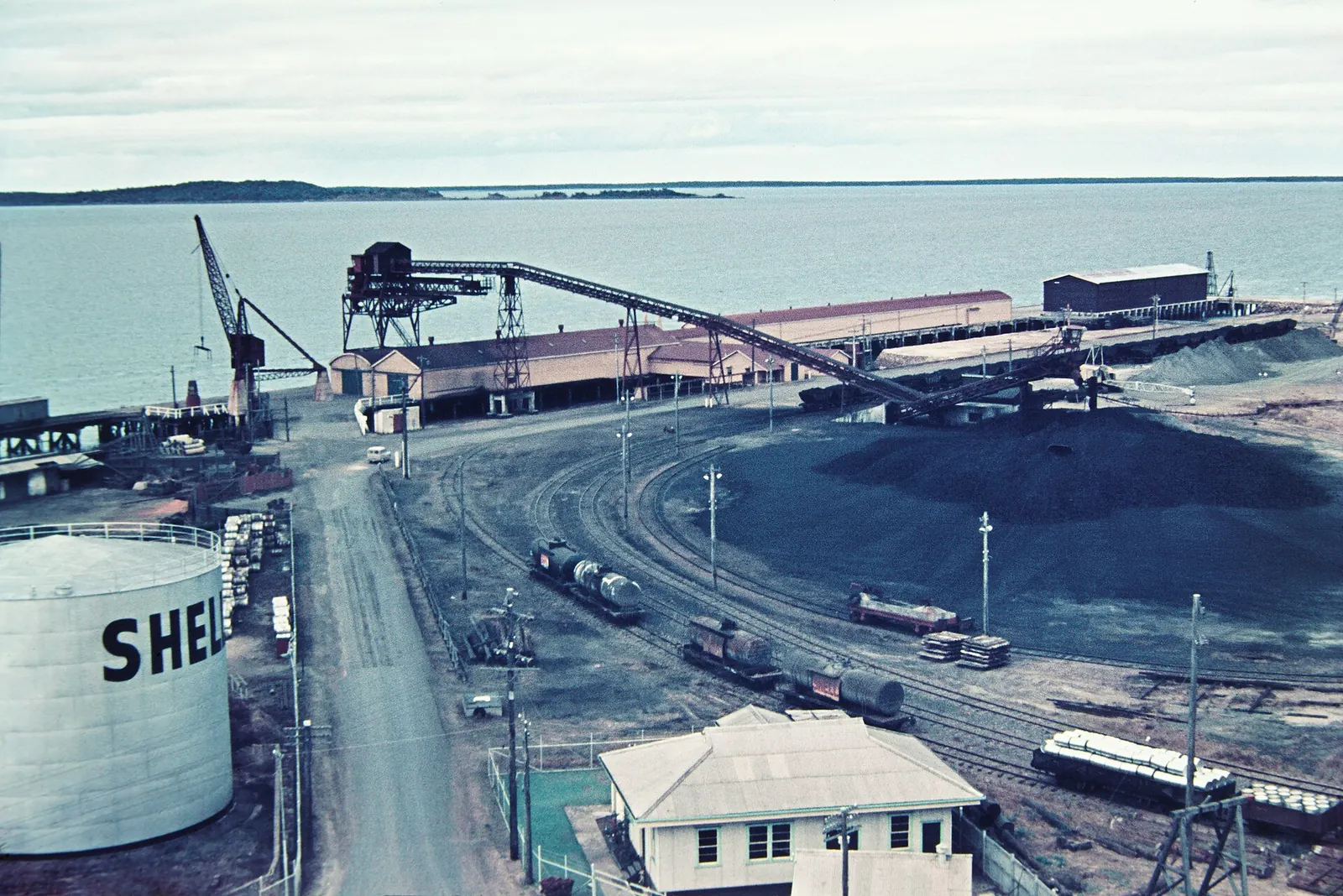
Coal is unfashionable in climate communiques and still central in seaborne energy trade. That tension is the starting point for any honest mid-2024 assessment. The IEA's Coal 2025 trade chapter would later show that international coal trade grew 3% in 2024 to a record 1,544 million tonnes, with thermal coal at 1,176 million tonnes and metallurgical coal at 368 million tonnes. Seaborne trade exceeded 90% of the total. Asia-Pacific took 85% of global coal imports. China imported 548 million tonnes, an unprecedented national figure, followed by India at 237 million tonnes and Japan at 162 million tonnes. Indonesia exported 555 million tonnes, Australia 363 million, Russia 198 million. Those are the bones of the market.
In July 2024 the full-year record was still forming, but the directional story was visible in Chinese import strength, Indian procurement, and Indonesian export availability. Prices had softened from crisis peaks, which supported import volumes even as European structural decline continued. The EU's coal import trajectory had been downward; the IEA would later expect EU imports around 70 million tonnes in 2025, pausing rather than celebrating the decline. The centre of gravity is Asia, and it is not polite to pretend otherwise.
Thermal coal and metallurgical coal must be kept analytically separate. Thermal coal competes with gas, renewables, nuclear and demand management in power systems. Met coal is tied to blast-furnace steelmaking, where substitution by hydrogen-based direct reduction is slower than speeches imply. The IEA noted that met coal's medium-term trade outlook is more resilient than thermal's, partly because low-carbon steel technologies are deploying more slowly than earlier assumed. A global article that lumps "coal" as one declining slab will mislead steel and power readers alike.
Indonesia's role as Asia's swing thermal supplier is structural. When China and India need tonnes, Indonesian exporters respond; when prices crush margins, volumes can fall fast. Australia straddles high-quality thermal and met markets and is exposed to Chinese policy swings and to Japanese and Korean term demand. Russian coal, redirected under sanctions pressure, has leaned into Asian outlets; the IEA reported 75% of Russian exports went to Asia in 2024. Trade routes, payment channels and freight are part of the commodity, not externalities.
Why did Chinese imports hit records even as domestic production capacity is vast? The short answer is optimisation under constraints: domestic mine safety checks, logistics bottlenecks inland, quality preferences, coastal power-plant economics, and inventory strategy. High imports can coexist with high domestic output when coastal generators prefer seaborne supply and when stock policies encourage buying into soft prices. Analysts who treat Chinese imports as a pure deficit signal will keep being wrong.
For the energy transition, seaborne coal trade is both a climate problem and a development reality. Emerging Asia still uses coal for reliability when renewables and grids are catching up. The policy task is not to narrate coal out of existence in 2024, but to bend the power-sector curve with credible alternatives while recognising that met coal will linger in steel. Making the transition add up means counting the tonnes that still move and the investment needed to replace their energy services.
Freight markets couple coal to oil and gas shipping through vessel availability, though vessel classes differ. Red Sea disruption affects containerised goods and some energy flows more directly than Capesize coal runs from Indonesia to China, which are shorter and differently routed. Still, global dry-bulk sentiment and bunker costs transmit shocks. Energy security desks should keep dry bulk on the same monitoring wall as tankers.
Looking toward 2025, the IEA's later expectation of a 5% trade decline to 1,468 million tonnes, driven largely by Chinese import retreat toward 489 million tonnes amid high stocks and soft demand, shows how quickly a record year can reverse. Indonesia's exports were expected to fall at least 9% to 505 million tonnes in that outlook. July 2024 readers should hold both ideas: the market can print records, and it can shrink when China steps back. Position management that assumes perpetual Chinese import growth is how trading books get hurt.
Environmental regulation, carbon pricing in Europe, and methane rules will keep pressure on the Atlantic coal system. Asia's pace will be set by domestic politics of power tariffs, air quality, and industrial policy. Global modelers who apply European phase-out slopes to Asia will overstate the near-term decline in trade. Conversely, those who ignore China's long-term intent to peak coal use will understate the later bend. Use regional specificity.
Engineering readers should also watch port and rail bottlenecks: Richards Bay, Newcastle, Kalimantan barging, Chinese discharge ports. Nameplate export capacity means little when rail or weather constrains throughput. Physical logistics remain the binding constraint more often than speeches admit.
The measurement problem deserves candour. Public debate often demands a single number when the honest answer is a range conditioned on weather, compliance, and policy. Analysts who refuse to give false precision are not being evasive; they are being professional. Where the evidence is quantitative, the figures here are drawn from named institutional sources; where it is qualitative, the analysis stays qualitative. Work of this kind is only useful to engineers and finance ministries if that line is held.
Institutional process also matters. Ministerial meetings, regulator reports, and statistical releases arrive on calendars that do not match the news cycle. A decision delayed by a quarter can matter more than a speech that trends for a day. Readers should track the scheduled decision points and the secondary-source compliance tables as carefully as they track spot prices. Spot prices are the symptom. The schedules and the physical balances are the mechanism.
For firms, the practical response is layered: contractual flexibility where it can be bought at reasonable cost; operational buffers in storage and logistics; and scenario planning that includes corridor disruption and producer-policy shifts as base cases rather than footnotes. For governments, the response is transparent contingency planning and honest communication about bill impacts. Pretending that global energy markets can be insulated by rhetoric alone is not strategy.
A final caution on data: report tonnes as thermal or met, name the country, and cite the year. Vague claims about 'coal demand rising' without those markers are not analysis.
None of this analysis requires a villain. Markets clear under constraints. The constraints in 2024 through 2026 include geopolitics at sea, producer coordination onshore, demand substitution in transport, and the slow build-out of critical mineral supply chains for the equipment that substitutes. Treating those constraints as a single "energy crisis" slogan collapses distinctions that determine whether a policy works. Precision is not pedantry. It is how the transition is made to add up.