
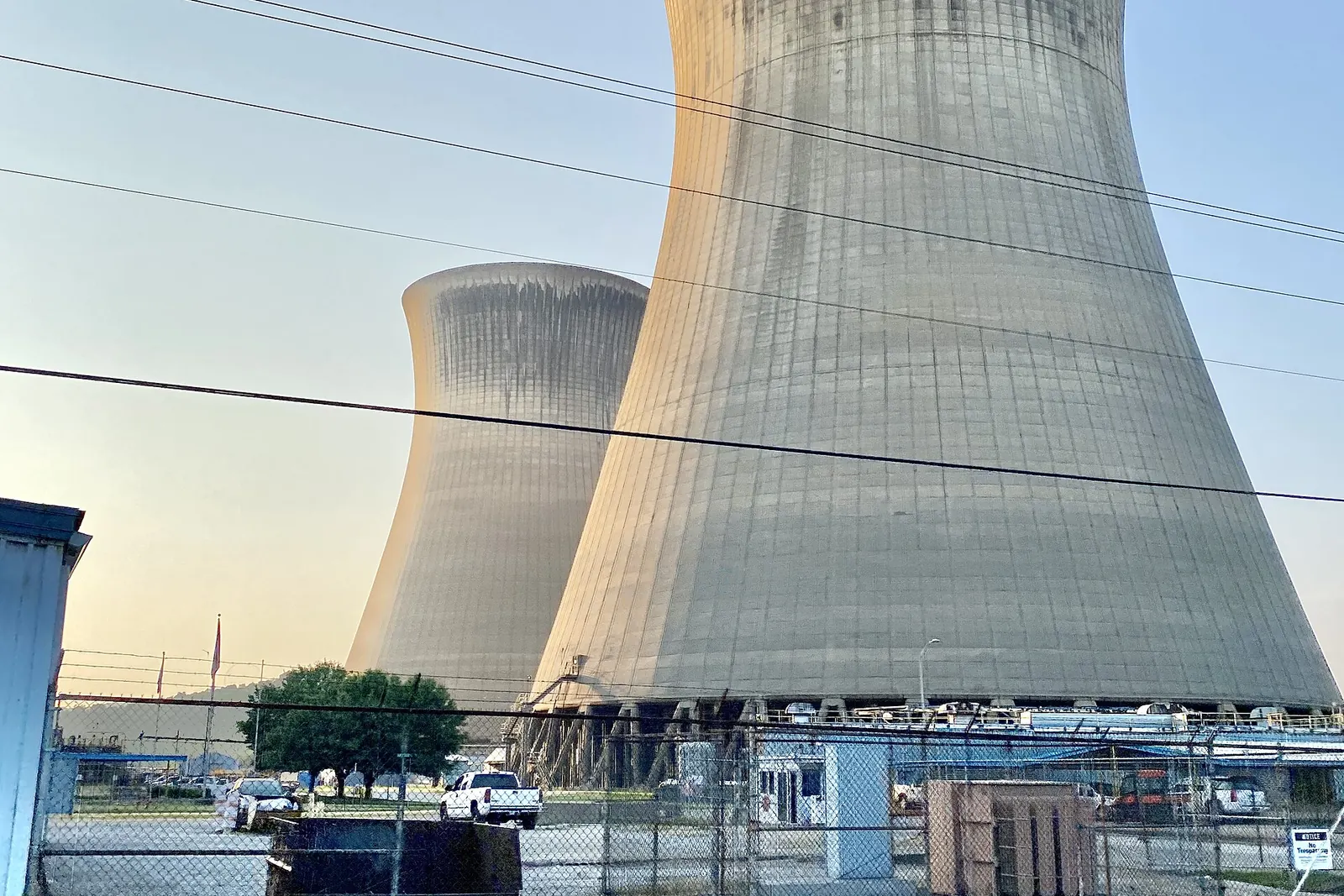
Coal units in the United States rarely retire only because a speech demanded it. They retire when competing gas combined-cycle energy, rising compliance costs, and poor capacity factors make continued operation a losing proposition. EIA's 20 February 2024 survey showed operators planning to retire 5.2 gigawatts of capacity in 2024, a 62 percent decrease from 13.5 gigawatts retired the prior year and the least since 2008. Coal and natural gas jointly accounted for 91 percent of planned exits. Planned coal retirements were 2.3 gigawatts, or 1.3 percent of the coal fleet at the end of 2023, after 22.3 gigawatts of coal capacity retired over the prior two years. The capacity-weighted average age of the retiring coal units was almost 54 years, about ten years older than the operating coal fleet's weighted average. EIA already flagged that coal retirements were expected to rise again in 2025 plans, then projected at 10.9 gigawatts.
Plant markers in the 2024 plan
The largest coal retirements scheduled for 2024 were Seminole Unit 1 at 626.0 megawatts in Florida and Homer City Unit 1 at 626.1 megawatts in Pennsylvania. Gas retirements of 2.4 gigawatts included Mystic Generating Station at 1,413 megawatts in Massachusetts and 754.0 megawatts of simple-cycle turbines at TVA Johnsonville. Those details matter because local transmission constraints do not care about national averages.
Replacement logic
Some owners replace coal with gas on related sites, preserving transmission connectivity and staffing pathways while cutting emissions intensity and improving heat rates. Others exit without in-kind firm replacement, relying on market purchases and renewable additions. The second path is viable only when interconnection and accredited capacity keep pace. FERC's Order No. 2023 cluster reforms exist because queues had swollen beyond 2,000 gigawatts at the end of 2022 with waits of up to five years, delaying that pace. EIA noted 62.8 gigawatts of planned additions for 2024, but additions are not matched one-for-one by technology to retiring steam in a winter peak study.
Reliability caution
A coal-to-gas switch that arrives on time is a reliability bridge. A coal exit that arrives before the gas block, storage, or transmission upgrade is a reserve-margin hole. Winter fuel assurance for gas units must be designed, not assumed, especially where LNG feedgas competes for the same basins under the then-ongoing non-FTA export-authorisation pause.
Policy reading for mid-2024
Analysts should track plant-level filings, not only national gigawatt totals. Where no replacement is named, demand evidence of capacity procurement. Early data-centre load growth visible in utility planning debates raises the cost of bare exits. Making the transition add up means counting replacement firm megawatts with the same seriousness as retiring ones.
The practical discipline is unchanged across fuel types and market constructs. Read the primary docket or statistical release before arguing about national destiny. Separate nameplate megawatts from accredited capacity, and contracted offtake from commissioned trains. Map interconnection and transmission lead times onto customer energisation promises rather than the other way round. Treat winter and summer extreme cases as design conditions. When federal policy shifts, update the slope of the forecast without rewriting physical laws. When state commissions push back on cost allocation, treat that push-back as part of the build path rather than as noise. United States energy infrastructure is financed, permitted and operated by people who must reconcile those constraints daily. Analysis that ignores them will not survive first contact with a peak day. Regional operators will continue to publish winter assessments, summer reliability outlooks and interconnection status reports. Those documents, read together with EIA inventories and FERC orders, give a clearer picture than any single speech. Investors should price execution risk honestly. Policymakers should resist the urge to treat one statute or one survey table as the whole system. The grid is a machine. Machines care about margins, not metaphors.