
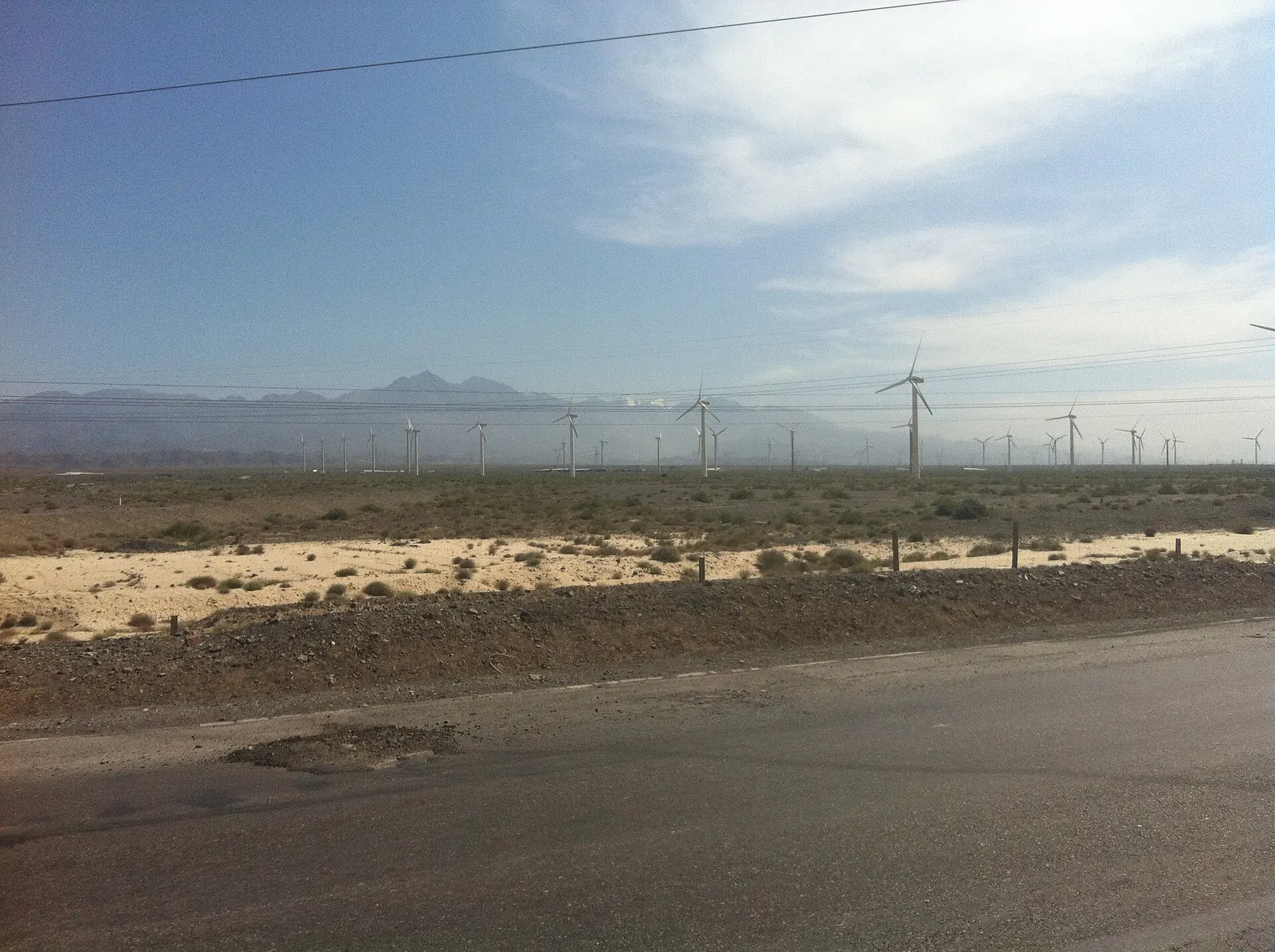
Two data releases this summer marked a turn in China's power sector. On 23 July the China Electricity Council reported that grid-connected wind and solar capacity had reached 1,180 GW at the end of June, 38.4 per cent of the national fleet, against 1,170 GW of coal. It was the first time new energy capacity had exceeded coal. Then the National Energy Administration's July statistics showed combined wind and solar capacity of about 1,210 GW, roughly 740 GW of solar and 470 GW of wind. That figure crosses the 1,200 GW goal China set for 2030 in its 2021 climate pledge, six years early.
Capacity milestones attract attention because they are easy to state. They are also easy to misread. Coal still generates far more electricity than wind and solar combined, because a coal plant can run most hours of the year and a solar panel cannot. The real significance of the crossover lies elsewhere: it shifts the central problem of Chinese power policy from building clean capacity to operating a system in which variable sources are the largest block of installed plant.
The numbers behind the crossover
The NEA's mid-year briefing on 31 July gives the detail. In the first half of 2024 China added 134 GW of renewable capacity, up 24 per cent year on year and 88 per cent of all new capacity. Solar contributed 102 GW, wind 25.84 GW, hydropower 4.99 GW and biomass 1.16 GW. Total renewable capacity reached 1,653 GW, about 53.8 per cent of the national fleet.
Generation tells a more measured story. Renewables produced 1,560 TWh in the first half, about 35.1 per cent of total generation. Wind and solar together produced 900.7 TWh, roughly 20 per cent of the total. The NEA noted, with some pride, that this exceeded the electricity used by the entire tertiary sector and by all urban and rural households over the same period.
So wind and solar hold about 38 per cent of capacity and produce about 20 per cent of electricity. Coal holds a similar share of capacity and produces most of the rest of thermal generation. The gap between capacity share and energy share is the clearest measure of the integration challenge.
July: the 2030 target falls
The July additions were 21.05 GW of solar, down slightly from June, bringing the year-to-date solar total to 123.53 GW. Wind additions for the first seven months reached 29.91 GW. Solar capacity was up 49.8 per cent year on year and wind 19.8 per cent. Total generating capacity was about 3,100 GW.
When China pledged 1,200 GW of wind and solar by 2030, its fleet stood at around 414 GW. The target was criticised at the time as too modest, and it has now proved to be so by a wide margin. TaiyangNews notes that the World Bank has called for the target to be raised to 1,700 GW. A target that is met six years early is no longer a constraint. It is a historical marker. The relevant question is what replaces it.
Why capacity share matters for dispatch
When coal dominated capacity, Chinese grid operators planned the system around coal. Provincial governments allocated annual generation hours to coal plants, prices were largely regulated, and renewable output was absorbed around a predictable coal base. That model works when variable sources are a margin. It works badly when they are the largest block.
At 38 per cent of capacity, wind and solar output in some hours will exceed demand in some provinces. Coal plants will need to ramp down further and more often, and in some hours switch off. That requires different contracts, different prices and different operating habits. A coal unit with a fixed annual hours allocation has no incentive to back down at midday. A coal unit paid for availability, and paid market prices for energy, does.
China's coal capacity payment, in force since January 2024, is a step in that direction. It pays coal plants to be available rather than to generate. Combined with spot markets, it can turn the coal fleet from an energy supplier into a balancing resource. The crossover makes that transition urgent rather than theoretical.
Investment is following the logic
The CEC figures show power investment by key companies of 598.1 billion yuan in the first half, up 10.6 per cent. Generation investment rose only 2.5 per cent to 344.1 billion yuan, with non-fossil sources taking 85 per cent of that. The implication is that grid spending is now growing much faster than generation spending, which reverses the pattern of 2023, when generation investment surged and grid investment lagged. That is the right direction. A system with this much variable capacity needs transmission, distribution upgrades and storage more than it needs another year of record panel installations.
The case against complacency
The milestone is real, but three caveats apply. First, coal capacity is still growing. The 1,170 GW figure is not a ceiling, and new coal plants approved in 2022 and 2023 continue to come online. Second, capacity statistics are national. Integration problems are provincial, and some provinces are far more saturated than others. Third, curtailment data lag deployment. If grid build and market reform fall behind, the next sign will be rising curtailment in the north-west, not a fall in capacity growth.
Our position
The overtaking of coal by wind and solar in capacity terms is a genuine milestone, and the early achievement of the 2030 target confirms that China's clean energy build is running far ahead of its policy commitments. But energy share, not capacity share, determines emissions, and on that measure wind and solar remain at around a fifth of generation.
The next phase of China's transition will be decided by operating rules. Coal must become a flexible backup that is paid to be available. Grid investment must keep running ahead of generation investment. And the 2030 target that has just been met should be replaced with one that reflects what the industry is actually building. Each of those is harder than installing panels, which is why the crossover is better read as the end of the easy part than as the end of the problem.