
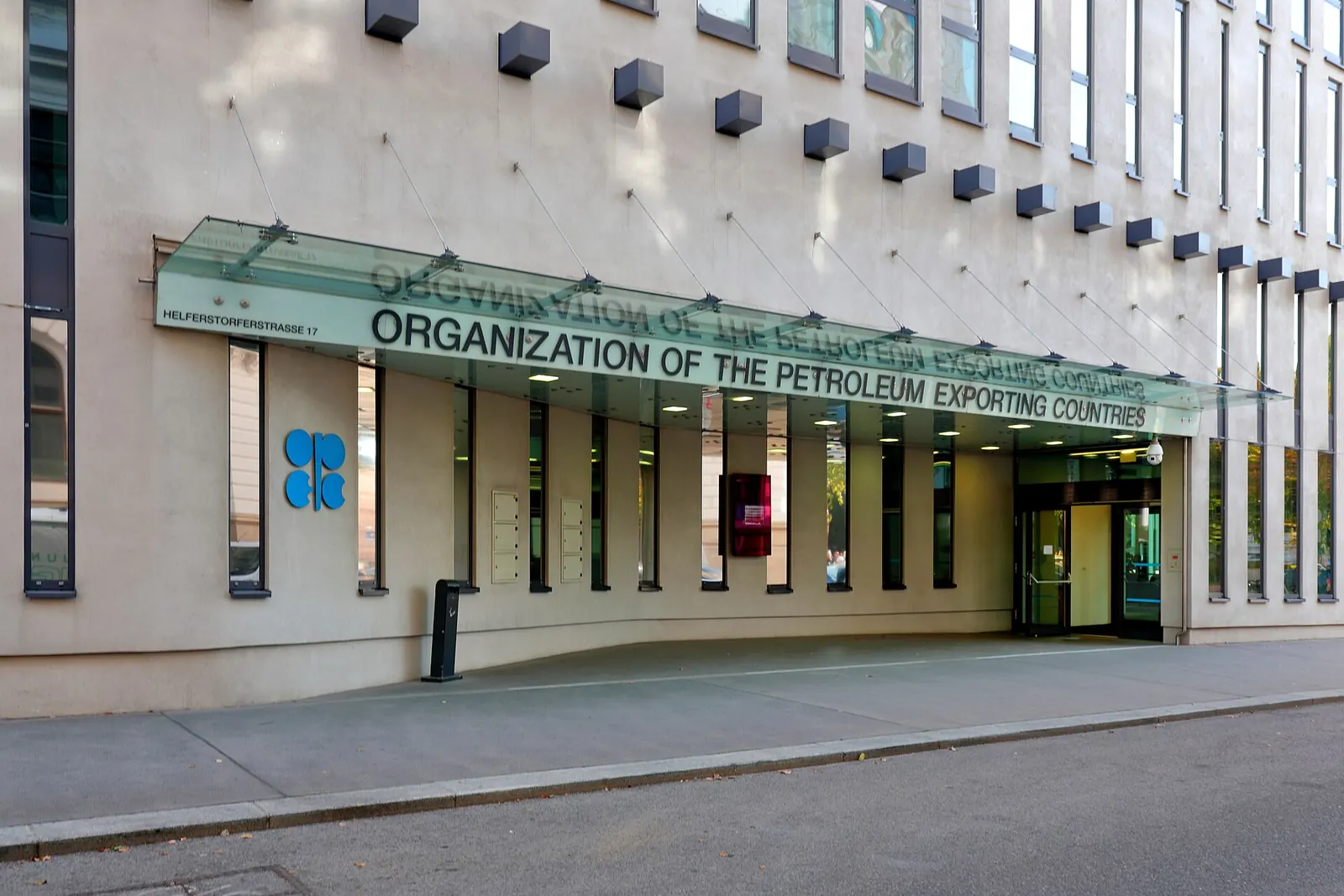
On 5 September 2024 eight OPEC+ producers chose delay over delivery. The countries that had announced additional voluntary cuts in April and November 2023, namely Saudi Arabia, Russia, Iraq, the United Arab Emirates, Kuwait, Kazakhstan, Algeria and Oman, held a virtual meeting and extended those additional voluntary production cuts of 2.2 million barrels per day for two months until the end of November 2024. The OPEC statement is unambiguous on the next step: after that extension, the cuts are to be gradually phased out on a monthly basis starting 1 December 2024, according to an attached schedule, with the flexibility to pause or reverse the adjustments as necessary. The National, reporting the same day, noted that the eight will pause scheduled increases of 180,000 barrels per day that had been lined up for October and November. The June 2024 architecture of deep OPEC+ restraint therefore remains intact into late autumn; only the calendar of the first voluntary unwind has moved.
The market context explains the caution. The National recorded Brent trading at 72.51 dollars per barrel and West Texas Intermediate at 68.93 dollars per barrel on the evening of the announcement in UAE time, after crude prices had hit their lowest in nine months earlier in the week. CNBC, on 4 September, described U.S. crude falling below 70 dollars per barrel to a nine-month low amid uncertainty over the October production increase that OPEC+ was then still scheduled to begin. Weak Chinese demand narratives, soft manufacturing prints, and the prospect that Libyan disruption might ease all sat in the same tape. Producer coalitions do not rewrite physics; they react to the residual market they still control. In early September that residual market looked soft enough that returning barrels on the June timetable risked compounding a price slide already under way.
Compliance, not the headline volume, is the harder engineering problem. The OPEC release states that Iraq and Kazakhstan have overproduced since January 2024, yet have strongly reaffirmed commitment to the agreement and to compensation schedules submitted to the OPEC Secretariat under the 53rd Joint Ministerial Monitoring Committee meeting of 3 April 2024. In August 2024, Saudi Arabia, Russia, the United Arab Emirates, Kuwait, Algeria and Oman conducted two ministerial discussions with Iraq and Kazakhstan, urging full conformity and compensation for overproduced volumes since January. Iraq and Kazakhstan committed to engage with secondary sources on production adjustments and to meet compensation schedules submitted on 22 August. During late-August visits by the OPEC Secretary General, coordinated with Saudi Arabia's Minister of Energy and the Chairman of the OPEC and non-OPEC Ministerial Meetings, workshops with secondary sources reviewed immediate measures: advancing field maintenance, reducing production, and delaying or cancelling August spot sales, plus adjusting compensation plans for any August overproduction. The overproducing countries reconfirmed that the entire overproduced volume will be fully compensated for by September 2025. That is the quiet machinery of OPEC+ governance: not a police force, but a calendar of compensation and a secondary-source audit trail.
Readers who only watch the 2.2 million barrel per day figure miss the stacking that still matters. Reuters, covering the 2 June 2024 ministerial outcome, put contemporaneous total OPEC+ cutting at 5.86 million barrels per day, about 5.7 percent of global demand, of which 3.66 million barrels per day were the cuts then due for end-2024 and later extended through 2025, and 2.2 million barrels per day were the voluntary tranche by eight members. September's decision does not reopen that larger stack. It postpones the first monthly restoration of the voluntary tranche. Markets trade the marginal barrel and the credibility of the next rollover. A two-month delay that preserves pause-and-reverse language is therefore a price-defence signal and a reminder that the June unwind schedule was always contingent.
From a balance-sheet view, the call on OPEC+ still depends on non-OPEC growth and on Chinese apparent demand, not only on Vienna's arithmetic. The IEA's later Global Energy Review would show Chinese oil use rising only 0.8 percent in 2024 after an 8.7 percent surge in 2023. In September 2024 that full-year outcome was not yet closed, but the directional risk was already priced: electric vehicle penetration, LNG trucking, high-speed rail, and property-sector weakness all reduce the automaticity of Chinese oil demand growth that producers once treated as a given. United States supply continues to fill part of the residual market OPEC+ is trying to manage. Brazil, Guyana and other Atlantic producers add project barrels that do not take instruction from ministerial communiqués. Extending voluntary cuts buys time; it does not shrink non-OPEC capacity already sanctioned and drilling.
For importing economies, including those in South Asia that buy on the water, the September delay is another attempt at a near-term price floor. It does not guarantee a return to eighty-dollar Brent. Spare capacity, demand misses, and non-OPEC barrels can still overwhelm a coalition that is defending price while financial conditions remain tight and Chinese growth soft. What the decision does signal is preference: the eight prefer holding volume off the market through November to testing an October ramp into a tape that had already erased 2024 gains for U.S. crude. Budget planners in importing capitals should treat that preference as a policy input, not as a promise. Waiting for OPEC+ to oversupply on cue is not a national strategy. Accelerating demand-side measures that cut oil intensity is.
Spare capacity and chokepoint risk still share a risk register with voluntary cuts. The Red Sea disruption that began in late 2023 illustrated how freight and insurance can move landed costs without a classic Gulf production outage. EIA analysis later documented fewer tanker transits through the Red Sea in 2024 as vessels rerouted. Hormuz remains the larger physical chokepoint in any serious scenario set. A barrel withheld under a voluntary cut and a barrel delayed around the Cape of Good Hope are not the same shock, but both tighten effective availability for European and Asian buyers on particular weeks. Scenario analysis that treats producer policy and maritime disruption as independent draws will understate the joint tail. They are correlated through regional politics.
What should analysts watch through autumn 2024? First, whether the December 1 phase-out actually begins, or whether pause-and-reverse language is invoked again before the first monthly step. Second, secondary-source compliance for Iraq and Kazakhstan against the August and September compensation plans, and whether compensation through September 2025 stays on schedule. Third, Chinese apparent demand and refinery runs, not only GDP headlines. Fourth, the pace of U.S. and other non-OPEC growth in the monthly reports of the IEA and OPEC. Fifth, the forward curve's contango or backwardation as a signal of storage economics. Sixth, any language from Riyadh about the conditions under which an unwind would be paused.
Refining margins transmit OPEC+ policy into product markets. When crude is supported but product cracks are weak, refiners cut runs and the call on crude falls, undermining the cutters' intent. When cracks are strong, the opposite occurs. Middle distillates and gasoline can diverge when industrial diesel demand is soft while mobility recovers unevenly across regions. A global piece that discusses only crude prices without product balances is doing half the engineering job. Inventory accounting deserves the same discipline. A draw in OECD commercial stocks can coexist with builds in China or on the water. Floating storage, delayed customs clearance, and strategic stock movements muddy the signal. OPEC+ ministers know this, which is why they lean on secondary sources and proprietary assessments rather than a single public series. Analysts outside the room should triangulate rather than anoint one dashboard as truth.
Fiscal politics inside producer states also shape how long voluntary cuts can last. Budgets framed at higher Brent prices behave differently from budgets that can live with the low seventies. That does not mean producers will always cut until a fiscal number is hit; market-share fears and spare-capacity signalling constrain them. It does mean that voluntary cuts are a political economy instrument as much as a textbook cartel tool. Readers in importing capitals should strip romance from producer solidarity and watch the constraints: compliance disputes, capacity claims, and the domestic politics of forgone revenue.
Institutional process matters more than a single press cycle. The June meeting set a contingent unwind. The September meeting moved the start by two months and restated flexibility. A December ministerial remains on the calendar as a further decision point. Spot prices are the symptom. The schedules, the compensation tables, and the physical balances are the mechanism. Firms should layer contractual flexibility where it can be bought at reasonable cost, keep operational buffers in storage and logistics, and treat corridor disruption and producer-policy shifts as base cases rather than footnotes. Governments should plan contingency communication about bill impacts honestly. Pretending that global oil markets can be insulated by rhetoric alone is not strategy.
OPEC+ policy is not a morality play. It is a repeated game under uncertainty. In September 2024 the eight voluntary cutters are still in the defend-and-defer phase of that game. Whether the next move is a December start to restoration, another pause, or a deeper compensation push will depend on the arithmetic of stocks and the politics of quota. Engineers who build balance models should keep both in the equations. Policy advisers who sell certainty about the oil price path are selling something the market does not offer.
The measurement problem deserves candour. Public debate often demands a single number when the honest answer is a range conditioned on weather, compliance, and policy. Analysts who refuse to give false precision are not being evasive; they are being professional. Where the evidence is quantitative, the figures here are drawn from named institutional sources; where it is qualitative, the analysis stays qualitative. Work of this kind is only useful to engineers and finance ministries if that line is held.
Making the transition add up requires holding two ideas at once. First, producer cuts can keep oil prices higher than an uncontrolled market would deliver in a soft-demand year, which raises the incentive to electrify transport on the demand side. Second, those same higher prices stress import bills and inflation in vulnerable economies. Transition policy that ignores either side will mis-forecast politics. Precision about OPEC+ calendars is not pedantry. It is how national planning stays consistent with the actual producer reaction function rather than with a flat supply curve that never existed.