
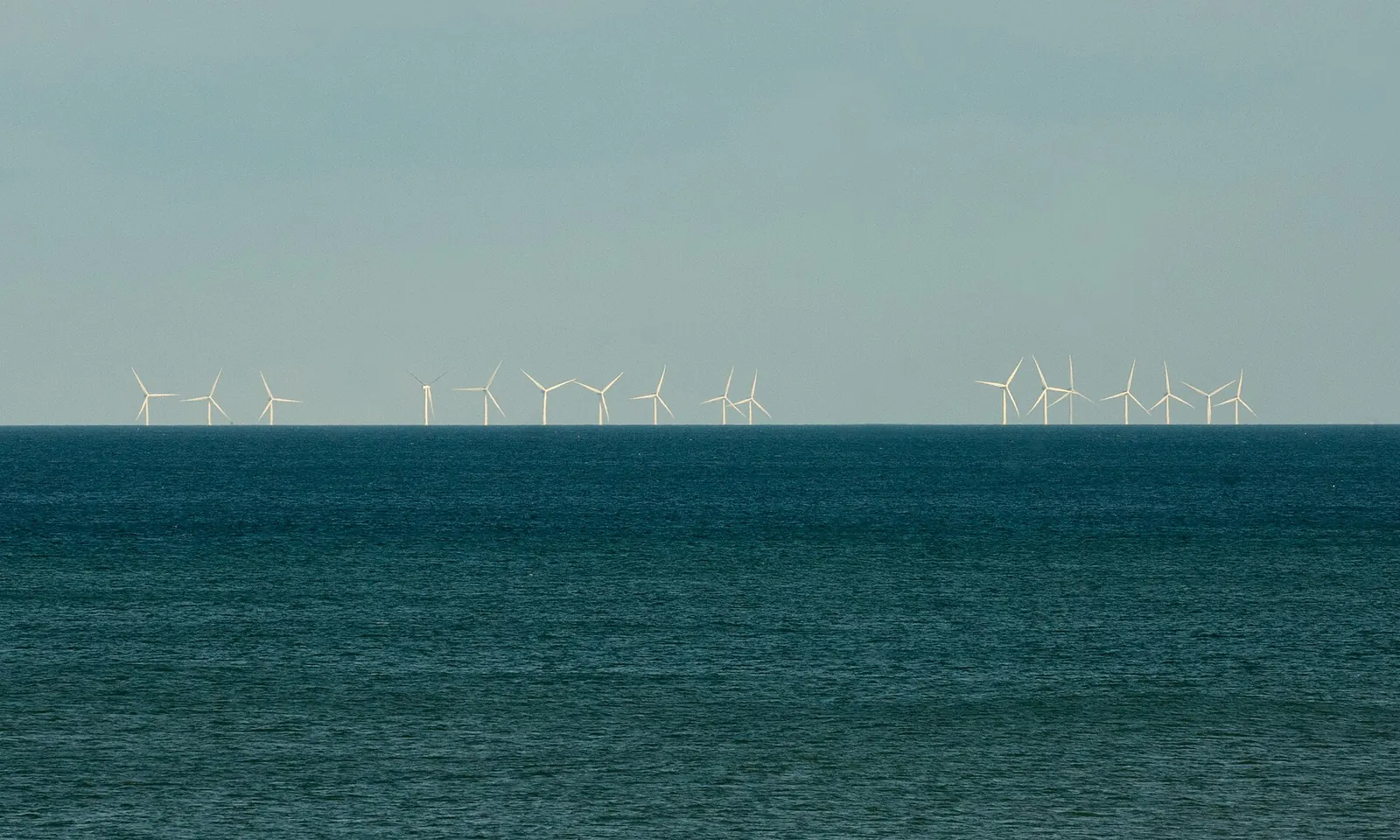
On 3 September 2024 the UK government announced the results of the sixth allocation round of its Contracts for Difference scheme. AR6 awarded contracts to a record 131 projects with a combined capacity of about 9.6 GW. Offshore wind secured about 4.9 GW, including 3.36 GW of new fixed-bottom projects such as Ørsted's Hornsea 4 and ScottishPower's East Anglia Two, at a strike price of GBP 58.87 per megawatt-hour in 2012 prices, and about 1.58 GW from projects that had reduced previously contracted capacity and re-entered, at GBP 54.23. The offshore wind clearing price was around 19 per cent below the administrative cap of GBP 73. Solar, onshore wind, floating offshore wind and tidal projects also won contracts.
The result is a sharp recovery from AR5 a year earlier, when no offshore wind projects bid at all because the government's administrative strike price was too low to cover the higher costs of turbines, steel and finance that followed the 2022 inflation shock. Our view is that the new government was right to raise the ceiling and enlarge the budget. AR6 shows that offshore wind remains competitive with new gas generation at realistic prices. The lesson is that auctions must reflect actual costs, and that a failed auction is far more expensive than one that clears at a higher price.
What went wrong in AR5
The administrative strike price for offshore wind in AR5 was GBP 44 per megawatt-hour in 2012 prices. That was set on the basis of cost assumptions that had been overtaken by events. Turbine prices, interest rates and supply-chain costs had all risen. Developers concluded that they could not build at that price and stayed out. The round produced no new offshore wind, setting the UK's deployment pipeline back by a year and threatening its 2030 targets.
That episode showed the danger of treating low strike prices as success. A low strike price is only valuable if projects are built at it. If no one bids, or if winning projects later prove unviable and are cancelled, the cost to consumers is not zero. It is the cost of the gas generation and the import dependence that the wind farms would have displaced.
Why AR6 worked
For AR6 the government raised the administrative strike price for fixed offshore wind to GBP 73 and increased the budget for the round. That gave developers room to bid at levels that reflected the new cost environment. The clearing price of GBP 58.87 is materially higher than the record lows of earlier rounds, but it is still well below the cap, which shows genuine competition.
In today's money, that price is substantially higher than the 2012-price figure suggests, because contract prices are indexed to inflation. Even so, it compares well with the expected cost of new gas-fired generation once carbon prices and fuel costs are included, and it provides price stability over the contract's life. During 2022, when wholesale prices soared, wind farms on contracts for difference paid money back to consumers because the market price exceeded their strike prices. That two-way protection is the scheme's main advantage.
Why the budget matters as much as the price
The size of the auction budget determines how much capacity can be bought at a given price. A small budget combined with a high ceiling can still produce a thin round, because the most expensive projects that would clear are excluded once the money runs out. The government's decision to increase the AR6 budget allowed more projects to clear and gave investors confidence that annual rounds will be large enough to support a steady pipeline. That steady pipeline matters for supply chains, because turbine makers, cable manufacturers and port operators invest in capacity only when they can see orders several years ahead.
Remaining concerns
The first concern is delivery. Winning a contract is not the same as building a project. Several earlier offshore wind contracts were affected by rising costs. Vattenfall halted its Norfolk Boreas project in 2023 despite holding an AR4 contract, citing higher costs, and later sold the project. The UK needs supply chain capacity, port investment and grid connections to turn AR6 contracts into operating wind farms on time. Grid connection queues, in particular, are a major bottleneck, with many projects facing waits of years.
The second concern is the overall pace. The government's ambition for clean power by 2030 implies offshore wind deployment far above what AR6 alone delivers. Annual rounds will need to procure several gigawatts of offshore wind each year, and the budget and administrative prices will need to keep pace with costs. The government has moved to annual auctions, which should help.
The third concern is floating offshore wind. AR6 included a separate pot for emerging technologies, and floating wind won a contract, but at a much higher price than fixed-bottom projects. Floating wind is important for the UK's long-term potential, especially in deeper waters off Scotland, but costs must fall significantly before it can be deployed at scale. The government should be clear about how much it is willing to pay for the learning that early projects provide.
What this means for Europe
AR6 is a useful signal for other European markets that have struggled with offshore wind auctions. Several countries have seen tenders with weak participation or projects cancelled after award, often because auction designs placed too much risk on developers or set prices too low. The British experience suggests that two-way contracts for difference with realistic administrative prices can attract strong participation. The EU's recent electricity market reform, which makes two-way contracts the default form of support for new renewable investment from 2027, points in the same direction.
Our assessment
AR6 is a success because it accepted reality. Offshore wind costs more than it did before 2022, and an auction that pretends otherwise produces no wind farms. By raising the ceiling and the budget, the government secured a record volume of capacity at prices that are still competitive with alternatives and that protect consumers from future price spikes. The next test is delivery: grid connections, supply chains and planning must keep up so that these contracts become turbines rather than cancelled projects.