
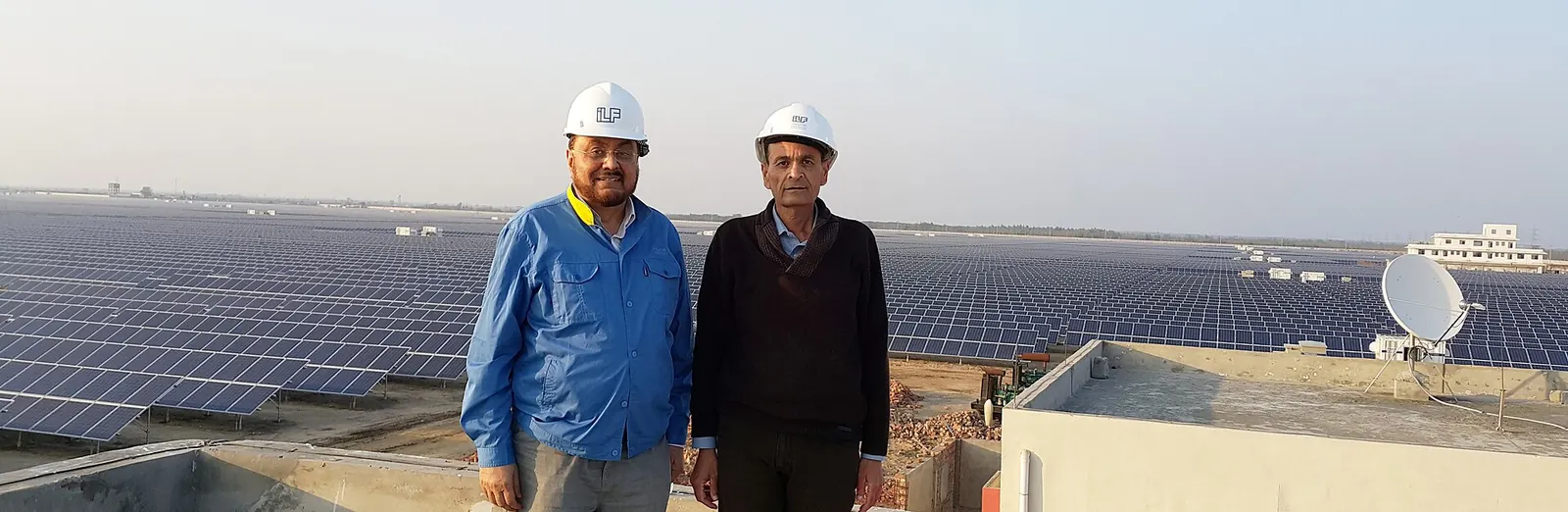
Quaid-e-Azam Solar Park in Bahawalpur remains the reference utility-scale solar story in Pakistan. The Cholistan site was planned for 1,000 MW. CPEC Secretariat project tables list 400 MW completed by August 2016, with a further 600 MW described as under implementation, and Zonergy among the executing sponsors for the CPEC-tracked package. The first 100 MW public-sector plant under Quaid-e-Azam Solar Power reached commercial operation on 15 July 2015. Subsequent 100 MW blocks brought operational park capacity to 400 MW through 2016. That history matters because later solar policy keeps promising multi-gigawatt parks and fast-track packages while the operational stock of large plants grew far more slowly than rooftop solar.
Utility-scale solar and distributed solar are different products. A park injects at transmission or high-voltage distribution nodes on a scheduled interconnection. Rooftop systems reshape DISCO net load feeder by feeder, often with export credits that became a fiscal and political fight by 2024. Confusing the two leads to bad scorecards. Pakistan can post rising ARE capacity share from rooftops while still failing to clear a single large competitive solar auction. Both facts were true in 2024. Transition Economics Institute keeps them on separate ledgers for that reason.
The Fast-Track Solar PV Initiatives 2022 framework tried to jump-start utility-scale volume through international competitive bidding aligned with IGCEP. The 600 MW Kot Addu Muzaffargarh package was the pilot. Multiple bid windows, a reverse auction against a benchmark near 3.4 US cents per kilowatt-hour, removal of that benchmark, richer indexation, Dubai roadshows, and deadline extensions into January 2024 still produced zero bids, as Dawn reported from PPIB confirmation. NTDC acquired about 2,553 acres for the Muzaffargarh site anyway, and discussed further land for Layyah and Jhang packages that would have pushed a multi-site solar push toward roughly 2,400 MW on paper. Land banks without financial close are inventory, not generation. Acquiring acreage while auctions fail is how governments confuse activity with capacity.
Why parks stall while terraces boom is not a mystery of irradiance. Bahawalpur's resource is excellent. The binding constraints are offtaker credit in a circular-debt system, currency and interest-rate risk, interconnection certainty, and dispatch or curtailment allocation. Households and factories financing rooftop systems under net metering faced a simpler credit story: they were saving their own retail tariff. Utility-scale sponsors need twenty-five-year contracts that banks will fund. Empty auctions teach that slogan-level tariffs and unfinished wire plans do not clear. Lenders price Pakistani offtaker risk with open eyes after years of receivables aging across the thermal and renewable fleets alike.
Quaid-e-Azam's early phases also carry lessons about public-private sequencing. The public 100 MW plant proved construction and grid connection were possible. Private 100 MW blocks followed. Stretching from 400 MW operational toward the 1,000 MW park ambition required continued sponsor appetite, evacuation, and policy stability. CPEC tracking that still lists hundreds of megawatts as under implementation years after the first blocks reached commercial operation is a reminder that park master plans are not COD certificates. Transition Economics Institute scores parks by megawatts energised and annual yield, not by brochure totals. A park that produces is an asset. A park that exists mainly in a project table is a political exhibit.
Provincial solar parks and federal IGCEP candidates must converge on interconnection-ready nodes. Selling abstract Cholistan or southern Punjab quotas without National Grid Company confirmation reproduces the wind-corridor failure mode inland. Dust, soiling, water for cleaning, and land-lease politics are real operating costs in desert parks. Yield assessments that ignore soiling and inverter clipping will overstate energy in financial models and understate the tariff needed for bankability. Sponsors who promise park expansions without publishing soiling-loss assumptions are selling optimism, not engineering. Local water stress around cleaning cycles deserves the same honesty as irradiance maps.
Hybridising utility-scale solar with storage is the next design fork. Daytime energy is abundant; evening residual peaks still drive capacity payments and fuel burn. Parks that only sell midday energy into a system with rising rooftop penetration will face deeper midday price pressure and higher curtailment risk as distributed solar grows. Co-located batteries, or hybrid wind-solar where resource allows, improve the product the system actually needs. Auction RFPs should state storage requirements before bids, not after preferred bidders are chosen. Otherwise every award becomes a renegotiation.
Industrial and captive solar at factory scale sits between rooftop and parks. Factories reducing load through solar can improve export competitiveness and ease some peaks if paired with demand management. Wheeling and competitive markets should eventually let surplus industrial solar reach other buyers rather than forcing a binary choice between full net metering and pure self-consumption. Until those channels work, captive solar will keep looking like silent demand destruction to DISCOs. Planners who cannot see captive solar in their load forecasts will keep buying the wrong central plants.
Equity and land use deserve attention without romance. Large parks concentrate lease benefits and construction jobs in specific districts. Rooftop solar correlates with roof rights and capital access. A renewables programme that only builds parks under-serves renters. A programme that only subsidises rooftops under-provides firm daytime energy at transmission scale. Pakistan needs both, with published procurement calendars for parks and published export-credit methodologies for prosumers. Public solarisation of schools, clinics, and tube wells can spread benefits without pretending retail-priced exports are a social programme.
International experience is not a template to photocopy, but it is a warning label. Countries that cleared utility-scale solar at scale did so with bankable offtakers, predictable interconnection queues, and auction calendars that survived cabinet reshuffles. Pakistan has the resource and the labour. It has under-delivered on the contracting machine. Fixing that machine is more valuable than announcing another thousand-megawatt park on unreformed terms.
September 2024's practical agenda for utility-scale solar is narrow. Finish evacuation for plants that already exist. Stop announcing multi-gigawatt packages that cannot clear a single RFP. Certify nodes, publish indexation lenders accept, and run one modest auction that awards and closes. Expand Quaid-e-Azam and sibling parks only on that operational discipline. Transition Economics Institute will keep measuring utility-scale solar by COD megawatts, curtailed energy, and cleared auction prices, not by the acreage acquired for projects nobody bid on.