
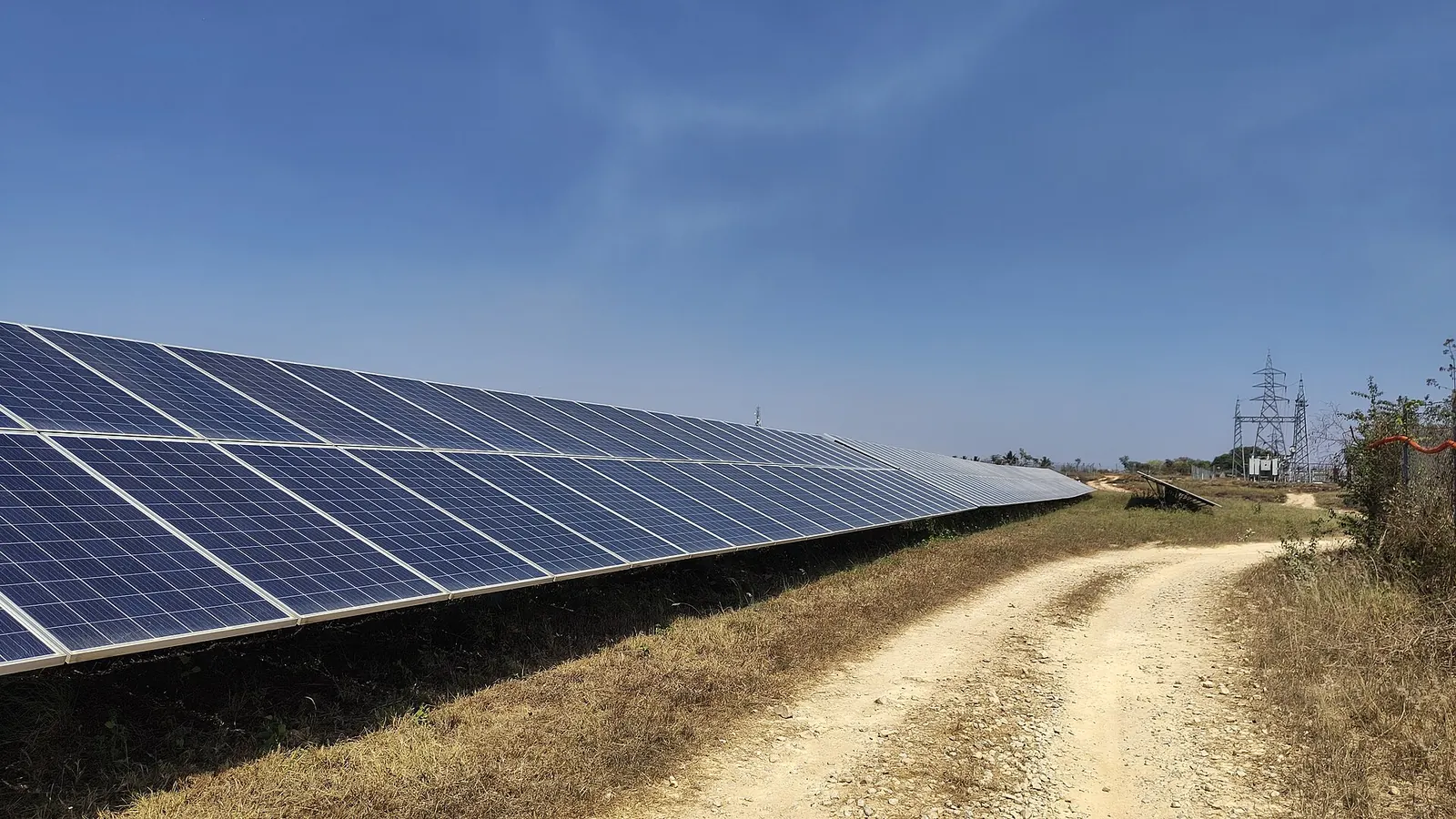
The International Energy Agency's World Energy Outlook 2024, published on 16 October, makes two arguments that matter for every energy-importing economy. The first is that the world is entering what the agency calls an Age of Electricity, with electricity demand growing at twice the pace of overall energy use and set to add the equivalent of Japan's entire electricity consumption to global demand every year in its Stated Policies Scenario. The second is that the second half of the 2020s is likely to bring an overhang of oil and liquefied natural gas supply, alongside a large surplus of manufacturing capacity for solar panels and batteries. In the agency's words, buyers and consumers may have the edge in energy markets for a time.
Our view is that this is the most useful framing the IEA has offered in several years, because it shifts attention from long-term targets to a near-term market opportunity. For importers in South Asia, Southeast Asia and Africa, a period of cheaper fuel and cheaper clean technology is a chance to strengthen their energy systems. It is also a trap if it is used simply to lock in more fossil fuel dependence. The Outlook's own warning should be taken seriously: energy history shows that one day the cycle will reverse and prices will rise.
The supply overhang
On oil, the IEA expects demand growth to slow sharply because China, the engine of oil market growth for two decades, is switching to electricity in road transport. China's oil use for road transport is projected to decline, offset by rising use as a petrochemical feedstock. India becomes the main source of oil demand growth, adding almost 2 million barrels a day to 2035. Meanwhile, new supply is coming mainly from the United States, Brazil, Guyana and Canada. OPEC+ spare capacity is already at record levels of around 6 million barrels a day, and the agency sees prices around USD 75 to 80 a barrel, which would require further production restraint by the group.
On gas, around 270 billion cubic metres a year of new LNG export capacity has been approved and is set to come online by 2030, led by the United States and Qatar. That is an increase of nearly 50 per cent in global export capacity. The IEA points out a central tension: developing economies would generally need gas prices of around USD 3 to 5 per million British thermal units to switch to gas at scale instead of renewables and coal, while most new export projects need delivered prices of around USD 8 to recover their costs. Something, as the agency says, has to give.
The electricity surge
Electricity demand projections in the Stated Policies Scenario are 6 per cent, or 2,200 terawatt hours, higher in 2035 than in last year's Outlook. The drivers are light industry, electric mobility, cooling and data centres. The IEA notes that the combination of rising incomes and higher temperatures generates more than 1,200 terawatt hours of extra global demand for cooling by 2035, more than the entire Middle East uses today. That is a larger effect than even an upside case for data centres.
Renewable capacity rises from about 4,250 gigawatts today to nearly 10,000 gigawatts in 2030 in the Stated Policies Scenario. That falls short of the COP28 tripling goal, but is more than enough in aggregate to cover electricity demand growth and push coal-fired generation into decline. With nuclear, low-emissions sources generate more than half of the world's electricity before 2030. Clean energy investment is approaching USD 2 trillion a year, almost double the combined spending on new oil, gas and coal supply.
The investment imbalance
The Outlook's most important warning concerns grids and storage. At the moment, for every dollar spent on renewable power, 60 cents are spent on grids and storage. The agency argues that this ratio needs to reach parity, and in all its scenarios it does so by the 2040s. Where grids lag, renewable generation is curtailed, connections are delayed and prices rise. This is visible in many emerging economies today, where new solar capacity cannot reach demand centres.
Manufacturing surpluses compound the picture. Annual solar manufacturing capacity is set to exceed 1,100 gigawatts, far above current installation rates, and battery manufacturing capacity is similarly plentiful. Most of it is in China. Since 2020 almost 200 trade measures affecting clean energy technologies have been introduced worldwide, most of them restrictive, compared with 40 in the preceding five years. That fragmentation raises costs for some buyers but leaves others, especially in developing economies, with access to very cheap equipment.
What importers should do
For fuel-importing countries, the Outlook suggests a clear strategy. Use the coming period of lower fuel prices to reduce fiscal stress and rebuild reserves, but avoid signing long-term LNG or oil contracts that assume today's demand projections will hold. Use the surplus of cheap solar panels and batteries to accelerate deployment, but invest at least as heavily in grids, storage and distribution to absorb it. Remove inefficient fossil fuel subsidies while prices are lower and the political cost is smaller.
The IEA also notes that importers in Asia face a long-term rise in dependence on imported oil and gas, to nearly 90 per cent for oil and around 60 per cent for gas by 2050 in the Stated Policies Scenario. Energy security for these countries will depend on reducing that dependence through electrification, efficiency and domestic renewable generation. A buyers' market is the right time to make those investments.
Risks to the outlook
The Outlook was written against a backdrop of conflict in the Middle East and Russia's war in Ukraine, and it acknowledges that the risk of further disruptions is very high. A supply overhang provides a buffer, but not protection against a major disruption at a chokepoint. Elections in countries representing half of global energy demand in 2024 also add policy uncertainty. A slower pace of transition in large economies would absorb more of the coming LNG and oil supply and keep prices higher.
Our assessment
WEO 2024 is a valuable corrective to the idea that energy markets will remain tight indefinitely. Its message is that a period of ample supply, for both fossil fuels and clean technologies, is approaching. Importers that use it to strengthen grids, deploy cheap renewables and reform subsidies will be better placed for the next price cycle. Those that use it to lock in cheap fuel dependence may find that the cycle turns faster than expected.