
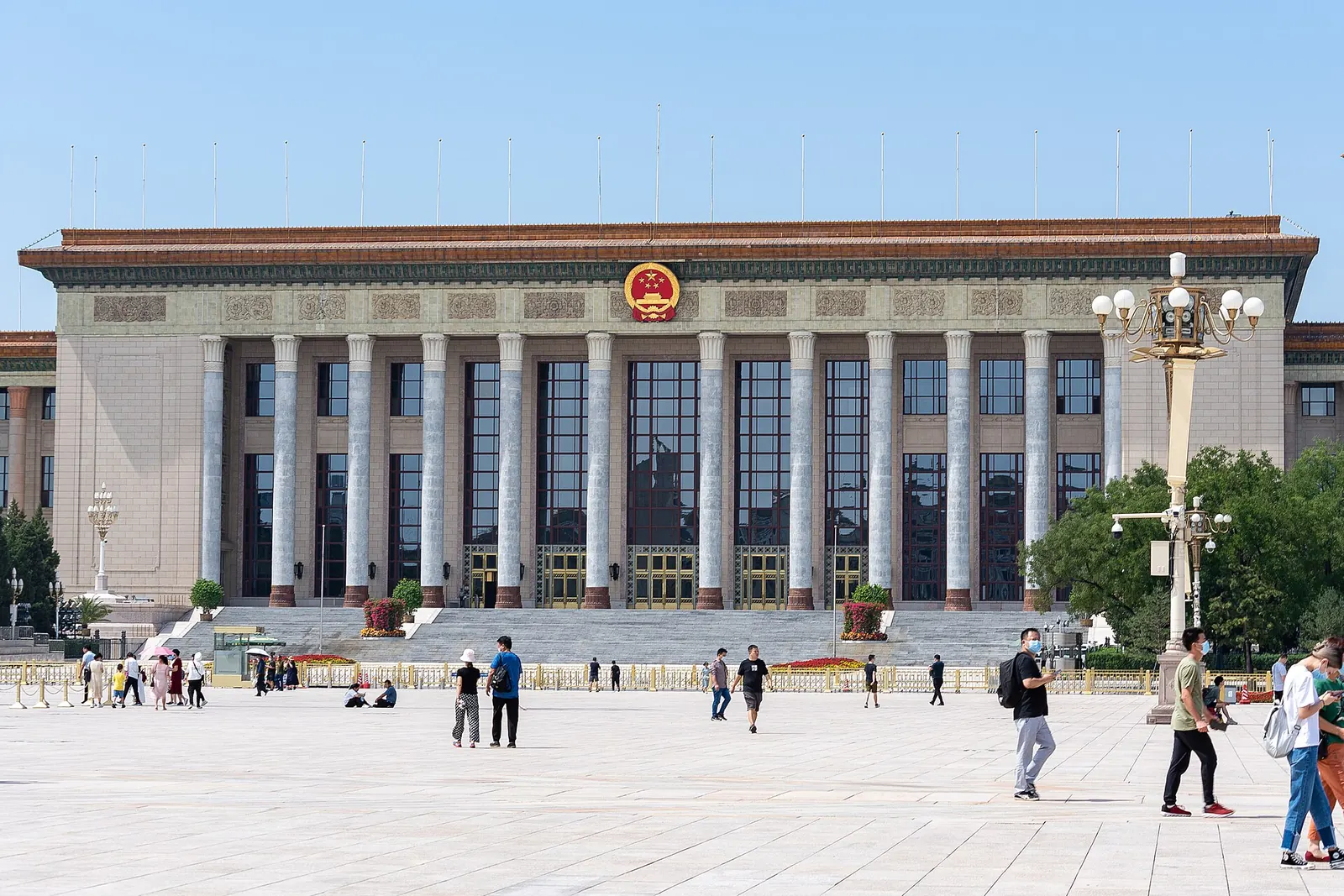
On 8 November 2024 the Standing Committee of the National People's Congress adopted the Energy Law of the People's Republic of China. President Xi Jinping signed Presidential Order No. 37 the same day, and the law takes effect on 1 January 2025. Xinhua described it as the country's first energy law. It has nine chapters and eighty articles, covering planning, development and use, the market system, reserves and emergency response, technology, supervision, and legal responsibility.
China has had sector laws for electricity, coal, renewable energy and energy conservation for years. What it lacked was an umbrella statute. That gap had been discussed since the mid-2000s, and drafts circulated repeatedly without passage. The final text is, in large part, a codification of existing policy. But it contains three features that will matter to anyone operating in or trading with China's energy sector: it gives planning legal force, it writes the green transition into national law alongside security, and it includes an explicit retaliation clause aimed at foreign restrictions on Chinese energy industries.
A statute built around planning
The law's structure puts planning first. Energy planning chapters precede the chapters on development and use, and the market system appears only after both. That ordering reflects how China's energy sector actually works. National, sectoral and provincial plans set capacity targets, siting and transmission corridors, and markets operate inside the space those plans define.
For investors, the practical effect is that a project consistent with an approved plan now sits on firmer legal ground, and a project outside one sits on weaker ground. That is not new in practice, but legal codification makes plans harder to ignore when provincial and central interests diverge.
Security and transition in the same sentence
According to Xinhua, the law is designed to boost high-quality energy development, ensure national energy security, promote green and low-carbon transition, and facilitate active yet prudent progress towards carbon peaking and neutrality. The phrase "active yet prudent" has appeared in Chinese climate policy for several years. Its presence in a statute matters because it establishes a legal balance: transition is required, but not at the expense of supply security.
In practice this protects the continued role of coal as a security resource while giving renewables legal priority in development. Expect provincial authorities to cite both halves of that formula, depending on the decision in front of them. A coal plant justified for reliability and a solar base justified for decarbonisation can both claim statutory support.
Reserves and emergencies
The law has a full chapter on energy reserves and emergency response. China already holds strategic oil reserves and has expanded gas storage. Codifying the reserve system gives it a stable legal basis for funding and for obligations on enterprises to hold commercial reserves. Given that China is the world's largest importer of crude oil and, in most years, of liquefied natural gas, this is a material change for traders. Reserve obligations affect inventory behaviour, which in turn affects how Chinese buyers respond to price spikes.
The retaliation clause
Article 78 is the provision most likely to be quoted abroad. It states that where any country or region adopts discriminatory prohibitions, restrictions or similar measures against the People's Republic of China in the renewable energy industry or other energy fields, China may take corresponding measures against that country or region according to the actual situation. Article 79 adds that foreign organisations and individuals that harm China's national energy security will be held legally responsible.
The timing is not accidental. On 14 May 2024 the United States announced Section 301 tariff increases that took Chinese solar cells from 25 to 50 per cent, lithium-ion electric vehicle batteries from 7.5 to 25 per cent and electric vehicles from 25 to 100 per cent, with the final increases in force from 27 September. On 29 October the European Commission imposed definitive countervailing duties on Chinese battery electric vehicles for five years, at rates ranging from 17.0 per cent for BYD to 35.3 per cent for SAIC and non-cooperating producers. Two of China's largest export markets for clean technology acted against it within six months. Article 78 does not create a new power, since China already has an anti-foreign sanctions law. What it does is place energy specifically on that list, and give ministries a clear statutory hook for countermeasures in the sector.
Our reading is that Article 78 is primarily a deterrent. Its value to Beijing lies in signalling that restrictions on Chinese clean technology exports will not be cost-free. Its practical use is likely to be targeted rather than sweeping, for example through export controls on processing technology or critical minerals, or through procurement and licensing decisions that are hard to challenge at the World Trade Organization. A broad tit-for-tat would damage Chinese manufacturers who still need export markets to absorb surplus capacity, and Beijing knows it.
International treaties
Article 77 provides that where an international treaty China has concluded or joined differs from the law, the treaty applies, except for clauses China has reserved. That is a standard provision, but it gives some reassurance to foreign investors protected by bilateral investment treaties. It also means China's obligations under the Paris Agreement sit, in principle, above the domestic law where they conflict.
What does not change
The law does not set numerical targets. It does not cap coal, set a renewable share or define a carbon price. Those remain the domain of five-year plans, sector plans and ministerial notices. It also does not resolve the tension between provincial protectionism and a national electricity market, which is the main obstacle to efficient use of China's renewable capacity. Readers looking for a carbon cap in the statute will not find one.
Our position
The Energy Law is a framework statute, and much of it formalises policies China already applies. That should not lead observers to dismiss it. Codifying planning, reserves and the security-transition balance gives existing policy greater durability, which matters in a system where priorities can shift with the political cycle. The retaliation clause is the sharpest edge and should be read as a direct response to Western trade measures on clean technology.
For energy companies and governments dealing with China, the operating assumption from January 2025 should be that energy policy is now explicitly a matter of national security under Chinese law, that the green transition is a legal objective but subordinate to supply security when they conflict, and that trade restrictions on Chinese energy industries now carry a defined legal route to response.