
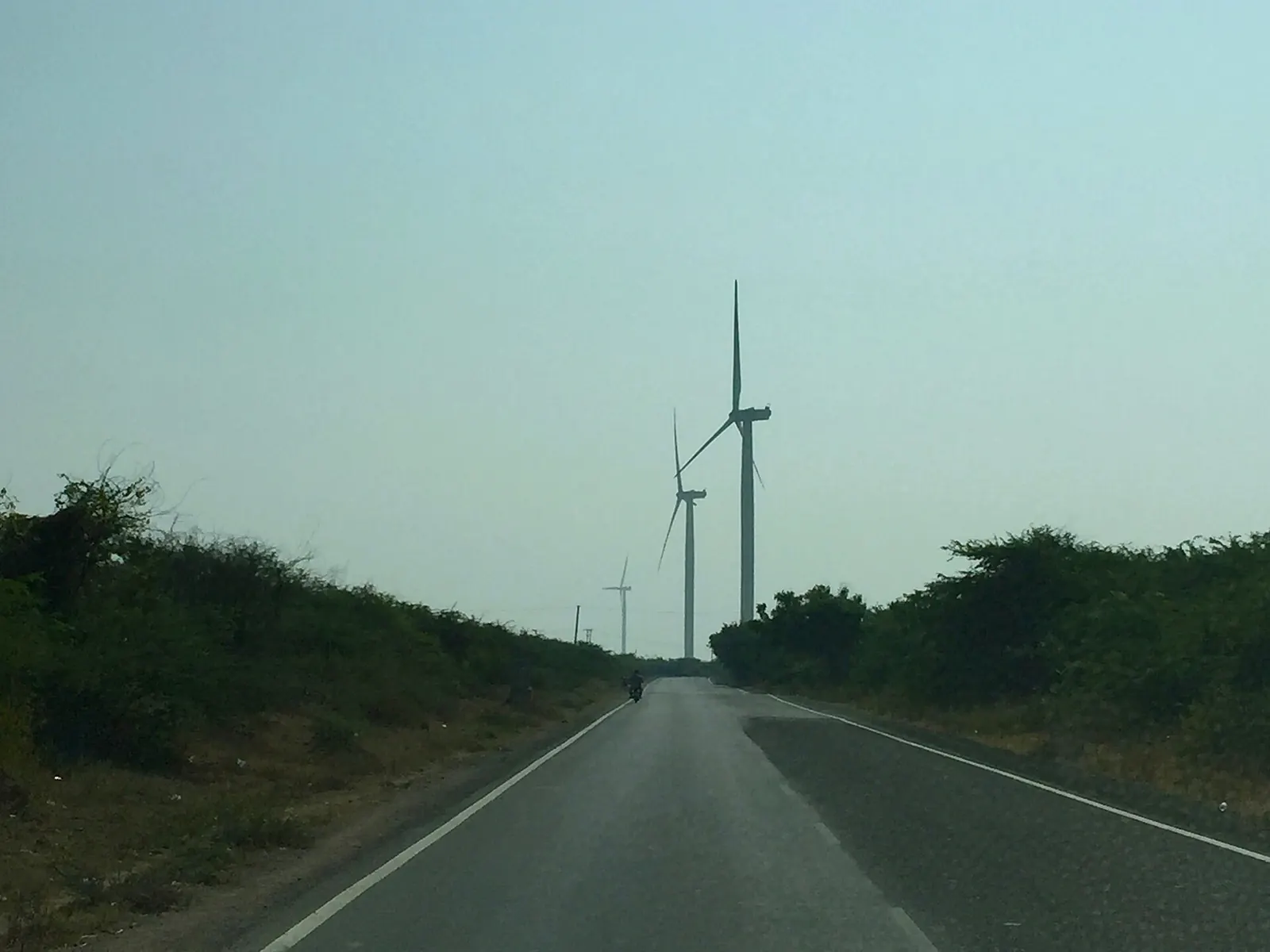
India's renewable generating capacity has crossed 200 GW. A government release on 13 November 2024, drawing on Central Electricity Authority data, put renewable capacity at 203.18 GW at the end of October, up 24.2 GW or 13.5 per cent in a year from 178.98 GW. Including 8,180 MW of nuclear, non-fossil capacity reached 211.36 GW. With total installed capacity at 452.69 GW, renewables, counted to include large hydro, accounted for more than 46.3 per cent of the fleet.
The milestone invites a straightforward reading: India is on track for its target of 500 GW of non-fossil capacity by 2030. The arithmetic does not support that reading. Adding 24 GW a year will not take India from roughly 211 GW to 500 GW in six years. That would require something closer to 48 GW a year. Our view is that the 200 GW mark shows India has built a credible renewable industry, but that the binding constraints, transmission, storage, and the finances of the state utilities that buy the power, have not moved at the speed the 2030 target requires.
The composition of the fleet
The breakdown in the release is instructive. Solar leads with 92.12 GW. Wind follows at 47.72 GW. Large hydro contributes 46.93 GW and small hydro 5.07 GW. Biopower adds 11.32 GW. Solar and wind together are just under 140 GW, the rest is hydro and bioenergy that have grown slowly for years.
That means the growth needed to reach 2030 must come overwhelmingly from solar and wind, with a rising share from storage-backed hybrids. Hydro adds slowly and faces environmental and geological constraints. Nuclear adds in lumps measured in years. Wind has underperformed relative to its potential for a decade because of site constraints and auction design. Solar is doing most of the work.
Concentration in a few states
State data in the release show how concentrated the build is. Rajasthan leads with 29.98 GW, followed by Gujarat at 29.52 GW, Tamil Nadu at 23.70 GW and Karnataka at 22.37 GW. Those four states hold more than half of national renewable capacity.
Concentration is efficient in resource terms. Rajasthan has excellent solar irradiation and abundant land. Gujarat and Tamil Nadu have strong wind. But it means that most of the power must travel long distances to demand centres in northern and eastern India, and that inter-state transmission is the gating factor for further growth. Developers in Rajasthan have faced delays in connecting projects because transmission lines and substations have lagged behind generation.
The pipeline problem
India's renewable tenders have been substantial, with central agencies issuing large volumes of auctions annually. Yet installed capacity has grown more slowly than awarded capacity. A significant volume of awarded projects has struggled to sign power sale agreements with state distribution companies, which are the end buyers. Without those agreements, projects cannot reach financial close.
The reasons are financial and commercial. Many distribution companies are already contracted for more power than they need in some hours, especially at midday. They are reluctant to sign 25-year agreements for more solar when what they lack is evening supply. They also carry accumulated losses that make them cautious about long-term commitments.
That mismatch, between what central agencies tender and what state utilities want to buy, is the largest single obstacle to faster deployment. It cannot be solved by more tenders. It requires tenders that deliver what the buyers need, firm and dispatchable renewable supply, at prices they can afford.
A modest suggestion on metrics
The government's own release frames progress in gigawatts installed. That is the easiest number to report and the least informative about outcomes. A more useful dashboard would track three further figures each quarter: the volume of awarded capacity without a signed power sale agreement, the share of renewable output curtailed or backed down in the leading states, and the volume of firm or storage-backed renewable supply contracted for evening hours. Those numbers would show whether the system is converting tenders into delivered clean energy.
What counts towards 2030
The 500 GW target is for non-fossil capacity, not renewables alone. It includes large hydro and nuclear. Under India's updated nationally determined contribution submitted in August 2022, the formal commitment is to achieve 50 per cent of cumulative electric power capacity from non-fossil sources by 2030, alongside a 45 per cent reduction in emissions intensity of GDP from 2005 levels. The 500 GW figure is a domestic target, more ambitious than the international one.
That distinction matters. India is close to meeting its international commitment on capacity share. The 500 GW domestic target is far more demanding. Meeting the first while missing the second would be consistent with past patterns in which India over-delivers on its international pledges and under-delivers on its domestic aspirations.
Jobs and industry
The release cites IRENA's 2024 review estimating about 1.02 million renewable energy jobs in India in 2023, with hydropower the largest employer at around 453,000 and solar PV at about 318,600. India added 9.7 GW of solar PV in 2023 by IRENA's count, ranking fifth globally for new installations, with cumulative capacity of 72.7 GW at the end of that year on IRENA's basis.
The manufacturing story is changing quickly. Production-linked incentives and import duties have expanded domestic module capacity, and the approved list of models and manufacturers restricts many projects to domestic modules. That supports industrial policy goals but raises project costs relative to imported equipment. The trade-off between cheaper power and domestic manufacturing will shape the pace of the build.
Our position
Crossing 200 GW is a meaningful milestone. India has built an industry that can deliver more than 20 GW of renewable capacity a year, and the four leading states have shown what resource-rich regions can do. But at the current pace, India will fall well short of 500 GW of non-fossil capacity by 2030.
To close the gap, three things must change. Transmission must lead generation rather than follow it, especially out of Rajasthan and Gujarat. Tenders must shift from plain solar to firm and dispatchable renewable supply that meets evening demand. And state utilities must be put on a financial footing that allows them to sign long-term contracts. Of the three, utility finance is the hardest, and without it the other two will not be enough.