
On 9 February 2025 China's National Development and Reform Commission and National Energy Administration published a joint notice on deepening the market-based reform of on-grid tariffs for new energy, catalogued as Fagai Jiage [2025] No. 136. The notice requires wind and solar generation to enter the electricity market, with prices formed through trading, and sets up a contract-for-difference style settlement for new projects. Projects connected before 1 June 2025 are treated as existing projects, and those connected afterwards are subject to a competitive mechanism.
This is the most consequential change to Chinese renewable economics since feed-in tariffs were phased out for new onshore projects. The world's largest renewable market is moving from a system in which revenue was largely fixed to one in which revenue depends on when and where a plant generates. Our view is that the reform is well designed in principle, likely to slow installations sharply after mid-2025, and likely to shift value from solar to wind, storage and flexible demand.
What the notice does
The Xinhua summary carried by the State Council's English website describes three pillars. Market forces are to determine renewable power prices. A pricing and settlement mechanism will support long-term sustainability. And existing and new projects will be treated differently.
For projects commissioned on or after 1 June 2025, provinces will set annual volumes eligible for a mechanism price, based on their renewable consumption targets and on what users can afford. Projects bid for that mechanism price, generally by technology, with the price set by competition and subject to provincial caps. Settlement then works as a two-way difference payment. When market prices fall below the mechanism price, the generator receives the difference. When market prices rise above it, the generator pays back the difference. That is the basic structure of a contract for difference, familiar from European auction design.
Existing projects receive a mechanism price linked to current arrangements, giving them a degree of continuity while their output is also exposed to market trading.
Why Beijing moved now
The official rationale is that the fixed-pricing approach no longer reflects supply and demand. Xinhua cites wind and solar generation costs now ranging from about 0.2 to 0.3 yuan per kWh, far below early levels, and puts installed wind and solar capacity at 1.41 billion kilowatts at the end of 2024, more than 40 per cent of the national fleet and above coal-fired capacity.
The market context matters too. NEA deputy head Song Hongkun is quoted as saying that market-based transactions reached 5.08 trillion kWh between January and October 2024, and that the share of market-traded electricity rose from 17 per cent in 2016 to 62 per cent. Nearly half of renewable generation was already traded in markets. The notice extends that principle to all of it.
The unstated rationale is the midday problem. China added about 277 GW of solar in 2024. Large volumes of solar output arrive at the same hours, often in provinces where transmission and storage are limited. Under a fixed tariff, a solar plant earns the same for a kilowatt-hour at noon in May, when the grid is saturated, as at seven in the evening in January, when it is short. Market pricing removes that distortion. It pays less for power when it is least needed.
Consequences for solar
Solar is the technology most exposed. Its output is concentrated in the middle of the day, which is when market prices in solar-heavy provinces will fall furthest. Even with a mechanism price, a solar project's revenue will depend on how much of its output is covered by the mechanism volume and how the bidding plays out in each province.
The first effect will be a rush. Developers have a clear deadline. Projects that connect before 1 June keep existing-project treatment. Projects that connect afterwards face competition and market exposure. Expect a surge of connections in April and May 2025, followed by a slowdown in the second half of the year. China's solar manufacturers, already under pressure from overcapacity and falling prices, will feel that slowdown in domestic orders.
The second effect will be on returns. Economists quoted by Xinhua acknowledge that the reform could lower returns for some projects. Developers will price that risk into bids. Some marginal projects, particularly in provinces with saturated midday demand, will not be built.
Consequences for wind, storage and flexibility
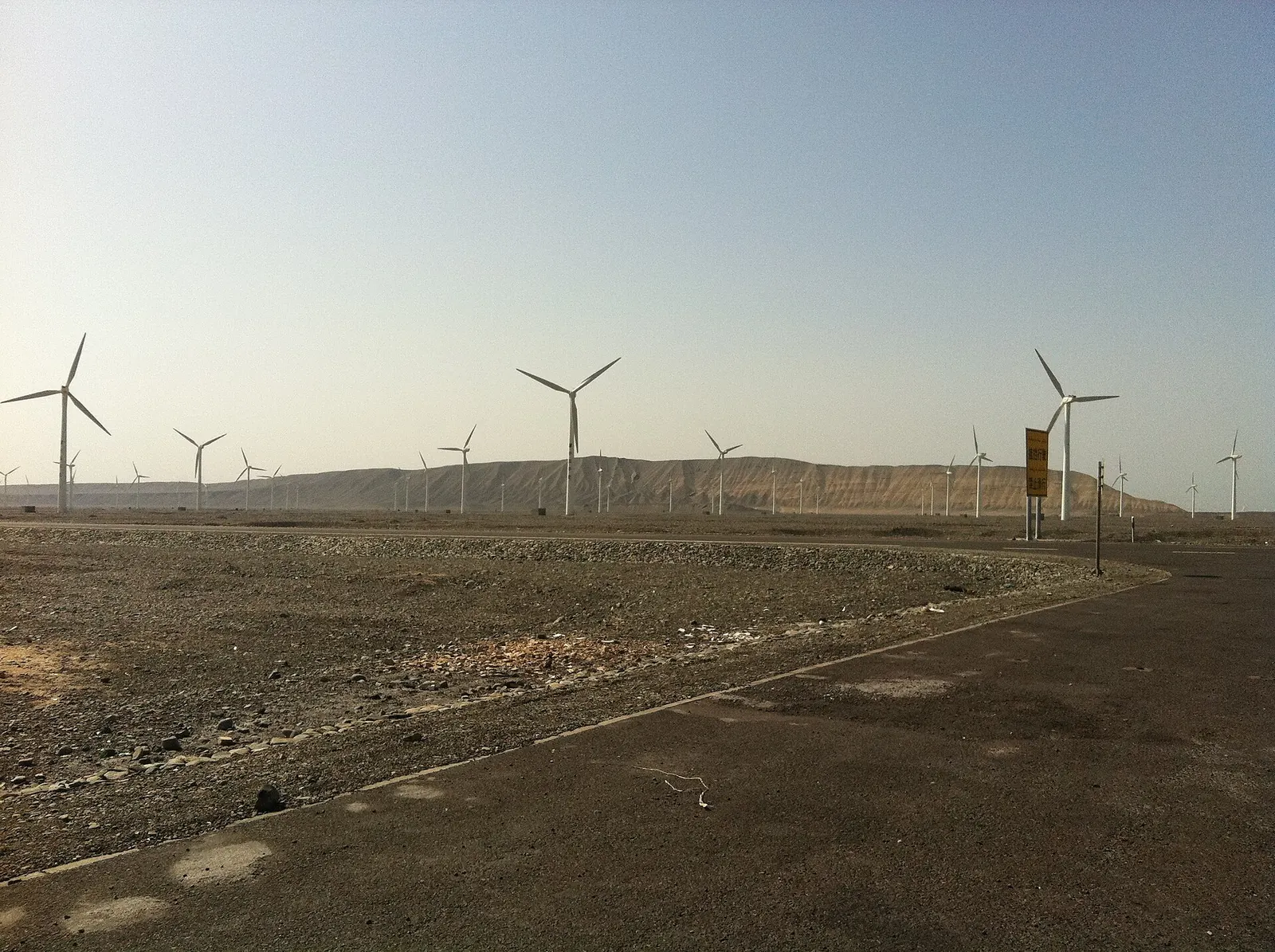
Wind generation is spread more evenly across the day and across seasons, and in many northern provinces it is strongest in winter evenings. That profile earns a higher capture price in a market than solar does. Document 136 therefore tilts relative economics towards wind, especially onshore wind in regions with strong evening output.
Storage gains even more. A battery that charges at midday and discharges in the evening earns the spread between low and high market prices. Under fixed tariffs that spread did not exist. Under market pricing it is the main revenue source. The notice also ends the practice of making storage a mandatory condition for renewable project approval, which many developers treated as a box-ticking exercise with underused batteries. Storage built for arbitrage will be sized and operated very differently from storage built to satisfy an approval condition.
Provincial implementation is everything
The notice is a framework. Provinces must translate it into rules on mechanism volumes, bidding procedures, price caps and settlement. Provincial governments face competing pressures: they want investment and local manufacturing jobs, they need to meet renewable consumption targets, and they want to keep retail power prices low. Some will set generous mechanism volumes and caps to sustain investment. Others will set tight ones to protect consumers.
That variation will produce a patchwork of returns across China in the second half of 2025, and developers will migrate towards the provinces with the most favourable rules. Provincial implementation plans are the documents that matter for investment decisions, and most are not yet published.
Our position
Document 136 is overdue and broadly sound. A power system with nearly 900 GW of solar cannot keep paying the same price for every kilowatt-hour regardless of timing. Contract-for-difference settlement gives investors a degree of revenue stability while exposing them to the value of their output.
The near-term consequence will be a sharp installation spike before 1 June, followed by a slower and more provincially uneven market. The medium-term consequence will be a shift in investment from solar towards wind, storage and flexible demand. For global markets, the reform is a signal that China's domestic solar demand is moving from policy-driven expansion to market-driven growth, and that the era of China absorbing ever larger volumes of its own solar output at fixed prices is ending.