
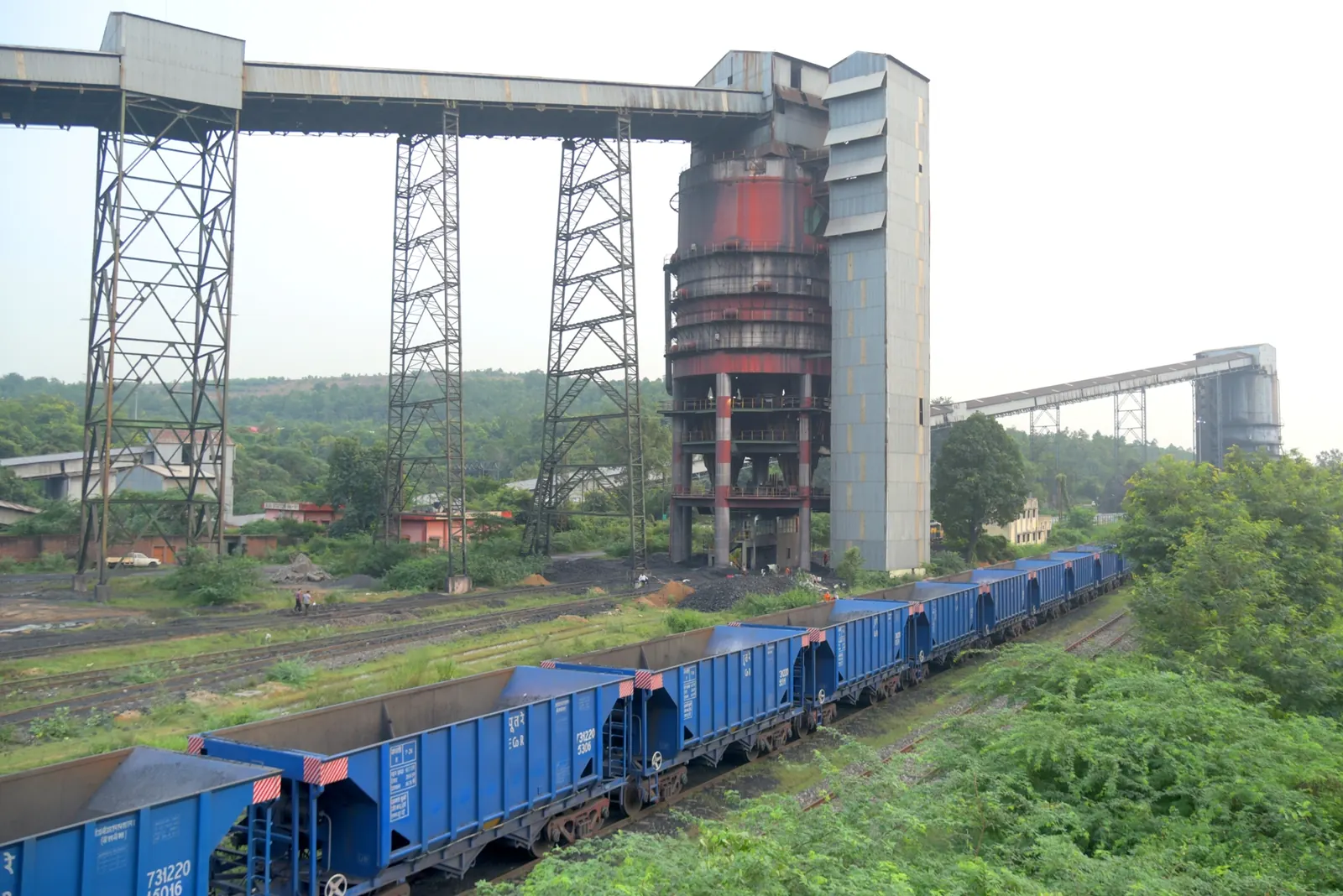
India produced more than one billion tonnes of coal in a financial year for the first time in 2024-25. The Ministry of Coal reported that output crossed the mark on 20 March 2025 and reached 1,047.57 million tonnes on a provisional basis for the year, up 4.99 per cent from 997.83 million tonnes in 2023-24. Dispatch also crossed one billion tonnes, at 1,024.99 million tonnes, up 5.34 per cent. Production from commercial and captive mines rose 28.11 per cent to 197.50 million tonnes.
The government presents the milestone, accurately, as a gain for energy security. The ministry notes that coal imports fell 8.4 per cent to 183.42 million tonnes in April to December 2024, saving 5.43 billion US dollars in foreign exchange, and that imports for blending by thermal power plants fell 29.8 per cent even as coal-based generation rose 3.53 per cent. Coal still supplies 55 per cent of India's energy mix and more than 74 per cent of its electricity.
Our view is that the billion-tonne mark settles one debate and opens another. It settles the question of whether India can produce enough domestic coal to keep its power plants supplied, which was in doubt during the shortages of 2021 and 2022. It opens the question of how long that coal production will be needed at this scale, and whether the investment now flowing into mines, railways and new coal plants is being planned for a decline that India's own renewable targets imply.
How the milestone was reached
Coal India and its subsidiaries remain the core of production, but the fastest growth has come from commercial and captive mines allocated through auctions since 2020. A 28 per cent rise in output from those mines in a single year shows that the auction regime is delivering. Private and state-owned captive operators now account for nearly a fifth of national output.
The rise in dispatch matters as much as production. Coal stocks at the pithead are useless if they cannot reach power plants. The ministry notes that coal is the single largest contributor to railway freight, with about 49 per cent of freight income in 2022-23. The railway network's ability to move a billion tonnes a year has been a constraint in past summers. That it coped in 2024-25 reflects investment in dedicated freight corridors and rolling stock.
Imports: a falling share, a persistent core
Lower imports are a genuine saving, especially in the power sector, where blending imports fell by almost 30 per cent. But the ministry acknowledges that shortages of coking coal and high-grade thermal coal make imports necessary. Steelmakers depend on imported coking coal because domestic reserves are of lower quality. Coastal plants designed for imported coal will continue to use it. India's import bill will fall at the margin but will not disappear.
The planning question
The ministry projects that coal-based thermal power will remain essential, with its share of generation at 55 per cent by 2030 and 27 per cent by 2047. Those projections imply a long plateau followed by a steep decline. They also imply that coal production will need to keep rising for some years, since total generation is growing at around 6 to 7 per cent a year.
The difficulty is that a 27 per cent share by 2047 implies a very different coal system from one built to produce more than a billion tonnes a year. Mines opened now have operating lives of 30 years or more. Railway investments are long-lived. Coal plants approved now will operate into the 2050s. If coal's share is to halve between 2030 and 2047, much of that capacity will be underused before the end of its life.
There are reasonable answers to that problem. Mines can be planned with shorter lives and phased closure. Coal plants can be paid for availability rather than energy, so that their value lies in providing reserve capacity as renewables grow. Coal companies can diversify, as Coal India has begun to do with investments in solar and in coal gasification. The government approved 8,500 crore rupees in January 2024 to promote gasification projects, aiming at methanol, fertilisers and synthetic natural gas. But those answers need to be built into planning now, not adopted reactively when utilisation falls.
What to watch in 2025-26
Three indicators will show whether planning is adjusting. The first is pithead stocks: if production keeps rising faster than dispatch, stockpiles will build and signal that supply has run ahead of demand. The second is the plant load factor of the coal fleet, which will reveal how much of the new thermal capacity is being run as baseload and how much as reserve. The third is the share of new mine approvals that include closure and land restoration plans with funded obligations.
Workers and states
The ministry counts around five lakh mine workers across more than 350 mines, and more than 239,000 employees at Coal India alone. Coal provides more than 70,000 crore rupees a year to central and state governments through royalties, GST and other levies. Several eastern states, notably Jharkhand, Odisha and Chhattisgarh, depend heavily on coal revenue and employment.
That dependence is the strongest argument for planning the transition early. A sudden decline in coal demand in the 2040s would land on states with the least fiscal room to absorb it. A gradual, planned decline, with investment in alternative industries in coal regions, would be far less disruptive. The billion-tonne milestone is the right moment to start that planning, because it is the point at which supply security has been secured and attention can shift to managing what comes next.
Our position
India's billion-tonne coal year is a real achievement for energy security. It removes the risk of fuel shortages that hit the power sector in 2021 and 2022, cuts imports for power blending sharply and shows that the commercial mining reforms are working.
It should also be read as a planning warning. India's own projections imply that coal's share of power generation will halve between 2030 and 2047. The mines, railways and plants being built today must be designed for that trajectory, with shorter lives, availability-based payments and diversification strategies for the companies and states that depend on coal. Producing a billion tonnes was the challenge of the last decade. Planning for the decline of that billion tonnes is the challenge of the next.