
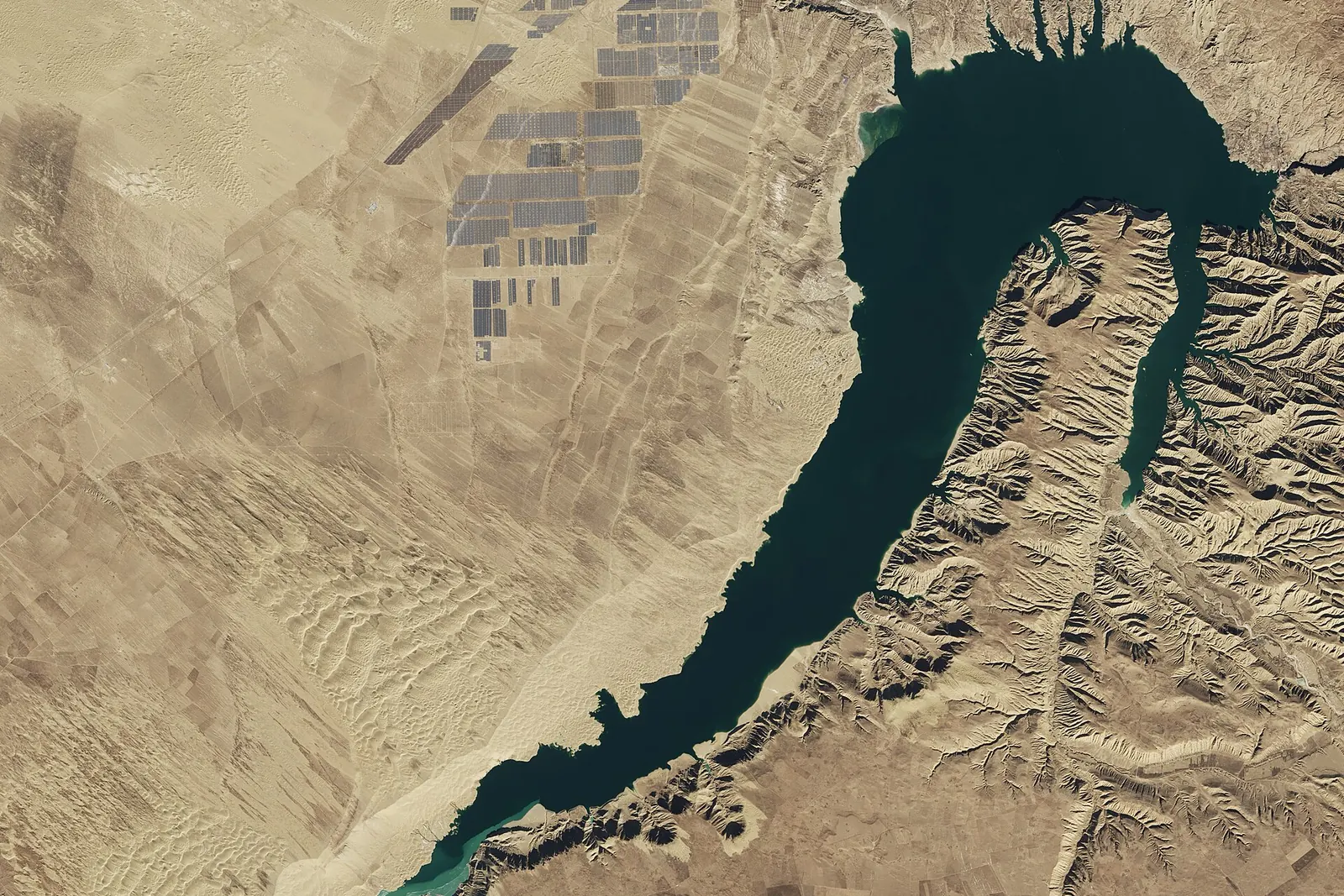
The National Energy Administration's statistics for January to May 2025, released on 23 June, contain a figure without precedent in any power market. China connected 92.92 GW of solar capacity in May alone. That was 388 per cent more than in May 2024, when 19.04 GW was added, and more than double April's total. Over the first five months of the year China added 197.85 GW of solar, up 150 per cent year on year, and cumulative solar capacity passed 1 TW, reaching about 1,084 GW.
The reason is no mystery. Under the February 2025 pricing reform, Fagai Jiage [2025] No. 136, projects connected before 1 June keep existing-project treatment, while those connected later must compete for a mechanism price and take on market exposure. Developers responded exactly as incentives suggested. They pulled forward every project they could. The more interesting questions are what the rush did to the grid and the market, and what follows it. Our view is that the second half of 2025 will show a steep fall in monthly additions, a rise in curtailment in the most saturated provinces, and the first real test of whether provincial bidding rules can sustain investment.
Reading the May data
PV Tech's breakdown of the NEA release shows total generating capacity of 3.61 TW at the end of May, up 18.8 per cent year on year. Solar was up 56.9 per cent and wind up 23.1 per cent to about 570 GW. Average utilisation hours across all plants fell to 1,249 hours over the five months, 132 hours fewer than a year earlier. Grid investment rose 19.8 per cent to 204 billion yuan, while generation investment rose only 0.4 per cent to 257.8 billion yuan.
Three points stand out. First, a utilisation fall of more than 10 per cent in a single year is large. It reflects capacity growing far faster than demand, which squeezes hours for every type of plant. Second, grid investment growing fifty times faster than generation investment is a welcome correction after years in which the reverse was true. Third, the generation investment figure, almost flat despite record connections, suggests that much of the capital behind the May projects was committed in 2024 and that new commitments have already slowed.
The grid absorbed the rush, for now
Connecting 93 GW of solar in a month is a logistical feat. It also places enormous midday output on networks that were already saturated in some provinces. In spring, when heating load has fallen and cooling load has not yet risen, midday demand is often at its lowest of the year. Adding tens of gigawatts of solar at that time pushes local prices down and raises the risk of curtailment.
The national statistics do not yet show a collapse in utilisation of renewables, and the authorities have committed to supporting the absorption of more than 200 GW a year of new renewable capacity through 2027 while keeping the utilisation rate at or above 90 per cent. That commitment, published in January 2025, means curtailment of up to 10 per cent is now an accepted planning parameter. The May rush will push several provinces towards that limit.
What happens after June
The pull-forward means that June and the months after it will look weak by comparison. That is a mechanical effect, not a collapse of demand. But there are also real reasons to expect lower installations in the second half of 2025.
Provinces are still publishing their implementation rules for Document 136. Until each province sets mechanism volumes, price caps and bidding procedures, developers cannot price new projects with confidence. Projects will wait for those rules. In provinces where midday prices are already low, the market exposure created by the reform will make some projects uneconomic, regardless of bidding outcomes.
Distributed solar faces a parallel adjustment. Commercial and industrial rooftop projects that sold power to the grid at fixed prices must now sell more of it into markets or consume it on site. Business models will shift towards self-consumption and direct supply contracts.
Consequences for manufacturers
China's solar manufacturing base has spent two years in a price war. Module prices have fallen to levels at which most producers are losing money. The May rush provided a short burst of domestic demand that eased inventories. A second-half slowdown will reverse that relief, and the industry will look more urgently for consolidation, production discipline and export markets.
That matters for global buyers. If domestic demand slows while capacity remains, export prices will stay low and Chinese producers will compete harder in markets from the Middle East to Africa and South Asia. For importing countries, that is an opportunity to buy cheap modules. For the few producers outside China, it is another year of margin pressure.
A shift in what gets built
The rush also signals a change in the mix. Under market pricing, solar's midday output earns less than wind's more evenly distributed output, and much less than evening power from storage. Developers who would once have built solar alone will increasingly add storage or choose wind. Provinces with strong evening wind profiles and good transmission links will attract investment that previously went to solar-heavy regions.
The NEA's data for the remainder of 2025 should show this shift in the composition of new connections. A decline in solar additions accompanied by steady wind additions and rising storage would be the expected signature.
Our position
The May 2025 solar figure is best read as a policy artefact. It shows how sharply Chinese developers respond to a deadline, and it marks the end of the fixed-price era for new wind and solar projects. It does not show that Chinese solar demand is accelerating.
For the second half of 2025, we expect markedly lower solar additions, rising curtailment in saturated provinces, a continued squeeze on manufacturers, and a gradual shift of investment towards wind and storage. The real test of China's new framework is not whether it can produce a record month before a deadline. It is whether provincial bidding rules can sustain steady, well-located investment once the deadline has passed.