
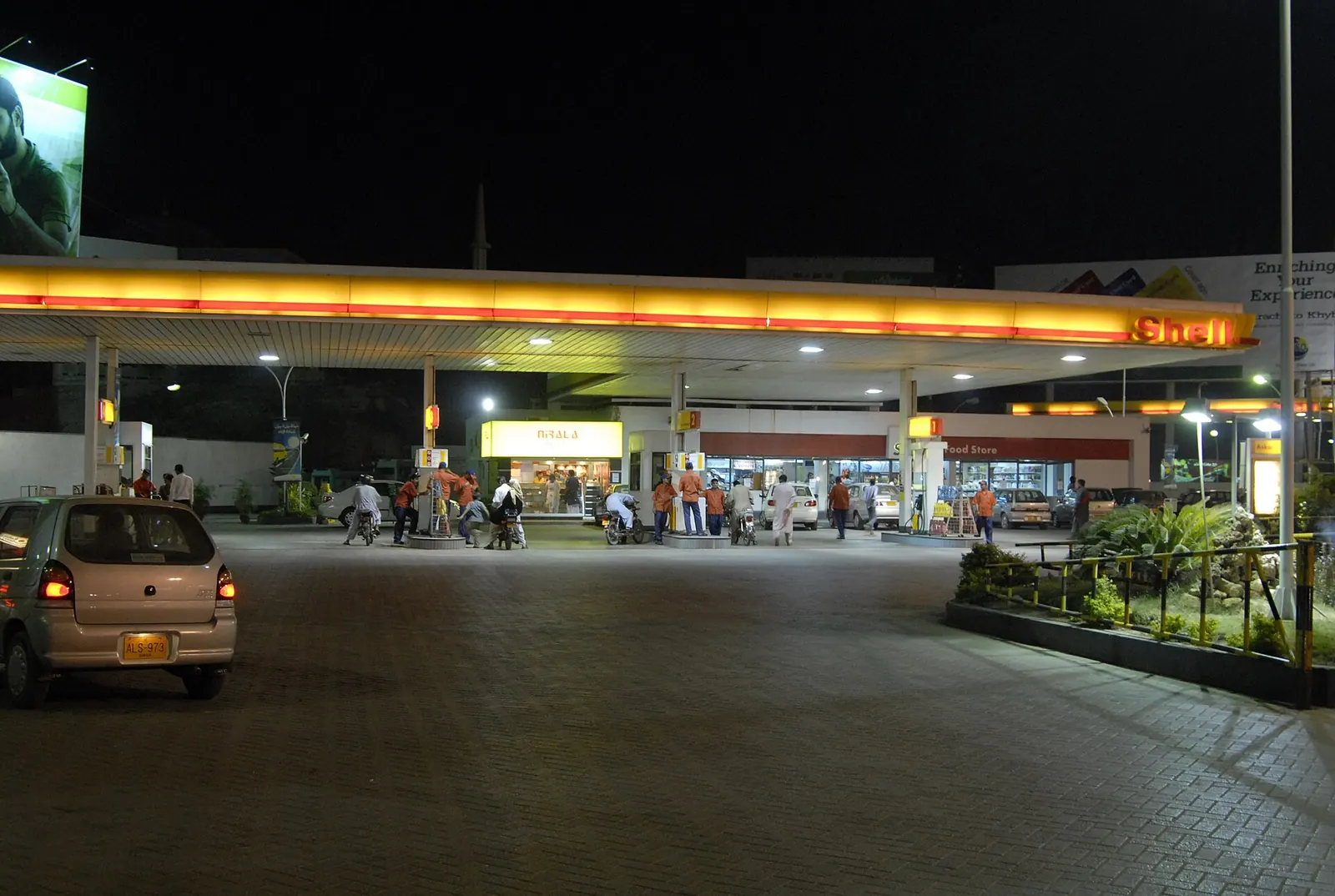
From 1 July 2025 Pakistan began charging a Climate Support Levy on petroleum products. Introduced in the Finance Act 2025 after being proposed in the budget as a carbon levy, it is set at Rs2.5 per litre on petrol, high-speed diesel and furnace oil for fiscal year 2025-26, with furnace oil also charged at an equivalent rate per tonne. The rate is scheduled to rise to Rs5 per litre in 2026-27. It sits on top of the petroleum levy, which already raises large sums for the federal budget, and the general sales tax and customs duties that apply to fuel.
The levy was part of Pakistan's commitments under its IMF programme and, in particular, the Resilience and Sustainability Facility, which supports climate-related reforms. It has been criticised from two directions: by those who say any new fuel tax burdens households already struggling with high prices, and by those who say Rs2.5 is too small to change behaviour and is simply a revenue measure with a green label. Our view is that both criticisms have some force, but that the levy is worth keeping because of what it establishes: a carbon price signal on fuel that can grow over time, provided the revenue is used visibly and the most vulnerable households are protected.
How big is it?
At Rs2.5 per litre, the levy is small relative to the price of fuel. With petrol prices in the range of Rs250 to Rs270 per litre in mid-2025, it represents roughly one per cent of the retail price. Price movements driven by world oil prices and the exchange rate regularly exceed that in a single fortnightly adjustment. The petroleum levy, at many times the climate levy, is far more important for both revenue and price.
That means the climate levy is unlikely to reduce fuel consumption noticeably in its first year. Fuel demand in Pakistan is relatively inelastic in the short run, because most transport is by road and alternatives such as rail freight and public transport are limited. A one per cent price rise will not change how people commute or how goods are moved.
Why it still matters
The significance of the levy lies in its design and trajectory. It is explicitly linked to climate objectives, it is legislated to double in the second year, and it creates a mechanism that future governments can raise without creating a new instrument. Carbon pricing in most countries has started small and grown as institutions and public acceptance developed. Pakistan has now taken the first step.
It also helps correct a distortion. Pakistan's energy tax structure has long been driven by revenue needs rather than by the relative social costs of different fuels. A levy that applies to petrol, diesel and furnace oil, but not to electricity, slightly improves the relative economics of electrification, including electric two-wheelers and rickshaws, which the government is promoting. If the levy grows, that effect will become more meaningful.
The distribution problem
Fuel taxes are often regressive in their immediate effect, because poorer households spend a larger share of their income on energy and transport. In Pakistan the picture is more nuanced. Car ownership is concentrated among higher-income households, and those households consume much more petrol per person. But motorcycles are used by millions of lower-income workers, and diesel costs feed directly into the price of food and goods through freight. A diesel levy therefore reaches poor households indirectly.
The answer is not to abandon the levy but to pair it with targeted support. Pakistan already has an established cash transfer system, the Benazir Income Support Programme, which reaches millions of low-income households. A share of levy revenue channelled through that system, or used to fund public transport and the electric two-wheeler subsidies, would offset the burden on the poorest and build public support. Without such links, the levy will be seen simply as another tax.
Revenue use and credibility
The Finance Act does not, as far as public descriptions go, ring-fence the levy's revenue for climate purposes. In a country with a large fiscal deficit, that is understandable: all revenue tends to flow into the general budget. But a climate levy whose revenue disappears into general spending will struggle to maintain its legitimacy as rates rise. The government should publish how much the levy raises and how much is spent on climate adaptation, clean transport and energy efficiency. Pakistan's exposure to climate disasters, including the catastrophic 2022 floods, gives it a strong case for directing such revenue into resilience.
What a rising path should look like
If the levy is to become a real price signal, its future path should be published several years ahead, so that households, transporters and vehicle buyers can plan. A predictable schedule of increases, tied to the rollout of support for electric two-wheelers, rickshaws and public transport, would let people see both the cost and the alternative at the same time. Sudden, unannounced increases in response to budget gaps would do the opposite, and would make the levy look like just another emergency tax.
Interaction with the power sector
The levy applies to furnace oil, which is still used in some power plants. That marginally raises the cost of oil-fired generation, which is already among the most expensive in the system and is dispatched rarely. It does not apply to coal or gas, which together supply a large share of Pakistan's electricity. Over time, a consistent carbon price across fuels would be more efficient, but extending the levy to gas and coal in power would raise electricity tariffs, which are already a political flashpoint. For now, the focus on transport fuels is a practical choice.
Our assessment
The Climate Support Levy is a modest first step that will not, at Rs2.5 per litre, change fuel use much. But it introduces the principle of carbon pricing into Pakistan's tax system and sets a path for it to rise. Its credibility will depend on two things: transparency about how the revenue is used and targeted protection for low-income households. If the government delivers on both, the levy can grow into a meaningful tool. If it becomes just another revenue line hidden inside fuel prices, it will be resented and eventually diluted.