
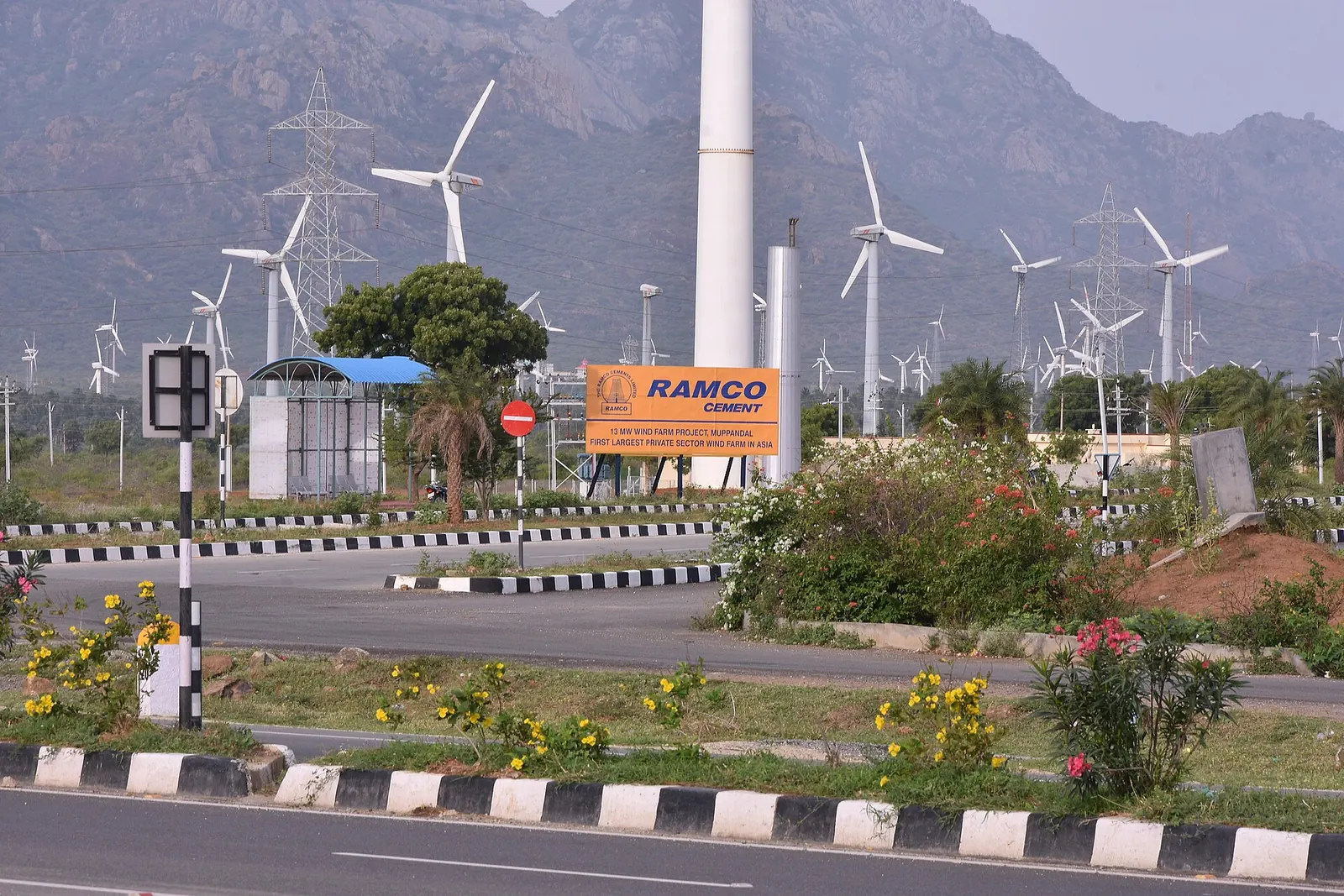
On 14 July 2025 the Ministry of New and Renewable Energy announced that India had reached 50 per cent of installed electricity capacity from non-fossil sources, five years ahead of the 2030 goal in its nationally determined contribution under the Paris Agreement. On 30 June total installed capacity stood at 484.82 GW. Non-fossil capacity, comprising renewables, large hydro and nuclear, totalled 242.78 GW, or 50.08 per cent. Thermal capacity was 242.04 GW, or 49.92 per cent. Within the non-fossil total, renewables other than large hydro accounted for 184.62 GW, large hydro for 49.38 GW and nuclear for 8.78 GW.
Minister Pralhad Joshi called it a proud moment, and it is. Few countries of India's income level have met a major climate commitment this early. But capacity share is not energy share, and India's coal-fired plants still generate the large majority of its electricity. Our view is that the milestone confirms India's ability to build clean capacity, and that the government's own framing of the next phase, which emphasises grid integration, storage and per capita clean consumption, is the right one. The next target should be expressed in energy, not gigawatts.
Why capacity and energy diverge
A solar plant in India typically runs at a capacity utilisation of around a fifth. A coal plant can run at well over half, and often does. So a fleet that is half non-fossil by capacity is nowhere near half non-fossil by generation. The Ministry of Coal's own figures, published in April 2025, state that coal fuels more than 74 per cent of India's power generation.
That gap is not a flaw in the milestone. It is a property of variable renewable energy everywhere. It does mean that capacity milestones overstate how far the power sector has decarbonised. They also understate how much more needs to happen. To bring coal's share of generation down meaningfully, India needs not only more solar and wind but also storage to shift midday output into the evening, and transmission to move it from resource-rich states to demand centres.
The policy foundations
The ministry credits several programmes. PM-KUSUM has supplied solar pumps to farmers and opened routes to agrivoltaics and feeder-level solarisation. PM Surya Ghar, launched in 2024, targets rooftop solar for one crore households. Solar parks have brought utility-scale projects in at low tariffs. The National Wind-Solar Hybrid Policy has encouraged combined projects that provide a smoother output profile. The ministry also notes the contribution of wind in Gujarat and Tamil Nadu to meeting the evening peak, an important point given that solar contributes nothing after sunset.
These programmes work at very different scales and through different institutions. Solar parks and central tenders drive most of the gigawatts. PM-KUSUM and PM Surya Ghar matter more for distribution networks, rural incomes and political support than for headline capacity. All of them depend, eventually, on state distribution companies that buy the power and maintain the local networks.
The government's own next-phase agenda
The ministry's statement is notably frank about what comes next. It calls for doubling per capita clean electricity consumption, especially in rural and underserved areas. It calls for a digitally integrated grid able to manage high renewable penetration and two-way flows. It names battery storage and pumped hydro as critical to reliability and round-the-clock supply. It calls for circular management of solar panels, turbine blades and batteries, and for faster investment in green hydrogen.
That is a reasonable agenda, and the emphasis on storage and grid is correct. What it lacks is a quantitative anchor. A target for the share of non-fossil generation, or for storage capacity, or for evening-hour clean supply, would give the next phase the same focus that the 50 per cent capacity goal gave the last.
The distribution company link
Every item on that agenda runs through the state distribution companies. They buy the power, operate the local networks where rooftop systems connect, and set the time-of-day tariffs that determine whether storage and flexible demand can earn a return. A capacity milestone achieved largely through central tenders and solar parks says little about their readiness. Measures of their financial health, metering coverage and payment discipline belong on the same dashboard as gigawatts installed.
Thermal capacity is still growing
The 49.92 per cent thermal share is not a static number. India is adding new coal capacity to meet rising peak demand, which reached a record 250 GW in May 2024. The coal ministry projects coal's share of generation at 55 per cent by 2030. That implies coal output growing in absolute terms for several more years even as its share declines.
There is no contradiction in building both. India's demand is growing fast enough that clean capacity alone cannot meet the evening peak without storage at a scale not yet procured. But it does mean the non-fossil share of capacity may rise more slowly from here, because thermal additions will offset part of the renewable build.
The 500 GW question
India's domestic goal is 500 GW of non-fossil capacity by 2030. At 242.78 GW in June 2025, the country needs to add roughly 257 GW in five and a half years, close to 47 GW a year. That is roughly double the annual additions India achieved in 2023-24. It is achievable only if transmission, storage procurement and utility contracting all accelerate together.
The international NDC goal has been met. The domestic target is far harder and will be the real test of India's energy transition this decade.
Our position
Reaching 50 per cent non-fossil capacity five years early is a genuine accomplishment and places India among the few G20 countries ahead of their capacity commitments. It reflects a decade of policy continuity on solar parks, auctions and manufacturing.
But capacity share overstates progress in decarbonisation, and coal still produces about three quarters of India's electricity. The next phase should be measured by what reaches consumers: the share of clean energy in generation, the volume of clean supply available in the evening, and the reliability of the grid that carries it. The government has identified the right priorities. It should now attach numbers to them.