
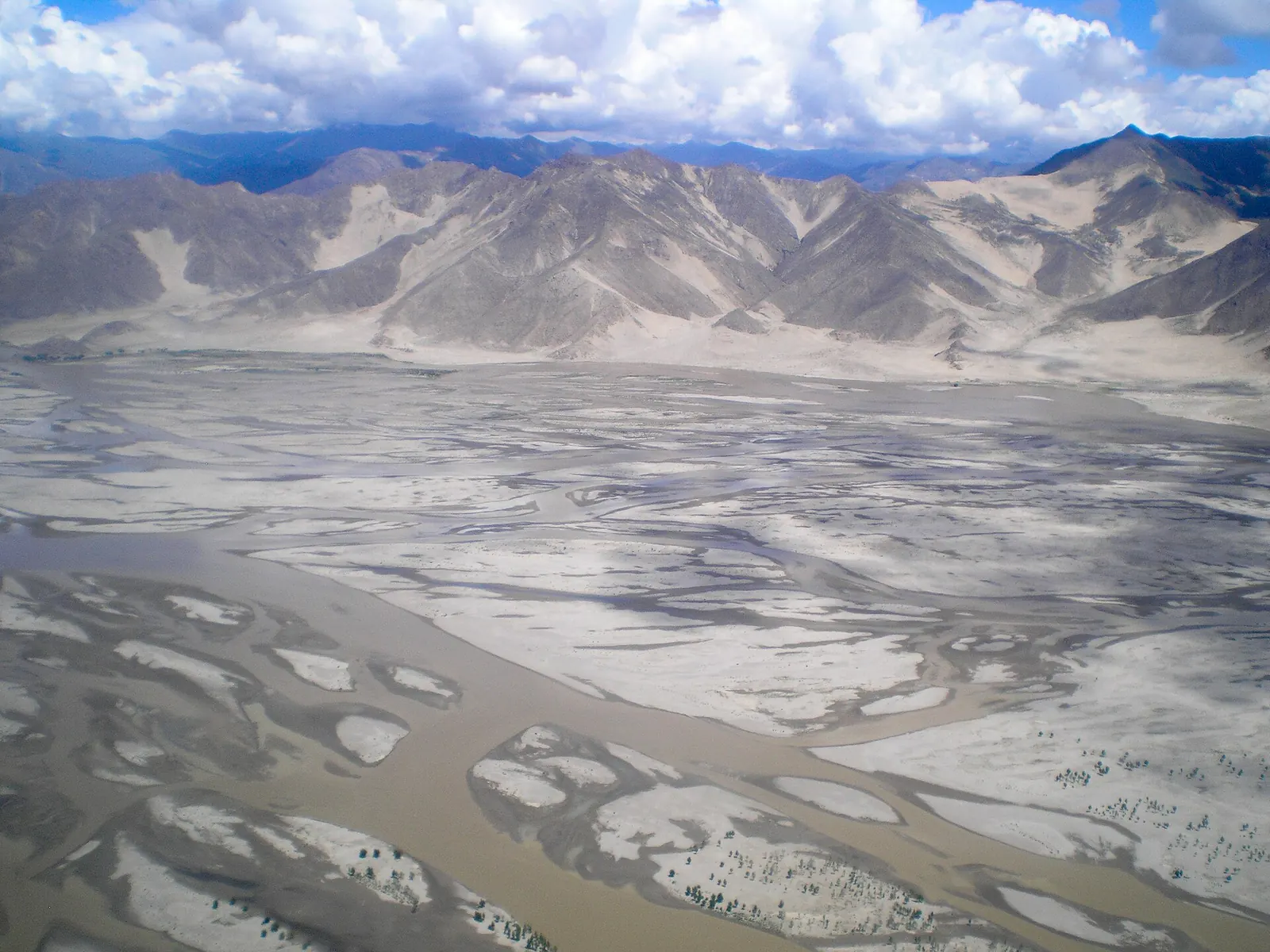
On 19 July 2025 Premier Li Qiang announced the start of construction of the hydropower project on the lower reaches of the Yarlung Tsangpo, the river known downstream in India as the Brahmaputra. The groundbreaking took place at the dam site of the Mainling hydropower station in Nyingchi, in the Xizang Autonomous Region. Xinhua reported that the project will consist of five cascade hydropower stations with an estimated total investment of about 1.2 trillion yuan, roughly 167.8 billion US dollars, and will primarily deliver electricity for consumption outside the region while also meeting local demand. A new state company, China Yajiang Group, has been created to build and operate it.
The scale invites comparison with the Three Gorges Dam, and the location invites geopolitical commentary. Both deserve attention. But the energy logic of the project is clearer than either. China is building record volumes of wind and solar and running into the limits of variable generation. Large hydropower provides firm, dispatchable and seasonal clean energy that can balance those resources across a continental grid. Our view is that the project is primarily an investment in system flexibility for the 2030s, and that its downstream risks for India and Bangladesh are real enough to require a formal data-sharing and consultation framework that does not yet exist.
What has been disclosed
Official disclosures are limited. Xinhua confirms five cascade stations, the 1.2 trillion yuan investment estimate, and the primary purpose of exporting power from Xizang. Bloomberg's coverage of the launch describes the project as a mega-dam and notes the controversy it has generated. Reporting on the project design describes a "cut the bend, tunnel diversion" approach, in which water is diverted through tunnels across the river's great bend, exploiting a steep drop in elevation over a short distance. Public reference sources describe a target of commercial operation around 2033, though official sources have not set out a detailed timetable.
The government has not published a full capacity figure or an environmental impact assessment in the public domain. That absence is itself significant, and it is the main reason downstream governments are uneasy.
Why China wants firm clean power
China's power system is changing faster than its operating model. The National Energy Administration reported that wind and solar capacity passed coal capacity in mid-2024, and that solar alone passed 1 TW in May 2025. Variable generation is now the largest block of installed capacity. That creates a growing need for resources that can supply power when the wind is calm and the sun is down, and that can store energy across seasons.
Coal currently fills that role, and China continues to build coal plants partly for that reason. Batteries are growing quickly but cover hours, not seasons. Pumped storage is expanding, but it consumes energy rather than producing it. Large hydropower, especially with reservoir storage, can shift water and therefore energy over weeks and months. A cascade in a region with very large hydraulic head can generate large volumes of electricity per unit of water, and transmit it eastwards over ultra-high-voltage lines to coastal demand centres.
That is the strategic case. In a system aiming to peak emissions before 2030 and reach carbon neutrality by 2060, each terawatt-hour of firm clean generation reduces the amount of coal needed for reliability.
Engineering and seismic risk
The lower Yarlung Tsangpo runs through some of the most tectonically active terrain on earth, near the eastern syntaxis of the Himalaya. Building tunnels and dams there poses serious engineering challenges and seismic risks. Chinese engineers have extensive experience with large hydropower in difficult terrain in Sichuan and Yunnan, but this location is more extreme. The investment estimate of 1.2 trillion yuan will likely prove optimistic, as cost overruns on remote mega-projects are the norm rather than the exception.
The downstream question
The Brahmaputra is a major river for north-eastern India and for Bangladesh. Downstream concerns centre on three issues: changes to flow timing, the trapping of sediment that sustains floodplain agriculture and delta formation, and the risk of sudden releases or failures. China has argued in the past that run-of-river projects do not reduce total flow. That argument is weaker for a large cascade with tunnel diversion, where the timing of flow can be changed significantly even if the annual volume is preserved.
India and China have had expert-level arrangements for sharing hydrological data during flood seasons, but these are limited in scope and have been interrupted during periods of political tension. There is no basin-wide treaty. The scale of the new project makes the case for a far more comprehensive framework covering real-time flow data, sediment monitoring, reservoir operating rules and emergency notification.
Power markets and the grid
For China's power sector, the project's value will depend on transmission. Xizang has small local demand, so almost all of the output must be exported to other provinces. That requires ultra-high-voltage links of several thousand kilometres. The pricing of that power, and the willingness of receiving provinces to accept it under China's still fragmented provincial markets, will determine how much of the cascade's flexibility is actually used. A large hydropower project contracted to run as baseload into a distant province delivers far less system value than one dispatched flexibly to balance solar and wind.
Our position
The Yarlung Tsangpo cascade is a rational investment from the perspective of China's power system. It adds firm, clean and potentially flexible generation at a scale few other resources can match, and it will reduce China's reliance on coal for reliability in the 2030s. The engineering risks are high and the cost estimate is likely to rise.
The downstream risks are not a reason for China to abandon the project, but they are a reason to change how it is governed. A binding basin framework with India and Bangladesh, built on full data sharing and agreed operating rules, would reduce the political risk to China as much as the physical risk to its neighbours. Without one, the cascade will be a source of regional tension for decades, whatever its contribution to decarbonisation.