
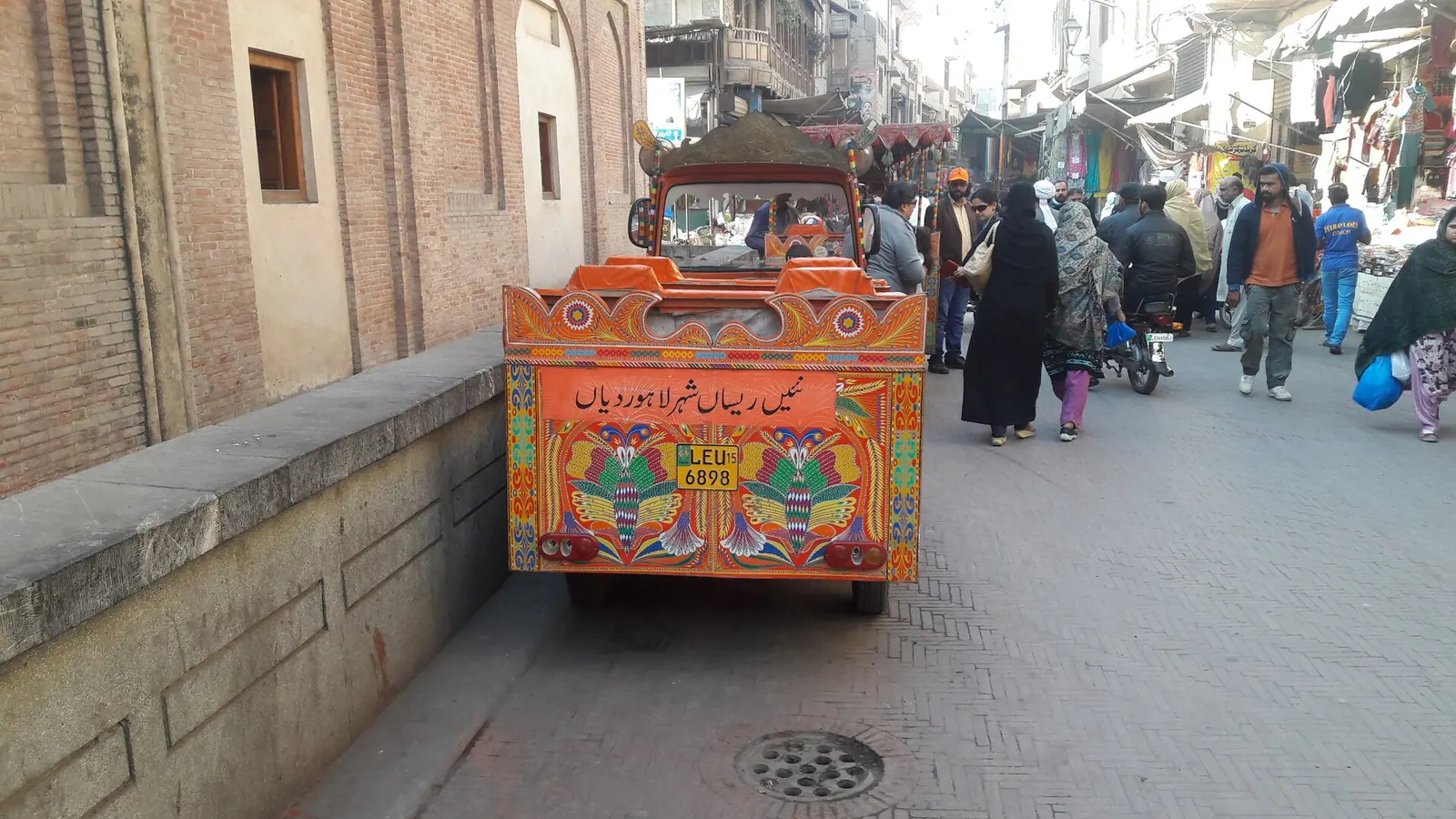
In early August 2025 Pakistan's Economic Coordination Committee approved a five-year subsidy scheme to support the rollout of 116,000 electric motorcycles and 3,170 electric rickshaws and loaders, at an estimated cost of around Rs100 billion. It is funded by a New Energy Vehicle Adoption Levy on conventional vehicles, charged at 1 per cent of the value of local and imported vehicles up to 1,300cc, 2 per cent between 1,300cc and 1,800cc, and 3 per cent above 1,800cc. The levy is expected to raise around Rs122 billion and, according to Dawn, also meets a condition of the IMF's USD 1.4 billion Resilience and Sustainability Facility. Both sit within the New Energy Vehicles Policy 2025-30, which aims for electric vehicles to make up 30 per cent of new vehicle sales by 2030.
The subsidy design is specific. Interest-free loans of up to Rs200,000 for an e-bike and Rs880,000 for an e-rickshaw or loader, with the government contributing up to Rs50,000 and Rs200,000 respectively and covering the full markup. At least a quarter of e-bike quotas are reserved for women, and a tenth for commercial users such as delivery riders. Our view is that this is one of the better-designed energy policies Pakistan has produced in recent years. It taxes the vehicles owned by higher-income households to subsidise the vehicles used by lower-income workers, and it targets the segment where electrification can cut oil imports fastest. Its success depends on battery quality, charging access and making sure electricity tariffs do not undermine the economics.
Why two-wheelers matter
Motorcycles dominate Pakistan's road fleet. Millions of workers, delivery riders and small traders depend on them, and they account for a large share of petrol consumption. Rickshaws and small loaders are central to urban transport and local freight. Electrifying these vehicles is cheaper and faster than electrifying cars: batteries are smaller, upfront price gaps are narrower, and daily distances are short enough that home or depot charging is feasible.
The fuel savings for users are significant. A rider who travels several dozen kilometres a day spends a large share of daily income on petrol. Even at Pakistan's high electricity tariffs, the cost of charging an e-bike for the same distance is substantially lower. Interest-free loans with a government contribution can make the monthly repayment comparable to or lower than what the rider currently spends on fuel, which is the key to adoption.
The progressive design
The levy falls on new conventional vehicles, with higher rates for larger engines. Buyers of cars above 1,800cc are, overwhelmingly, among the wealthiest Pakistanis. The proceeds fund subsidies for vehicles used by people with modest incomes. That is a rare progressive structure in Pakistan's energy policy, where subsidies have often benefited the better-off, for example through cross-subsidised electricity tariffs that favour larger consumers in some categories or untargeted fuel price relief.
The levy also raises the cost of conventional cars slightly relative to electric ones, nudging higher-income buyers towards hybrids and electric vehicles over time.
Using surplus power
The ECC explicitly noted that electric vehicles could help utilise excess power for productive purposes. That is an important point. Pakistan has substantial generating capacity that is paid for through capacity payments whether or not it is used. Grid demand has been depressed by high tariffs and the shift to rooftop solar. Every additional unit sold to charge vehicles spreads those fixed costs over more sales, which helps the power sector's finances. Charging that takes place during off-peak hours, overnight or in the middle of the day when solar output is high, is particularly valuable.
The government should therefore design charging tariffs that encourage off-peak use. A dedicated, lower tariff for EV charging at certain hours would improve user economics and help the grid.
Who benefits first
The allocation rules are worth noting. Quotas for rickshaws and loaders are distributed by provincial population, with 10 per cent reserved for Balochistan, and applications are processed through a digital platform with electronic balloting if demand exceeds supply. Loan tenures are two years for e-bikes and three years for e-rickshaws and loaders, with a 20 per cent first-loss portfolio guarantee from the government to encourage banks to lend. These details matter, because subsidy schemes in Pakistan have often been captured by the well-connected. A transparent digital process with published results would help build trust in the scheme and in electric vehicles generally.
The first phase is modest, at 40,000 e-bikes and 1,000 rickshaws and loaders. That is a small share of annual motorcycle sales, so the scheme should be read as a market-building exercise. Its most important effect may be to give manufacturers enough guaranteed demand to set up local assembly lines and after-sales networks, which would then serve unsubsidised buyers too.
The risks
Quality is the first risk. Cheap e-bikes with low-quality batteries can lose range quickly and damage public confidence. The scheme restricts participation to manufacturers and assemblers shortlisted by the Engineering Development Board on the basis of technical and financial strength. That screening should include battery warranties and safety standards, because a wave of failing batteries would set adoption back years.
Charging access is the second. Many riders live in dense urban housing without dedicated parking. Battery swapping, where riders exchange depleted batteries for charged ones at stations, may be more practical than home charging for many users, and policy should support it.
Electricity tariffs are the third. Pakistan's tariffs have risen sharply in recent years. If charging costs rise further, the economic case weakens. The government should make sure that EV charging is not caught up in tariff increases intended for other purposes.
Our assessment
The NEV levy and subsidy scheme is well targeted. It taxes larger cars to fund electric two- and three-wheelers, it focuses on the vehicles that consume the most fuel collectively, and it makes use of a power system with spare capacity. The 30 per cent sales target for 2030 is ambitious but achievable for two-wheelers if the scheme is implemented well. The government should prioritise battery quality, support battery swapping and design charging tariffs that favour off-peak use. If it does, this could become one of the most effective tools Pakistan has to cut its oil import bill.