
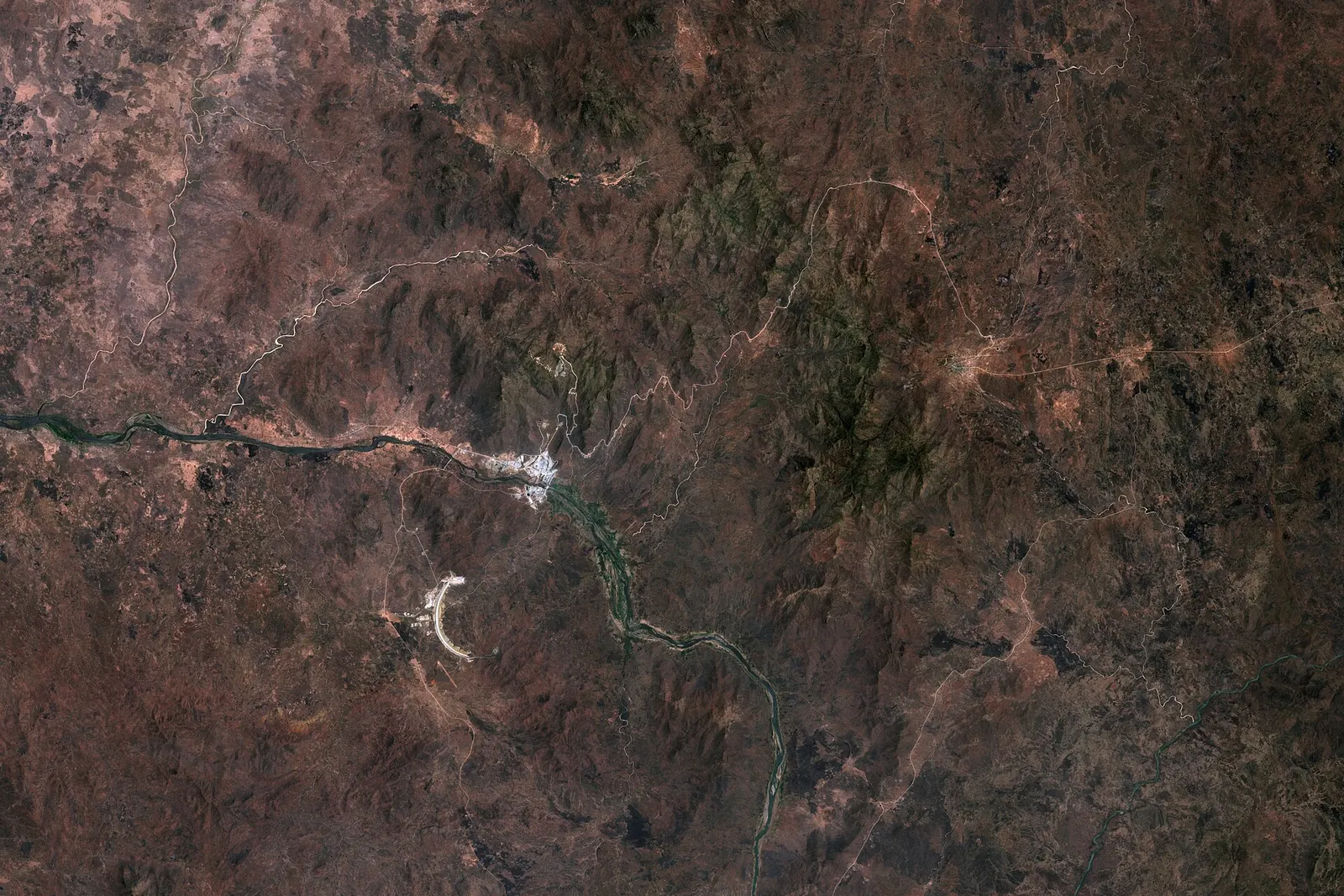
On 9 September 2025 Prime Minister Abiy Ahmed formally inaugurated the Grand Ethiopian Renaissance Dam on the Blue Nile at Guba, near the Sudanese border. The dam reached its maximum output of 5,150 MW on the day, making it Africa's largest hydroelectric plant and putting it among the 20 largest in the world, at roughly a quarter of the capacity of China's Three Gorges. The project cost about USD 5 billion, and local media reported that 91 per cent of the funding came from the state, with the rest from Ethiopians buying bonds or making donations. The presidents of Somalia, Djibouti and Kenya attended. Egypt's Foreign Ministry wrote to the UN Security Council saying the inauguration violated international law and that Cairo reserves the right to take all appropriate measures to protect the interests of its people.
The diplomatic dispute will dominate headlines, as it has since construction began in 2011. Our view is that the more consequential questions for the next five years are economic. Ethiopia has built enormous generating capacity in a country where only about 55 per cent of the population had electricity in 2022, according to World Bank data, and where urban access was around 94 per cent. The dam does not close that gap by itself. Ethiopia now needs transmission, distribution, tariffs that sustain its utility, and export contracts that earn hard currency. Without them, the GERD risks becoming a vast asset that runs well below its potential.
What the dam changes for Ethiopia's power system
Before the GERD, Ethiopia already relied overwhelmingly on hydropower, with plants such as Gibe III on the Omo river. Adding 5,150 MW to that base gives the country, on paper, generating capacity well in excess of its current domestic demand. That creates an unusual position in African electricity: a surplus of cheap, low-carbon power in a country with low per capita consumption.
But hydropower output depends on water, not nameplate capacity. Large dams are often designed with turbine capacity well above their average output, so they can supply peak demand and respond to the flow of the river through the year. Actual annual generation will depend on rainfall, reservoir management and the share of capacity that the grid can absorb. Analysts should be wary of equating 5,150 MW with 5,150 MW of continuous supply.
The grid is the bottleneck
The Reuters account of the inauguration noted that access in rural areas is often constrained by underdeveloped transmission networks. That is the core issue. Generation at Guba is far from the main load centres in Addis Ababa and the central highlands, and further still from rural communities that remain unconnected. Getting the power to them requires high-voltage lines, substations and, most expensively, distribution networks reaching millions of dispersed households.
Ethiopian Electric Power and Ethiopian Electric Utility, the state generation and distribution companies, have historically struggled financially, with tariffs that were among the lowest in Africa. Ethiopia began a phased tariff increase in 2024 as part of its broader economic reform programme with the International Monetary Fund. Sustaining that path is essential. A distribution utility that loses money on each new customer will connect people slowly, regardless of how much generation is available.
The surplus also explains why Ethiopia has attracted energy-intensive users such as bitcoin miners, which can be located near substations and buy large volumes at short notice. That brings revenue, but it is a fragile customer base whose demand can disappear when cryptocurrency prices fall. It is no substitute for domestic connections and industrial demand.
Exports are the economic prize
The most valuable use of surplus GERD output may be exports. Ethiopia already sells electricity to Djibouti and Sudan and has a high-voltage direct current interconnector to Kenya, which in turn links towards the Eastern Africa Power Pool. Kenya's attendance at the ceremony was a signal of that commercial relationship. Exports earn foreign exchange, which Ethiopia badly needs after its debt restructuring and currency reforms. They also bind neighbouring economies to Ethiopian supply, which has strategic value.
To make the most of this, Ethiopia needs bankable, long-term export contracts with creditworthy buyers and reliable transmission links. The Eastern Africa Power Pool provides a framework, but regional power trade in Africa has been held back by weak interconnections and by buyers' payment difficulties. Expanding links to Kenya, Tanzania and potentially Sudan, once its conflict allows, would turn the dam into a regional asset rather than a national one.
The Nile dispute
Egypt depends on the Nile for about 90 per cent of its fresh water and fears that the GERD could restrict flows during droughts and encourage further upstream dams. Sudan has joined Egypt's calls for a legally binding agreement on filling and operation, while also standing to benefit from better flood management and cheaper electricity. Ethiopia filled the reservoir in phases from 2020, and independent research cited in coverage of the inauguration found no major disruptions to downstream flow so far, helped by favourable rainfall and cautious filling in wet seasons.
Our view is that the dispute is now about operation rather than construction. The dam exists. What matters is how it is run during multi-year droughts, when Ethiopia's incentive to keep the reservoir full for power generation conflicts most sharply with downstream needs. A data-sharing and drought-management arrangement, even short of a full treaty, would reduce risk for all three countries. Ethiopia has an economic interest in this too: regional export markets and financing are easier to secure when relations with neighbours are not in crisis.
Our assessment
The GERD is a remarkable national project, financed largely from domestic sources and completed despite conflict and diplomatic pressure. It gives Ethiopia a rare asset: a large surplus of cheap, low-carbon power. But generation was the easier part. The test now is whether Ethiopia can build the grid, sustain the tariff reforms that keep its utilities solvent, sign export contracts that earn hard currency, and reach a workable arrangement on drought operation with Egypt and Sudan. If it does, the dam can underpin regional industrialisation. If it does not, much of its potential will be spilled over the turbines.