
On 18 September 2025 Prime Minister Anthony Albanese, Treasurer Jim Chalmers and Climate Change and Energy Minister Chris Bowen announced that Australia would set its 2035 emissions target at a reduction of 62 to 70 per cent from 2005 levels. The government accepted the independent advice of the Climate Change Authority, which described the range as ambitious but achievable. Alongside the target, it released a Net Zero Plan with six sector plans, Treasury economic modelling and the Authority's advice, and announced new spending, including a AUD 5 billion Net Zero Fund within the National Reconstruction Fund, AUD 2 billion more for the Clean Energy Finance Corporation and AUD 1.1 billion to encourage domestic production of clean fuels. The target will be submitted as Australia's nationally determined contribution under the Paris Agreement.
According to the government, most of the reductions needed to reach the lower end of the range can come from five areas: clean electricity, electrification and efficiency, clean fuels, new technologies and carbon removals on land. Our view is that the target is reasonable and that electricity is the decisive sector. Australia's power system has some of the best wind and solar resources in the world and a world-leading rooftop solar fleet, but the transmission lines and firming capacity needed to replace its ageing coal plants are behind schedule. The credibility of the 2035 target depends on whether that gap is closed.
Why electricity carries the target
Electricity is the largest single source of Australia's emissions and the sector where the cheapest abatement is available. The government already has a target of 82 per cent renewable electricity in the national grid by 2030. Reaching it would cut emissions from power generation sharply, and electrifying transport, buildings and parts of industry would then extend those reductions across the economy.
Progress has been substantial. Rooftop solar is installed on a large share of Australian homes, utility-scale solar and wind are expanding, and battery storage is growing rapidly, both at grid scale and in households, supported by a federal battery subsidy introduced in 2025. In South Australia, renewables already supply most of the state's electricity over a year.
The transmission bottleneck
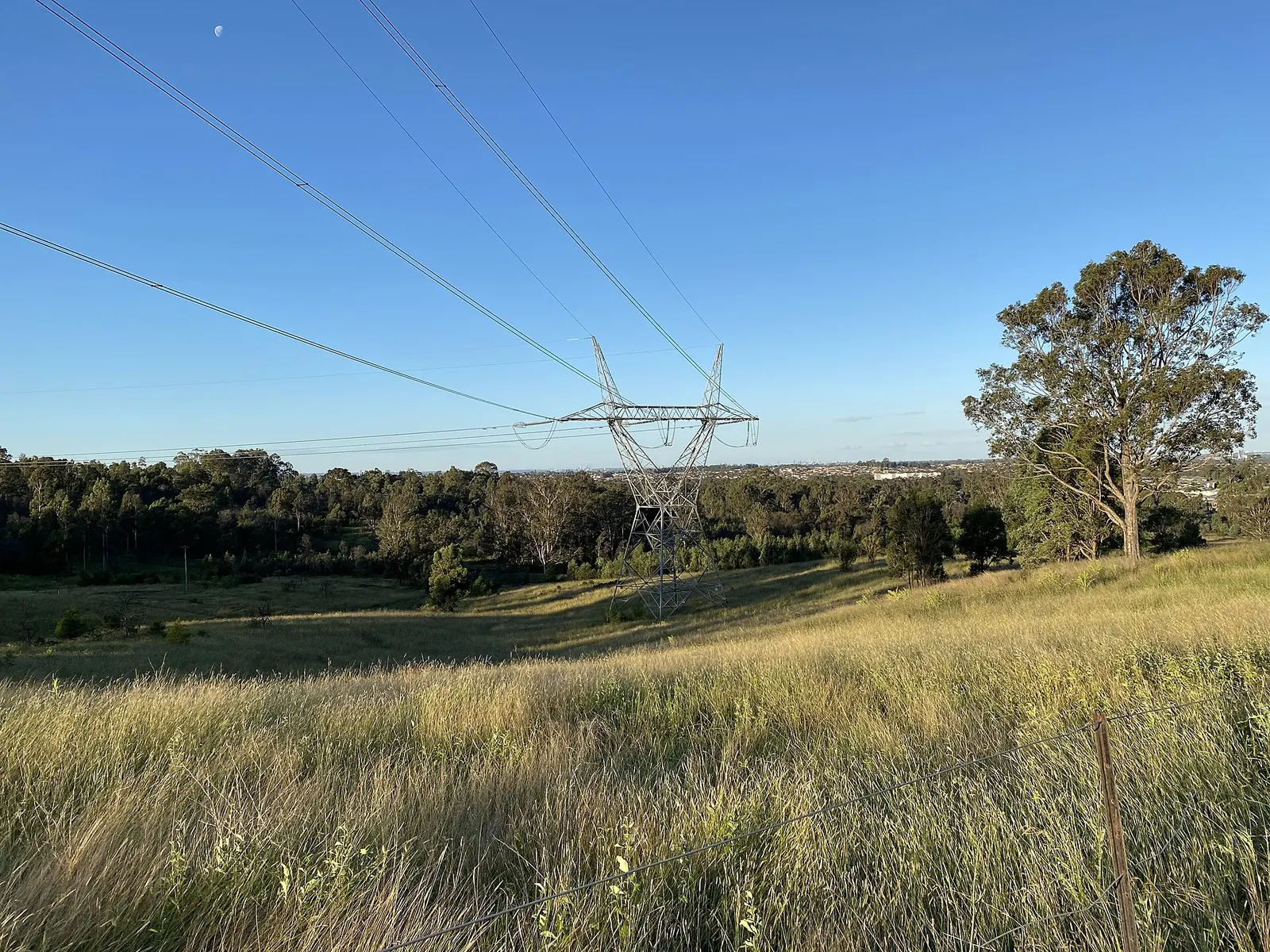
The Australian Energy Market Operator's Integrated System Plan sets out the transmission projects needed to connect new renewable zones and move power between states. Several of the most important lines have faced delays and large cost increases. Community opposition to new lines across farmland, rising construction costs and supply-chain constraints have all contributed.
Without transmission, new wind and solar farms cannot connect, and the coal plants they are meant to replace cannot retire safely. Several coal plant owners have already extended closure dates because replacement capacity and transmission are not ready. Each delay keeps emissions higher and makes the 2030 and 2035 targets harder to reach.
One practical response is to make better use of the grid that exists. Grid-scale batteries placed at congested points can absorb midday solar that would otherwise be curtailed and release it in the evening peak, deferring some transmission investment. Dynamic operating envelopes for rooftop solar, which let networks adjust how much households can export in real time, allow more distributed generation without new wires. These measures do not remove the need for major lines, but they can buy time while those lines are approved and built. Regulators should treat them as part of the transmission strategy rather than as separate programmes.
Firming and the role of gas
A system dominated by wind and solar needs firming capacity for periods when both are low. Australia's options include batteries, pumped hydro, demand response and gas-fired generation. The Snowy 2.0 pumped hydro project is the largest firming investment, but it has suffered major cost overruns and delays. Batteries are being built quickly and can cover daily cycles, but longer periods of low wind in winter require deeper storage or gas.
Gas will therefore continue to play a role as a back-up fuel, which creates an uncomfortable tension for a major gas exporter. Australia's east coast gas market has faced warnings of supply shortfalls later this decade, because much of the gas produced in Queensland is committed to LNG export contracts. Ensuring enough domestic gas for firming, without locking in high gas use, is one of the more delicate policy problems the Net Zero Plan must handle.
Beyond electricity
The harder sectors are transport, heavy industry and agriculture. The New Vehicle Efficiency Standard, which began applying in 2025, should accelerate the uptake of electric vehicles, but Australia's vehicle fleet turns over slowly. Heavy industry, including alumina, steel and LNG processing, faces high abatement costs, and the Safeguard Mechanism, which sets declining emissions baselines for large facilities, will be the main tool. Agriculture and land use present measurement and permanence challenges for carbon removals.
The AUD 5 billion Net Zero Fund and the clean fuels support are aimed at these sectors. They are useful, but the scale of investment needed to decarbonise alumina refining or steelmaking is much larger. The fund will work best if it crowds in private investment rather than substituting for it.
The politics
The opposition Coalition has moved away from supporting net zero, and the target will be a point of contest at future elections. A range rather than a single number gives the government room to claim success at the lower end while signalling ambition at the higher end. That flexibility is politically useful but also reduces clarity for investors, who will look at the policies behind the range rather than the range itself.
Our assessment
Australia's 2035 target is credible on paper and grounded in independent advice. It relies primarily on decarbonising electricity, which is the right priority given the country's renewable resources. But the target is hostage to transmission and firming. If the major transmission projects are delivered close to schedule and coal closures proceed, the lower end of the range is achievable and the upper end possible. If transmission continues to slip, coal plants will run longer, emissions will stay higher, and the target will become another example of ambition outrunning delivery.