
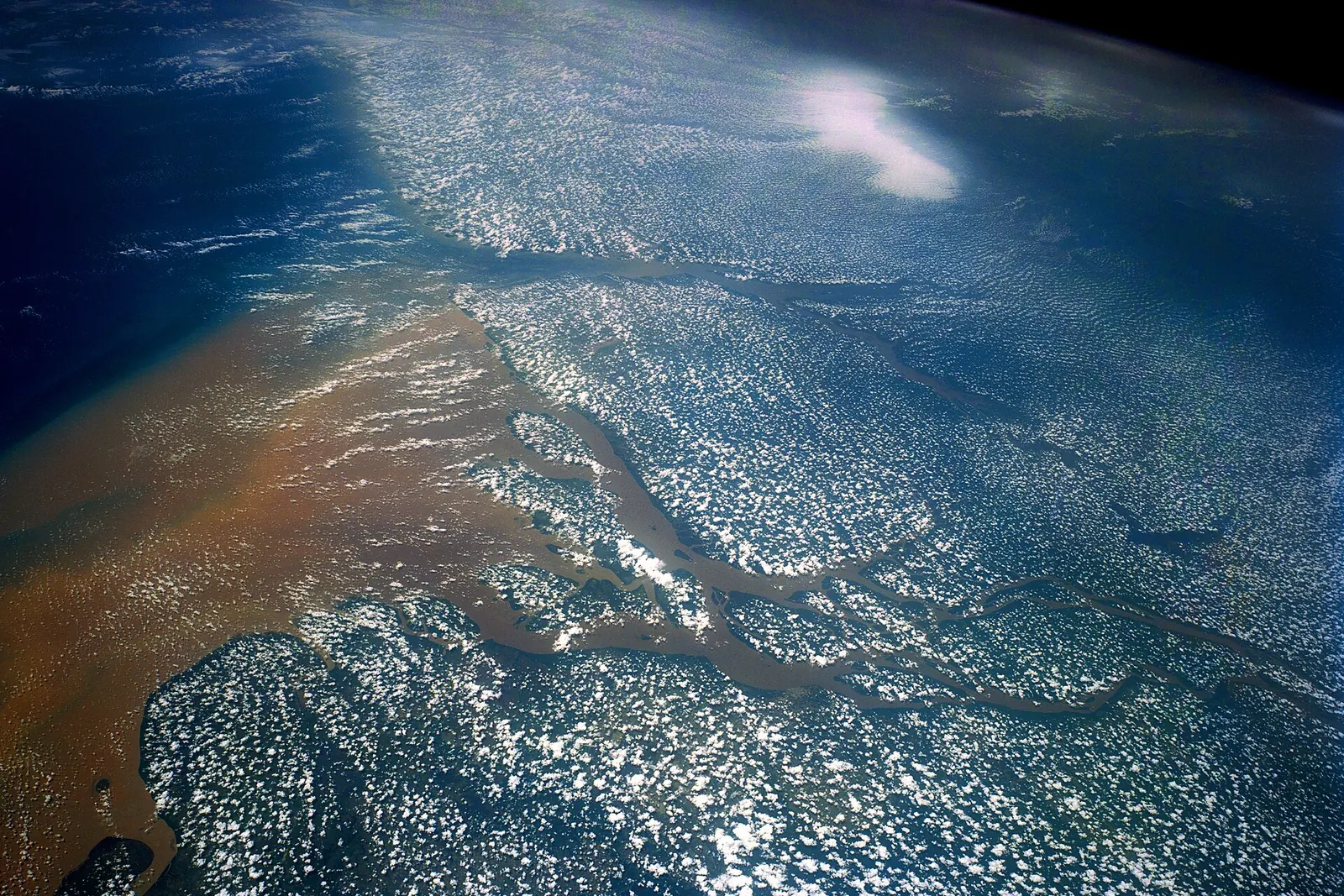
On 20 October 2025 Brazil's environmental agency, Ibama, granted Petrobras an operating licence to drill an exploratory well in block FZA-M-59 in the Foz do Amazonas basin, part of Brazil's Equatorial Margin. The well lies in deep water off the state of Amapá, about 175 kilometres from the coast and around 500 kilometres from the mouth of the Amazon river. Drilling was due to start immediately and to last around five months. It is an exploration well to assess whether oil and gas exist in economic quantities. There will be no production at this stage. Ibama said the licence followed a rigorous process, including an environmental impact study, three public hearings, 65 technical meetings in more than 20 municipalities in Pará and Amapá, inspections of emergency response structures and a pre-operational assessment involving more than 400 people. It had refused a licence for the same area in 2023, and approved Petrobras's revised emergency plan in May 2025.
The decision comes three weeks before Brazil hosts the COP30 climate conference in Belém, at the edge of the Amazon. Environmental groups called it a contradiction. President Luiz Inácio Lula da Silva has argued that no country is ready to give up oil, and the COP30 president, André Corrêa do Lago, has denied there is any contradiction. Our view is that Brazil's position is defensible in principle but fragile in practice. A country with large hydropower and fast-growing wind and solar can make a case for using oil revenue to fund development and the transition. But that case only holds if exploration is tied to strict environmental safeguards, a clear plan for the use of revenues and a realistic view of when, if ever, the oil would be produced.
Why Petrobras wants the Equatorial Margin
Brazil's oil output has grown strongly over the past decade, driven by the pre-salt fields off Rio de Janeiro and São Paulo. Those fields will eventually decline, and Petrobras has argued that the Equatorial Margin, which runs along the northern coast, could be the next major frontier. The geological rationale comes partly from neighbouring Guyana and Suriname, where large discoveries in similar formations have transformed their economies. If comparable resources exist off Amapá, they could sustain Brazilian production into the 2040s.
Petrobras says confirming oil in the Equatorial Margin could open an important energy frontier and help ensure a just, safe and sustainable transition. The company's chief executive, Magda Chambriard, described the licence as an achievement for Brazilian society.
For Amapá, one of Brazil's poorer states, the prospect of oil revenue is politically powerful. Local leaders have pressed for the licence, arguing that the north should share in the wealth that oil has brought to the south-east. That regional dimension helps explain why the federal government has backed Petrobras despite the diplomatic awkwardness of the timing.
The environmental risks
The region is ecologically sensitive. The Amazon plume carries freshwater and sediment far into the Atlantic, and the coast includes extensive mangroves and a reef system discovered relatively recently beneath the plume. Strong ocean currents complicate spill response. Those concerns were central to Ibama's 2023 refusal, which cited weaknesses in Petrobras's plans for responding to an accident and for rescuing oiled wildlife.
Ibama says the revised plans substantially improved emergency response. The test of that claim will be operational: whether drilling proceeds without incident and whether response capacity is maintained at the level promised. Exploration wells carry lower risks than production operations, but deepwater drilling in a frontier area with strong currents is not without danger.
The climate argument
Critics argue that opening a new oil frontier is incompatible with the goals of the Paris Agreement, which the International Energy Agency's net zero pathway has interpreted as requiring no new long-lead oil and gas fields. Supporters argue that global oil demand will persist for years, that Brazilian oil has relatively low production emissions compared with many sources, and that if Brazil does not produce, others will.
Our view is that both arguments contain truth, and that the decisive issue is timing. Exploration now may lead to production in the 2030s, if anything is found and developed. By then, global oil demand may be on a plateau or in decline. A project that reaches first oil in the mid-2030s and needs 20 years to pay back is exposed to significant risk of stranded assets. Brazil should be cautious about assuming that new frontier oil will be as valuable in 2040 as it is today.
Making the case credible
If Brazil wants to argue that oil revenue will fund its transition, it should make that link concrete. That means legislating for a share of revenue from new frontier production to go into a fund for energy transition and Amazon protection, with transparent governance. It means setting a clear decision point at which, if exploration finds commercial quantities, a full environmental and climate assessment will be made before development is approved. And it means continuing to expand Brazil's already strong renewable base so that new oil is clearly destined for export and not for locking in domestic fossil demand.
Brazil's electricity system already draws the large majority of its power from renewable sources, mainly hydropower, with wind and solar growing fast in the north-east. That gives the country more credibility than most oil producers when it argues for a gradual transition. Using that credibility well at COP30 will require showing that oil exploration is part of a managed plan rather than an open-ended expansion.
Our assessment
The Foz do Amazonas licence is the result of a genuine regulatory process, not a political override, and exploration alone does not commit Brazil to production. But the decision carries symbolic weight at COP30 and real environmental risk in a sensitive region. Brazil's argument that oil can fund development and the transition is reasonable only if it is backed by strict safeguards, earmarked revenue and a sober assessment of long-term demand. Without those, the licence will look less like a managed bet and more like a hedge against the transition the country says it supports.