
On 16 October 2025 the Democratic Republic of Congo lifted the cobalt export ban it had imposed in February and replaced it with a quota system administered by ARECOMS, the authority that regulates and controls strategic mineral markets. Exports for the final quarter of 2025 were capped at 18,125 tonnes. For 2026 and 2027 the cap is 96,600 tonnes a year, made up of a base quota of 87,000 tonnes allocated to producers, largely on the basis of their historical exports, and a strategic quota of 9,600 tonnes held by ARECOMS. Under the rules, unused monthly quotas are forfeited and moved to the strategic reserve.
Congo accounts for more than 70 per cent of world cobalt supply, and the ban, first imposed on 22 February 2025 and extended by three months in June, more than doubled the price of cobalt hydroxide, the intermediate product most Congolese mines export. The quota regime is designed to lock in a higher price by limiting supply rather than cutting it off. Our view is that Kinshasa has a legitimate reason to act and has chosen a tool that can work in the short term. But it is a tool that carries a real long-term danger for Congo itself: that battery makers accelerate their move away from cobalt, shrinking the market that the quotas are meant to protect.
Why Congo acted
The background is a price collapse. Cobalt prices fell steeply through 2023 and 2024 as output rose, particularly from large Chinese-owned copper and cobalt operations in Congo. Cobalt is mostly produced as a by-product of copper, which means supply responds to copper economics rather than cobalt demand. When copper production expanded, cobalt output followed regardless of whether the market needed it. The result was oversupply, depressed prices and, for the Congolese state, falling royalty revenue from its most strategically important mineral.
From Kinshasa's perspective, a country that supplies most of the world's cobalt should not be a price taker. The export ban demonstrated that it is not. Prices responded sharply. The quota system is an attempt to convert that demonstration into a durable framework that gives the state a say over the volume that leaves the country and, implicitly, over the price.
How the quotas will work in practice
The allocation of quotas based on historical exports favours established producers, and the largest of those are Chinese-owned. CMOC, which operates major mines including Tenke Fungurume and Kisanfu, and Glencore are the dominant producers. Because cobalt is a by-product, mines cannot easily cut cobalt output without cutting copper. They will therefore keep producing and stockpile cobalt hydroxide within Congo, waiting for quota to export it. That builds a large inventory overhang inside the country.
The early implementation has been difficult. Reuters reported in late October that producers were still waiting for export approvals after the quota system began, which means the transition from ban to quota has, in practice, extended the period of very limited exports. That supports prices but adds uncertainty for buyers, and uncertainty is the thing manufacturers most want to avoid in supply chains for batteries.
The substitution risk
Cobalt's main growth market is lithium-ion batteries for electric vehicles. But the battery industry has been moving away from cobalt for years. Lithium iron phosphate chemistries, which use no cobalt at all, now account for a large and growing share of EV batteries, especially in China, and nickel-rich chemistries have been designed to reduce cobalt content. High and volatile cobalt prices strengthen the case for both.
This is the central risk in Congo's strategy. A quota that raises prices for two or three years can increase revenue in that period. But if it convinces battery makers that cobalt supply is politically unreliable, they will shift even faster towards cobalt-free chemistries. Once production lines and supply contracts are redesigned, the demand rarely returns. Congo could win a higher price on a shrinking market.
There is also a supply response elsewhere. Indonesia has become a significant cobalt producer as a by-product of its nickel processing industry, and its output has grown rapidly. Higher prices make Indonesian cobalt more attractive to buyers who want to reduce their reliance on a single country.
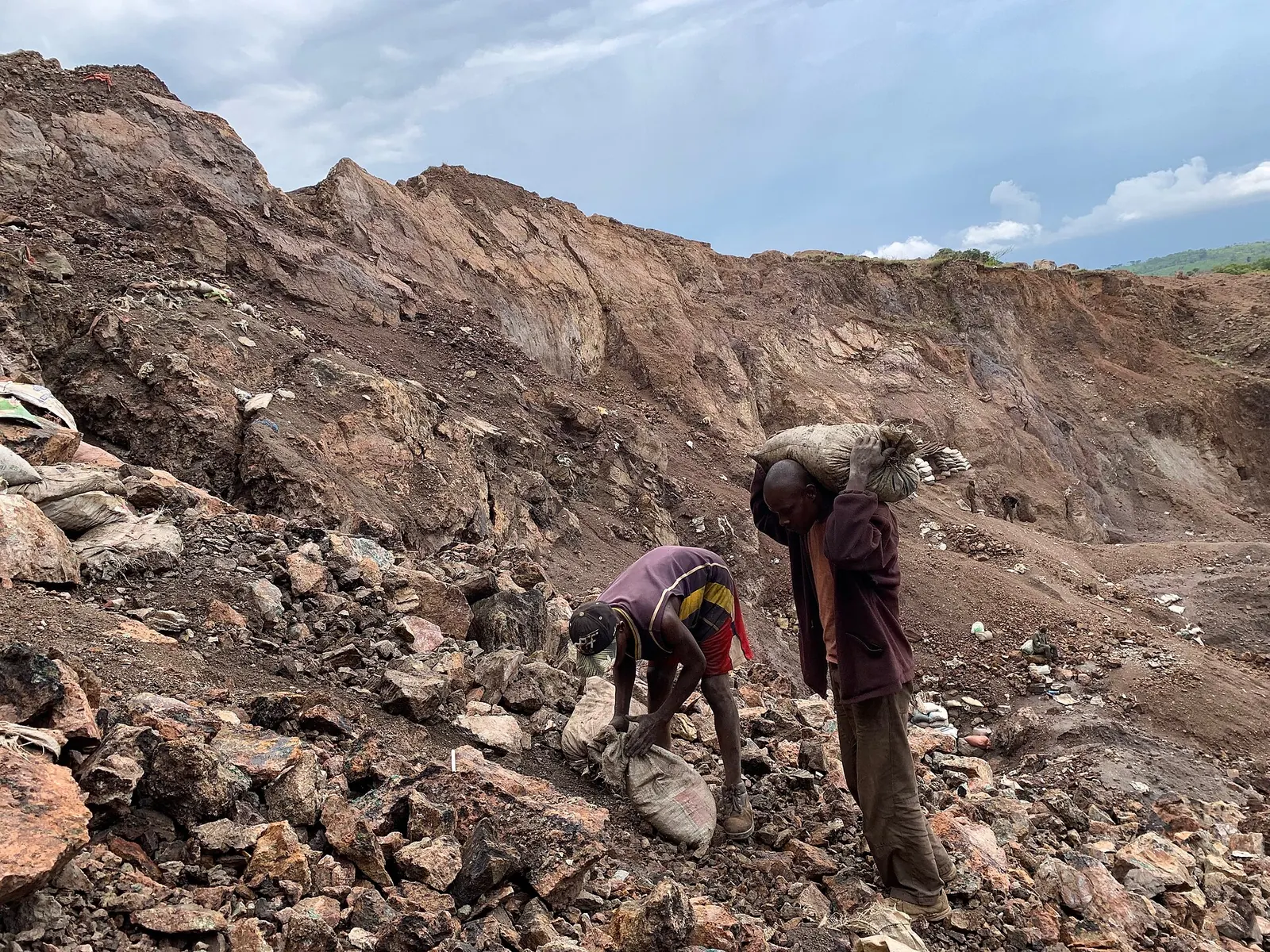
The quota also has distributional effects inside Congo. Artisanal miners, who produce a meaningful share of cobalt and are among the poorest participants in the industry, sell through traders and small processors that are unlikely to receive large quota allocations based on historical exports. If the formal export channel narrows, artisanal output may be pushed further into informal and cross-border trade, which is exactly what traceability efforts by buyers and the state have been trying to reduce. A quota system that excludes small producers risks undermining the responsible sourcing story that Congo needs to sell to Western buyers.
What a better strategy looks like
Our view is that Congo would gain more from using its leverage to capture more of the value chain than from controlling export volumes alone. That means encouraging refining of cobalt hydroxide into higher-value products within the country, or within the region, and building partnerships with buyers that want diversified, traceable supply, including in Europe and the United States. It also means improving the transparency and predictability of the quota system itself, so that buyers see Congo as a reliable long-term supplier rather than a source of policy shocks.
ARECOMS has signalled flexibility, saying it may adjust quotas if the market needs rebalancing. Clear, published criteria for such adjustments would help. A regime with transparent rules and modest price support is more sustainable than one that relies on surprise.
Our assessment
The move from ban to quota is a sensible evolution. It gives Congo a more stable and less disruptive tool than an outright ban, and it reflects legitimate frustration with a market in which the dominant producer country earned little from oversupply. But cobalt is not oil, and Congo is not Saudi Arabia. Its customers have alternatives in chemistry, if not yet in geology. The quota regime should be paired with policies that build local processing and long-term partnerships, and should be run predictably. Otherwise the policy that raised prices in 2025 may be remembered as the policy that accelerated the end of cobalt in batteries.