
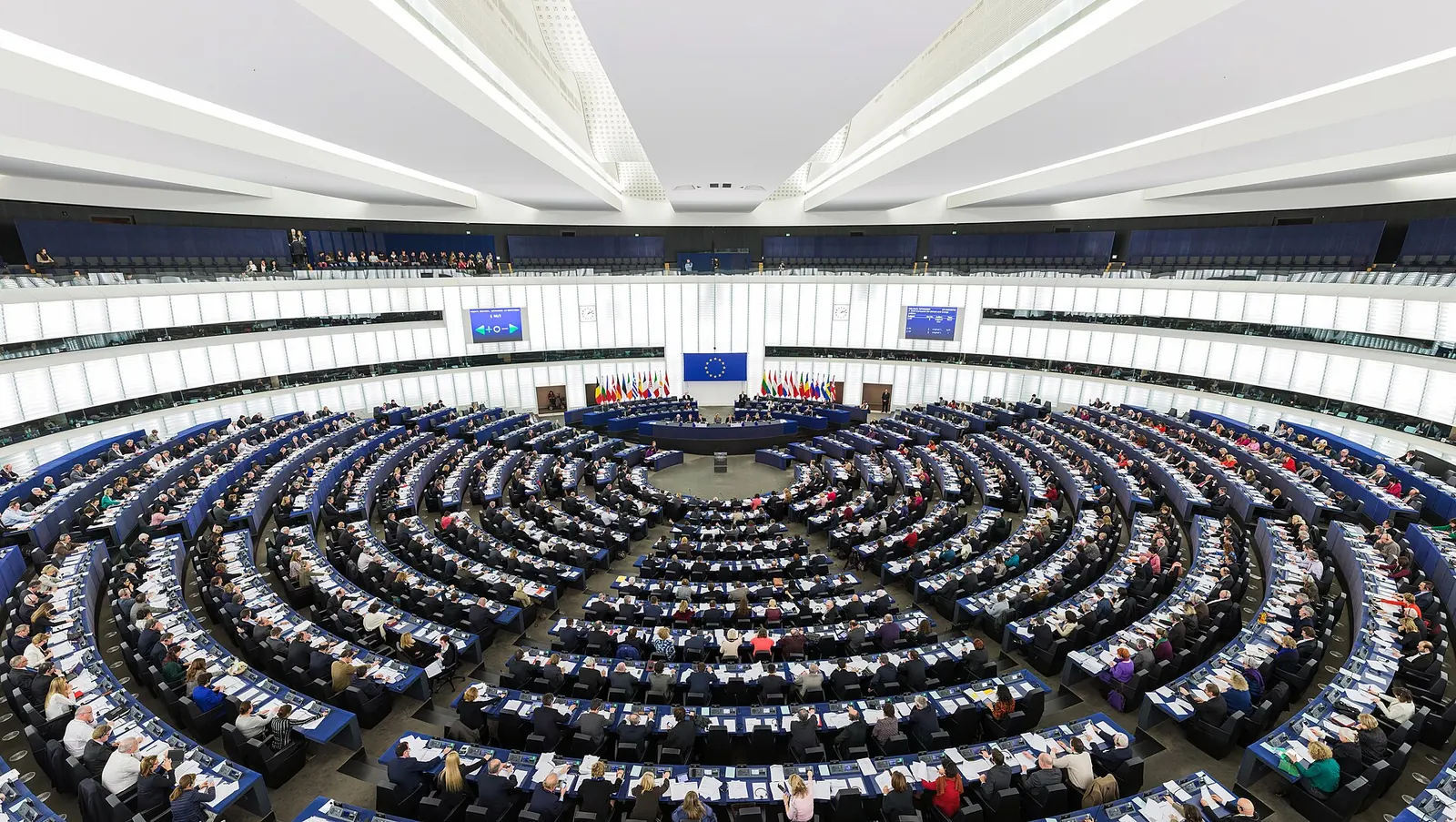
On 5 November 2025 EU environment ministers agreed the Council's position on amending the European Climate Law to set a binding 2040 target of a 90 per cent reduction in net greenhouse gas emissions compared with 1990. The headline number is the one the Commission proposed in July. But the Council's text adds significant flexibilities. Member states will be able to use high-quality international carbon credits for up to 5 per cent of 1990 net emissions, from 2036 onwards, with a pilot period from 2031 to 2035. That corresponds to a domestic reduction of 85 per cent. The text also provides a role for permanent domestic carbon removals within the emissions trading system, more flexibility across sectors and instruments, a biennial assessment of progress, and a review clause that can lead to the target being adjusted. Separately, ministers agreed to postpone the start of ETS2, the carbon market for buildings and road transport, by one year from 2027 to 2028.
The deal was reached under pressure to give the EU a position before the COP30 climate conference in Belém. Our view is that keeping 90 per cent as the headline was important for the EU's international credibility and for investor signals. But the substance of the target now depends on how the flexibilities are used. International credits, an expanded review clause and the delay to ETS2 together create a real risk that the 2040 target becomes softer in practice than it looks on paper.
Why the headline matters
A 2040 target bridges the existing 2030 goal of at least a 55 per cent cut and climate neutrality in 2050. Without it, investors in long-lived assets, such as steel plants, power stations, grids and buildings, would have little legal guidance on the trajectory beyond 2030. A clear target supports the price expectations in the emissions trading system and the business case for low-carbon investment.
Reaching agreement at 90 per cent, when some member states had pressed for lower numbers or for delay, was a meaningful achievement. The EU remains one of the few major economies with a legally binding pathway of this kind.
The international credit question
The most consequential flexibility is the use of international credits. Up to 5 per cent of 1990 emissions is a large volume. If fully used, it would mean that about a seventh of the additional reduction between the 2030 goal of 55 per cent and the 2040 target of 90 per cent could be achieved by paying for emissions reductions abroad rather than at home. The Council specifies high-quality credits under the Paris Agreement's market mechanisms. The quality of international credits has been a persistent problem, with many past offset schemes shown to overstate their impact.
There is a defensible case for some use of international credits: they can channel finance to developing countries and achieve reductions where they are cheapest. But they also reduce the pressure for domestic transformation, which is where European industry needs to invest to remain competitive in low-carbon markets. The rules that the Commission writes for which credits qualify, and how they are verified, will be crucial. If the standard is weak, the domestic target of 85 per cent will be the real target, and even that could be undermined.
The European Parliament has signalled support for the 90 per cent target in its own position, so the trilogue negotiations will focus on the detail of these flexibilities rather than on the headline. That is where observers should concentrate.
Removals and the review clause
Permanent carbon removals, such as direct air capture with storage or bioenergy with carbon capture, will be allowed within the emissions trading system to compensate for residual hard-to-abate emissions. In principle this is sensible, because some emissions will be very hard to eliminate. In practice permanent removals are expensive and at an early stage. Relying on them too heavily risks delaying reductions that are possible today.
The review clause is more significant than it looks. The Council text requires a biennial assessment of progress, taking into account scientific evidence, technological advances and the EU's global competitiveness, as well as energy prices and their impact on industry and households. Based on the review, the Commission may propose adjusting the 2040 target. That creates a standing route to reopen the target whenever competitiveness concerns rise. It is legitimate for a law to be reviewed, but a target that can be revisited every two years provides less certainty than a fixed one.
ETS2 delay
ETS2 is the carbon market for fuels used in buildings and road transport. It is politically sensitive because it will raise heating and motoring costs for households. Delaying it by a year to 2028 reduces short-term political risk but also delays the price signal that is supposed to drive investment in heat pumps, insulation and electric vehicles. The Social Climate Fund, designed to cushion vulnerable households, is linked to ETS2 revenue, so the delay also affects its timing.
What this means for energy markets
For power and industry, the 2040 target maintains the long-term direction for the existing emissions trading system. That supports carbon prices high enough to make coal power uneconomic and to push gas plants towards a back-up role. For energy-intensive industries, the target strengthens the case for the support measures in the Clean Industrial Deal, including the carbon border adjustment mechanism and support for clean industrial production. For buildings and transport, the delay to ETS2 slows the shift, putting more weight on regulation, such as building standards and vehicle emissions rules.
Our assessment
The Council has protected the 90 per cent headline while giving member states several ways to meet it with less domestic effort. That is a political compromise that preserved the EU's position before COP30. Its real meaning will be decided in the detailed rules on international credits and carbon removals, and in how the biennial review is used. If credits are strictly limited to high-quality ones and the review is used to strengthen rather than weaken policy, the 2040 target will guide investment as intended. If not, Europe will have a strong number attached to a weaker commitment.