
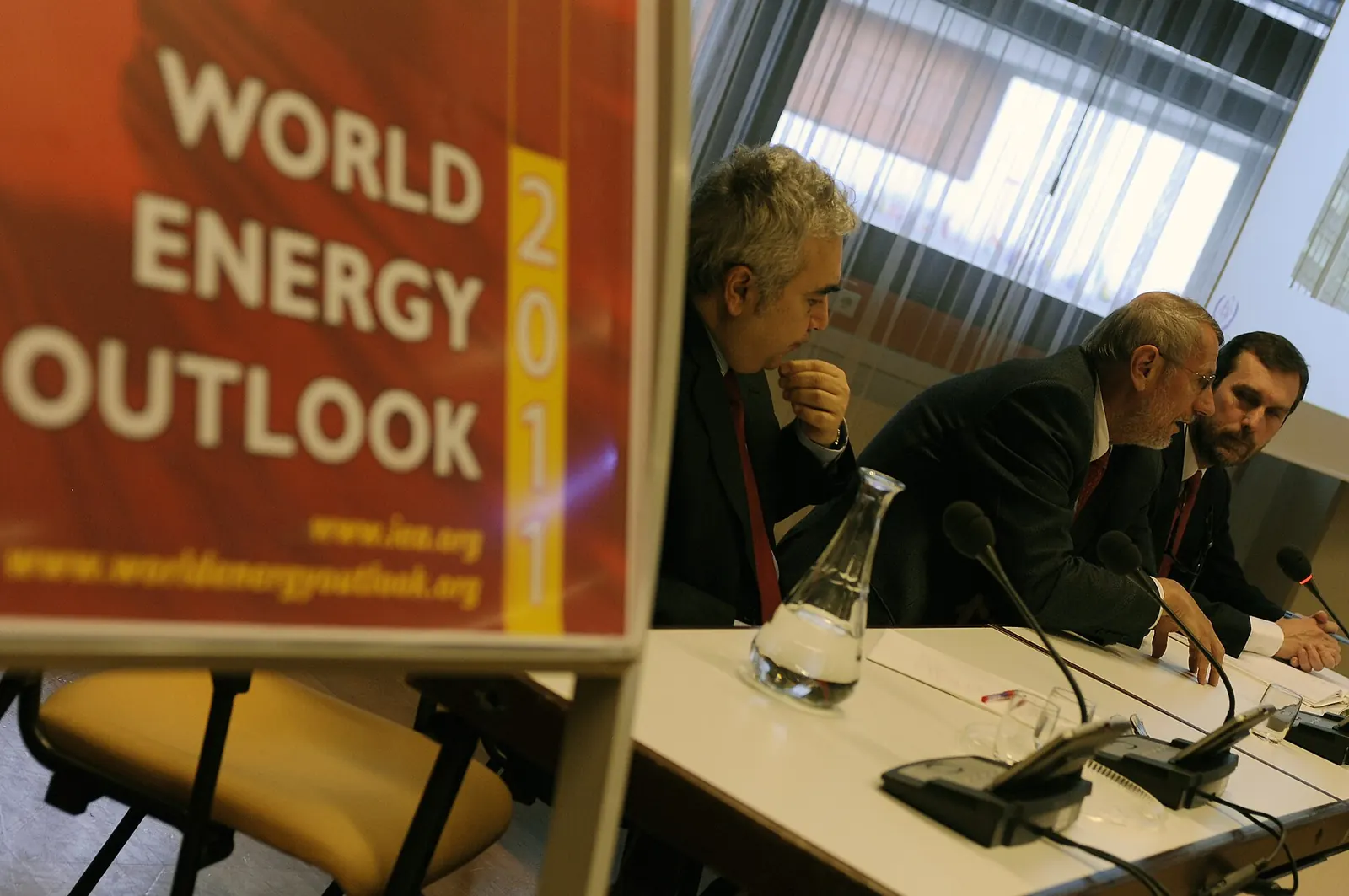
The International Energy Agency's World Energy Outlook 2025, released on 12 November, opens with a statement that sets the tone for the whole report: in a volatile world, energy security takes centre stage. The agency describes a backdrop of geopolitical fragility coexisting with subdued oil prices and a large surplus of oil supply over demand, countries prioritising security and affordability but reaching for different levers, fractures in the international trading system, and less momentum behind efforts to reduce emissions even as climate risks rise. It notes that 2024 was the hottest year on record and the first in which global temperatures exceeded 1.5 degrees Celsius above pre-industrial levels.
The most discussed change is the return of the Current Policies Scenario, which models only policies already enacted and takes a cautious view of how fast new technologies are deployed. In that scenario, oil demand keeps rising to 113 million barrels a day in 2050, and gas demand grows to mid-century. In the Stated Policies Scenario, which includes policies formally proposed, oil demand levels off around 102 million barrels a day around 2030 before a slow decline. Our view is that the new scenario is best read as a stress test rather than a forecast. Its value is in showing the costs of stalled transitions: higher import bills, greater exposure to supply shocks and higher emissions. For import-dependent economies, the lessons point firmly towards electrification and domestic clean energy.
Common ground across the scenarios
The IEA stresses that none of its scenarios is a forecast, and identifies several features common to all of them. Electricity demand grows much faster than overall energy use, rising by around 40 per cent to 2035 in both the Current Policies and Stated Policies Scenarios. Renewables grow faster than any other major source in every scenario, led by solar. Nuclear power makes a comeback, with more than 70 gigawatts under construction and global capacity set to increase by at least a third to 2035. And the centre of gravity of energy demand shifts to India, Southeast Asia, the Middle East, Latin America and Africa, as China's demand growth slows.
The IEA highlights a striking geographic fact: by 2035, 80 per cent of energy consumption growth occurs in regions with high-quality solar irradiation. That helps explain the rapid uptake of solar in all scenarios, and also the rise of cooling demand.
Critical minerals as the new security risk
The Outlook treats critical minerals as the most acute new vulnerability. A single country is the dominant refiner for 19 of 20 energy-related strategic minerals, with an average market share of around 70 per cent. As of November 2025, more than half of these minerals were subject to some form of export controls, and the IEA points to China's new controls on rare earth elements and battery components. The agency argues that diversifying supply chains will require a concerted policy effort, because market forces alone will not deliver.
Grids lag generation
Investment in electricity generation has risen by almost 70 per cent since 2015 to about USD 1 trillion a year, but grid spending has risen at less than half that pace, to USD 400 billion. The result is congestion, delays in connecting new generation and demand, rising curtailment of wind and solar, and higher prices. Battery storage additions exceeded 75 gigawatts in 2024, which helps, but the IEA notes that batteries cannot meet seasonal flexibility needs. The Outlook cites the 2025 blackouts in Chile and on the Iberian Peninsula as examples of the costs of insecure electricity supply.
Oil and LNG
In the near term, oil markets look well supplied, thanks to growing output from the United States, Canada, Guyana, Brazil and Argentina, and muted demand growth. But in the Current Policies Scenario, the overhang is worked off relatively quickly, because of declines at existing fields and continued consumption growth. Some 25 million barrels a day of new supply projects are needed to 2035 in that scenario, and prices rise to encourage them.
For gas, the IEA notes an unprecedented 300 billion cubic metres of new annual LNG export capacity scheduled to start operating by 2030, a 50 per cent increase in available global supply, around half of it in the United States and a further 20 per cent in Qatar. In the Stated Policies Scenario, price-sensitive markets in South and Southeast Asia absorb much of the new supply, but a 65 billion cubic metre overhang remains in 2030. In the Current Policies Scenario, more LNG goes to China and Europe and prices stay higher.
What the scenarios mean for importers
For a country like Pakistan, or for many importers in South and Southeast Asia and Africa, the scenarios carry a clear message. In a world where transitions stall, oil and gas demand rise, prices are higher and import bills grow. In a world where electrification and renewables advance, demand for imported fuels flattens and exposure to price shocks falls. Since importers cannot control which global scenario materialises, the safest strategy is to reduce their own dependence through domestic renewables, electrified transport and efficiency, while using the coming LNG surplus opportunistically rather than locking in long-term commitments at high prices.
The Outlook's energy access findings are also relevant. Around 730 million people still lack electricity and nearly 2 billion rely on harmful cooking methods. A new access scenario outlines a path to universal electricity access by 2035 and clean cooking by 2040, with liquefied petroleum gas playing a large role in cooking.
Emissions and climate
Energy-related carbon dioxide emissions reached a record 38 gigatonnes in 2024. In the Current Policies Scenario they stay around that level, implying close to 3 degrees of warming by 2100, compared with 2.5 degrees in the Stated Policies Scenario. The IEA now says that overshooting 1.5 degrees is inevitable, even in its Net Zero scenario, which returns below that level by 2100 only with large-scale carbon removal.
Our assessment
WEO 2025 is a sober report for a turbulent period. By restoring the Current Policies Scenario, the IEA has given policymakers a clearer view of the risks of stalled transitions. But the common ground across its scenarios is more important: electricity demand is surging, solar is the fastest-growing source, nuclear is returning, critical minerals and grids are the new security bottlenecks, and new demand is concentrated in sunny emerging economies. Countries that invest in grids, storage and domestic clean generation will be better protected whichever scenario materialises.