
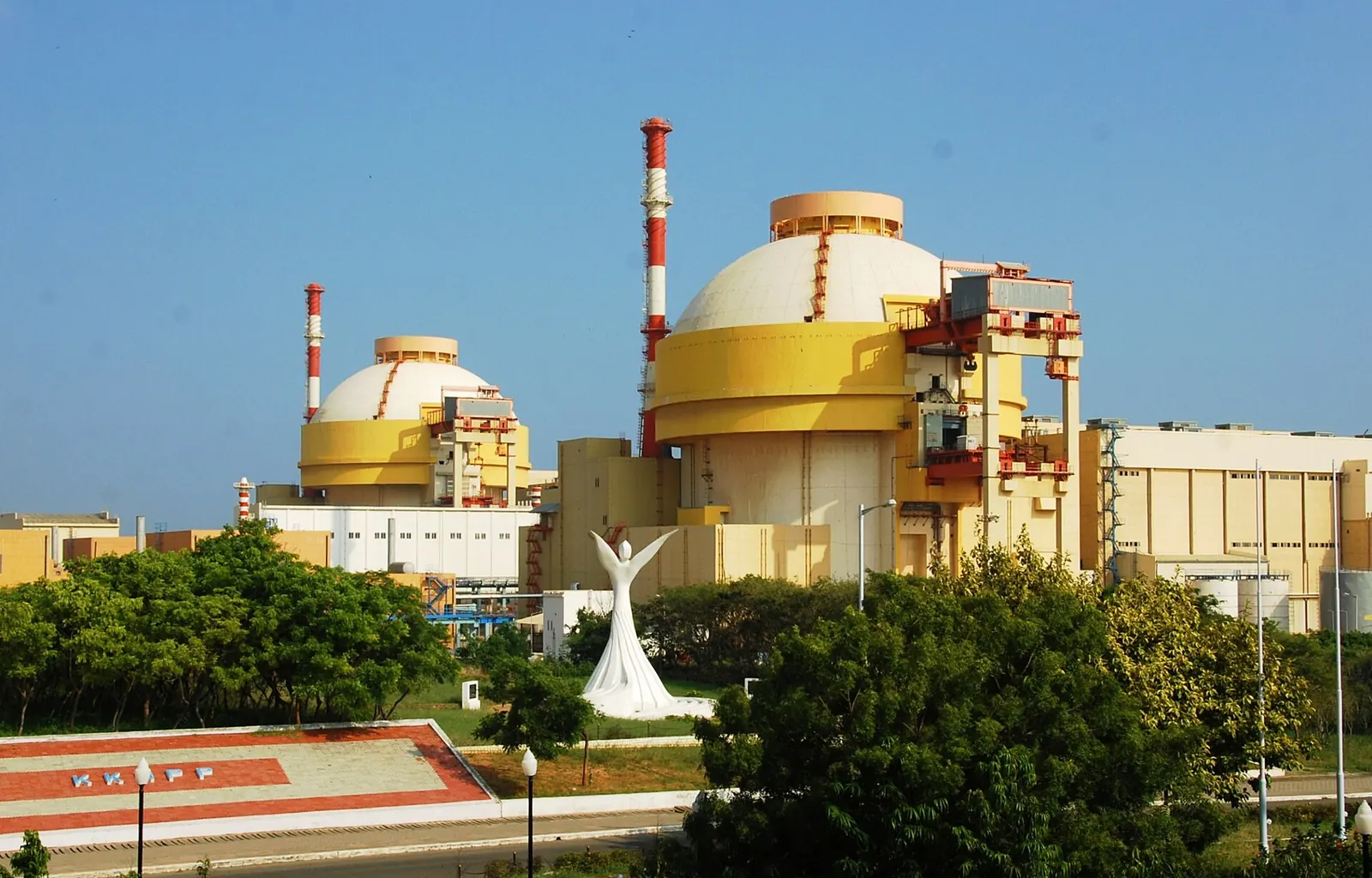
India's nuclear legal framework changed in a single week this month. The Sustainable Harnessing and Advancement of Nuclear Energy for Transforming India Bill, 2025, known as SHANTI, was tabled in the Lok Sabha on 15 December, passed there on 17 December, passed by the Rajya Sabha on 18 December, and received presidential assent on 20 December. The Act repeals the Atomic Energy Act of 1962 and the Civil Liability for Nuclear Damage Act of 2010, gives statutory recognition to the Atomic Energy Regulatory Board, permits private companies to take part in plant operation, power generation, equipment manufacture and selected fuel cycle activities, and replaces the single statutory cap on operator liability with a graded framework.
Prime Minister Narendra Modi described the passage as transformational. In legal terms it is. For six decades nuclear power generation in India has been a state monopoly, run by Nuclear Power Corporation of India and a small number of public sector joint ventures. The 2010 liability law, which gave operators a right of recourse against suppliers, deterred foreign vendors from building in India. SHANTI removes both barriers. Our view is that the law is necessary but nowhere near sufficient for India's goal of 100 GW of nuclear capacity by 2047, and that the next two years of rules, regulatory capacity building and first private projects will decide whether the target is credible.
What the Act changes
According to World Nuclear News, the Act enables limited private participation under regulatory oversight. Private firms may operate plants and generate power, manufacture equipment, and undertake selected fuel activities including conversion, refining and enrichment of uranium-235 up to a threshold the government will set. Activities of a sensitive nature remain exclusively under government control.
The liability change is the most consequential for foreign suppliers. Under the 2010 law, operators had a statutory right of recourse against suppliers in the event of an accident caused by defective equipment or services. That provision was widely cited as the reason why agreements with Westinghouse, EDF and others did not translate into new reactors. SHANTI replaces it with a graded framework for operators and, according to legal analysis, moves supplier recourse to a contractual basis except in cases of intentional damage.
The statutory recognition of the Atomic Energy Regulatory Board also matters. The regulator previously existed by executive order under the old Act. Placing it on a statutory footing strengthens its independence in principle, which is essential if private operators are to be regulated credibly.
Where India's programme stands
World Nuclear Association data cited by World Nuclear News show 24 operable reactors in India with total capacity of 7,943 MW, six reactors totalling 4,768 MW under construction, and ten more units of about 7 GW in pre-project stages. The government has set out a Nuclear Energy Mission aiming at 100 GWe by 2047 with large reactors and small modular reactors. The Union Budget for 2025-26 allocated 20,000 crore rupees to research and development of small modular reactors, with a goal of at least five indigenously developed units operating by 2033, and announced that the Atomic Energy Act and the liability law would be amended to allow private participation.
NPCIL's request for proposals inviting Indian industry to finance and build a fleet of 220 MW Bharat Small Reactors has been extended to 31 March 2026, according to World Nuclear News.
The scale of the gap is obvious. Going from about 8 GW to 100 GW in 22 years implies adding more than 4 GW a year on average, far above anything India has managed. Since the first Indian reactors began operating, the fleet has grown by a few hundred megawatts a year on average.
Why private capital may still hesitate
Legal permission does not create investment. Private developers will need answers to four questions before committing.
First, tariffs. Who will buy nuclear power, at what price, and under what contract? State distribution companies are the natural buyers, but their finances are fragile and they are already contracted for large volumes of cheap solar. Data centres and industrial buyers seeking firm clean power are a new and promising market, which the Prime Minister alluded to when he mentioned powering AI.
Second, fuel. Private operators will need assured supplies of fuel for decades. India has access to the international uranium market through the Nuclear Suppliers Group exemption granted in 2008, but procurement, conversion and fabrication remain heavily state-controlled. The terms on which private operators can secure fuel are not yet defined.
Third, licensing and regulation. The regulator will need to expand significantly to handle private applicants, new reactor designs and small modular reactors. Licensing timelines in most countries are long and uncertain, and investors price that uncertainty heavily.
Fourth, liability detail. The graded framework must be specified in rules, and insurance pools must be adequate. Foreign suppliers will scrutinise how contractual recourse works in practice before committing to supply reactors or major components.
The small reactor angle
The emphasis on Bharat Small Reactors, based on India's indigenous pressurised heavy water reactor design, reflects a pragmatic choice. A 220 MW unit is small enough to fit on industrial sites, including the land of retiring coal plants, and is based on technology India knows well. It could attract large industrial companies looking for captive firm power. The challenge is cost. Small reactors lose economies of scale and must recover them through standardisation and serial manufacture. That requires a pipeline of orders, which is what the NPCIL request for proposals is trying to create.
Our position
The SHANTI Act is the most important reform of India's nuclear sector since the 2008 civil nuclear agreement. It removes the two legal barriers, state monopoly and supplier liability, that had blocked private and foreign participation, and it puts the regulator on a statutory footing.
But the 100 GW target for 2047 remains far beyond India's historical build rate. Turning the new law into reactors requires bankable power purchase contracts, clear fuel arrangements, a regulator with the capacity to license new entrants quickly and safely, and liability rules that foreign suppliers accept. The first real signal will be whether any private or foreign-backed project reaches a financial investment decision by the end of 2026. Until then, SHANTI is a door opened rather than a programme under way.