
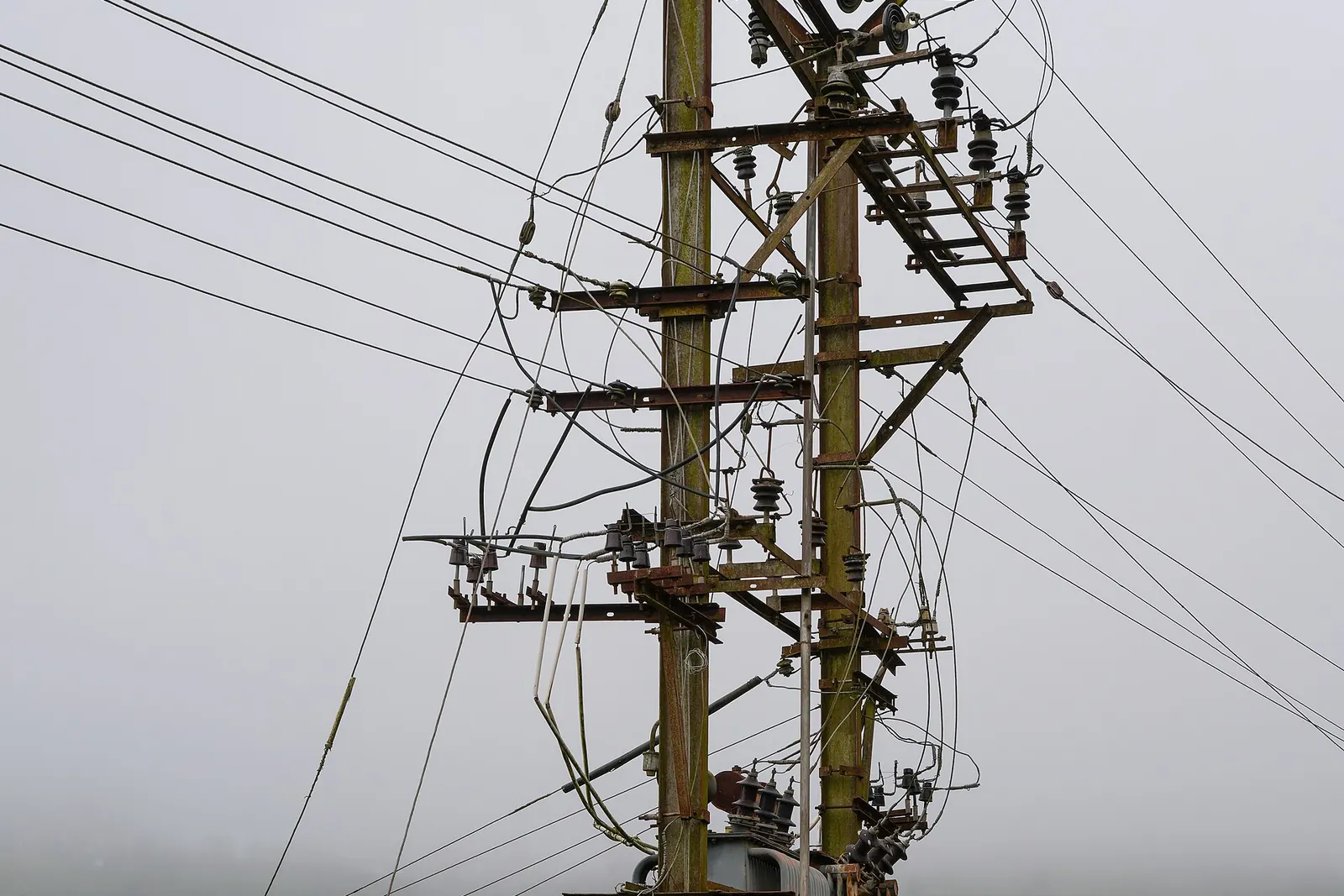
India's power distribution utilities have, taken together, reported a profit. The Ministry of Power announced on 18 January 2026 that distribution companies and state power departments recorded a combined profit after tax of 2,701 crore rupees in 2024-25. That compares with a loss of 25,553 crore rupees in 2023-24 and a loss of 67,962 crore rupees in 2013-14. The ministry describes it as the first collective profit since the unbundling and corporatisation of the old State Electricity Boards.
Other indicators moved in the same direction. Aggregate technical and commercial losses fell to 15.04 per cent in 2024-25 from 22.62 per cent in 2013-14. The gap between the average cost of supply and average revenue realised narrowed from 0.78 rupees per kWh to 0.06 rupees. Outstanding dues to generators fell by 96 per cent, from 1,39,947 crore rupees in 2022 to 4,927 crore rupees by January 2026, and the average payment cycle shortened from 178 days in 2020-21 to 113 days in 2024-25.
These are the most encouraging numbers India's distribution sector has produced in a generation, and the reforms behind them deserve credit. But a profit of 2,701 crore rupees across the entire sector is a margin measured in fractions of a per cent of revenue. Our view is that the turnaround is real and fragile, that it rests heavily on enforcement of payment discipline rather than on structural change in tariffs and subsidies, and that it will be tested by rising peak demand and the cost of procuring firm supply.
What drove the turnaround
The ministry lists six reforms. The Revamped Distribution Sector Scheme funds infrastructure and smart metering. Additional prudential norms link utility access to finance to performance benchmarks. Amendments to the Electricity Rules require timely fuel and power cost adjustments, prudent tariffs and transparent subsidy accounting. New accounting and disclosure rules issued in 2025 standardise utility accounts. The Late Payment Surcharge Rules enforce payment to generators. And states can borrow more under the Additional Borrowing Scheme if they implement power sector reforms.
The single most effective measure appears to be the Late Payment Surcharge Rules. A 96 per cent fall in overdue payments to generators is extraordinary. It reflects a regime in which utilities that fail to pay face regulated restrictions on power purchases from exchanges and inter-state markets. That changed the incentives for state governments, which ultimately stand behind their utilities.
Why the margin matters
A sector with revenue of several lakh crore rupees a year earning 2,701 crore is breaking even, not prospering. Small shocks can reverse it. A hot summer that forces utilities to buy expensive power on exchanges, a delay in state subsidy payments, or a political decision to freeze tariffs before an election could each wipe out the margin.
The cost-revenue gap of 0.06 rupees per kWh confirms how thin it is. On average, utilities now recover almost exactly what it costs to supply power. They do not yet earn enough to fund the network investment that rooftop solar, electric vehicles and rising peaks require.
Losses are falling, but unevenly
AT&C losses of 15.04 per cent nationally are a big improvement on 22.62 per cent a decade ago. But the national figure averages states with losses in single digits and states with losses still above 20 per cent. Smart meter roll-out under the Revamped Distribution Sector Scheme is the main tool for reducing commercial losses, through accurate billing and prepaid metering. Progress has been uneven and politically contested in some states.
Technical losses, which are physical, require investment in transformers, conductors and feeders. Commercial losses, from theft and non-billing, require metering and enforcement. Both cost money and political will.
The subsidy question
Many states provide free or heavily subsidised power to farmers and to low-consumption households. The amended Electricity Rules require subsidies to be accounted for transparently and paid in advance. That has helped. But the underlying fiscal commitment remains. As long as large categories of consumers pay below cost, utilities depend on timely state subsidy payments and on cross-subsidy from industrial and commercial users.
Cross-subsidy creates its own risk. Large industrial and commercial consumers are increasingly buying power directly from renewable generators through open access, which accounted for more than 38 per cent of utility-scale solar installations in 2025. Each large consumer that leaves the utility takes cross-subsidy revenue with it. Utilities that rely on industrial tariffs to fund agricultural subsidies face a slow erosion of that base.
What investors should read into it
For renewable developers and lenders, the most useful number in the release is not the profit. It is the collapse in overdue payments to generators. Payment risk from state buyers has been the main reason Indian renewable projects carried a premium in their cost of capital. If the payment cycle of 113 days keeps shortening, that premium should narrow, which lowers tariffs in future auctions.
The test ahead
India's peak demand reached 250 GW in May 2024 and continues to rise. Meeting evening peaks requires firm capacity, storage and sometimes expensive short-term purchases. Each of those costs flows to distribution companies. If regulators allow costs to pass through promptly under the amended rules, utilities can stay solvent. If tariff increases are delayed, the margin disappears.
A Group of Ministers under Minister of State Shripad Naik is examining the financial viability of distribution companies, the ministry says. That process should focus on three structural issues: direct benefit transfer of subsidies to consumers rather than to utilities, a predictable path for reducing cross-subsidy, and investment funding for network upgrades linked to measured improvements in losses.
Our position
The first collective profit for India's distribution companies is a significant achievement. It reflects a decade of reforms, and especially the enforcement of payment discipline through the Late Payment Surcharge Rules. Dues to generators have nearly vanished, and the payment cycle has shortened substantially.
But the profit is thin, and it rests more on discipline than on structural change. Subsidy dependence, cross-subsidy erosion through open access, and the rising cost of meeting peak demand are unresolved. The next step is to put utility finances on a footing that allows them to invest, not merely to pay their bills. Without that, India's renewable and electrification ambitions will run into the same distribution bottleneck that has constrained the sector for decades.