
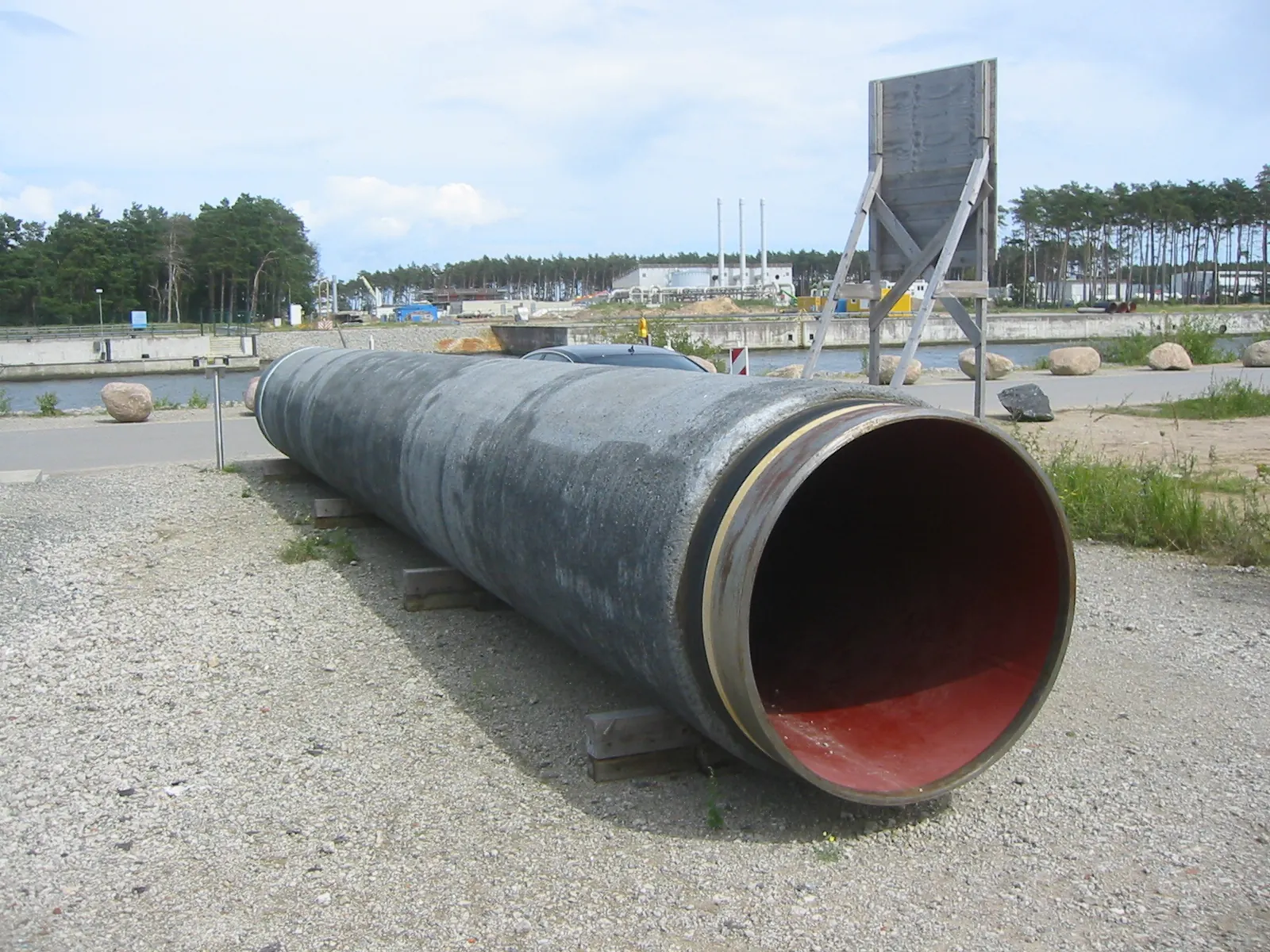
Regulation (EU) 2026/261, which phases out imports of Russian natural gas into the European Union, entered into force on 3 February 2026 after formal adoption in late January. It is the legal end point of the REPowerEU strategy launched after Russia's full-scale invasion of Ukraine in 2022. The co-legislators reached a provisional deal in early December 2025, and the European Parliament approved it on 17 December by 500 votes to 120, with 32 abstentions. The timetable is staggered. Spot purchases of Russian LNG are banned shortly after entry into force. Short-term LNG contracts concluded before 2025 may run until 25 April 2026, and long-term LNG contracts until 1 January 2027. For pipeline gas, short-term contracts may run until 17 June 2026 and long-term contracts until 30 September 2027, or until 1 November 2027 if storage filling targets are not met. Operators must provide customs authorities with detailed evidence of the country of production before gas is imported or stored, and member states must enforce harmonised penalties. The Commission has also committed to propose a ban on Russian oil imports in early 2026, to take effect no later than late 2027.
Our view is that the regulation is the right decision and that the EU can absorb it. Russian gas has already fallen to a small fraction of what it was before 2022, and global LNG supply is entering a period of strong growth. But the costs of the ban are concentrated. They fall on a handful of landlocked central European buyers, on the operators of LNG terminals that handle Russian cargoes, and on the EU's gas storage policy, which will need to work harder in the two winters during which Russian volumes leave the market.
How much Russian gas is left
Before the invasion, Russia supplied around 40 per cent of the EU's imported gas, mostly by pipeline. Pipeline flows through Nord Stream ended in 2022, and the transit contract through Ukraine expired at the end of 2024. What remained in 2025 was mainly LNG from the Yamal project in the Arctic, delivered to terminals in France, Belgium, Spain and the Netherlands, and pipeline gas via TurkStream to Hungary, Slovakia and parts of the Balkans.
These are meaningful but not dominant volumes. Ending them removes a residual dependence that Moscow could still use as leverage, and ends a stream of revenue to the Russian state. The European Parliament's press release describes the measure as a response to Russia's systematic weaponisation of energy supplies, including Gazprom's underfilling of storage and the abrupt halts to pipelines that drove prices up as much as eightfold in 2022.
Who bears the cost
LNG is relatively easy to replace. It is traded globally, and the cargoes Europe stops buying from Yamal will be sold elsewhere, mainly in Asia, freeing up other LNG for Europe. The cost to Europe of that swap is modest when global supply is growing, and the period from 2026 to 2028 is expected to see large additions from the United States and Qatar.
Pipeline gas is harder. Hungary and Slovakia are landlocked and their supply routes were built around Russian imports. Replacing TurkStream gas means bringing LNG through terminals in Croatia, Greece, Poland or Germany and moving it through interconnectors that were not designed for large reverse flows. That requires capacity bookings and sometimes new infrastructure, and the cost of transport will be higher than the pipeline gas it replaces. Both governments opposed the measure, and Budapest has signalled it will seek to challenge it. The long-term pipeline deadline of autumn 2027 gives these countries time to adjust, but they will need EU support for interconnection and diversification if the ban is not to become a lasting political grievance.
The storage dimension
The regulation explicitly links the pipeline deadline to storage, allowing the long-term contract end date to move from 30 September to 1 November 2027 if storage targets are not met. That reflects the reality that the EU's winter security depends on how full its storage is on 1 November. In recent years the EU has relaxed the strict 90 per cent filling target to give member states more flexibility on timing, because rigid targets were pushing up summer prices.
Removing Russian volumes means that storage must be filled from other sources. In a well-supplied LNG market, that should be manageable. In a tighter market, Europe would compete harder with Asia for cargoes during the summer injection season, raising prices. Policymakers should therefore treat the next two summers as a test of the storage framework, and should be ready to coordinate injection across member states rather than leave each to compete for the same cargoes.
Contracts and force majeure
There is also a commercial question for the European companies holding long-term contracts with Russian suppliers. Many of those contracts contain take-or-pay clauses and arbitration provisions. A legal ban gives buyers a stronger basis to claim that performance has become unlawful, which should protect them from damages. But Gazprom and Novatek can be expected to pursue arbitration, and some buyers may face long legal disputes. The regulation's clear legal prohibition is the best protection European importers could have asked for, because a voluntary exit would have left them exposed.
Enforcement and circumvention
The requirement that operators prove the country of production is important. Gas is fungible, and without strict documentation Russian LNG could reach Europe through transhipment or blending. Customs authorities will need the capacity to check documentation, and the harmonised penalties give them teeth. The test will be whether enforcement is consistent across member states with very different levels of exposure and political interest.
Our assessment
The Russian gas ban completes a policy that Europe began in 2022 under far more difficult conditions. Russian volumes are now small enough, and global LNG supply strong enough, for the EU to manage without them. But the burden is not evenly spread. The EU should invest in the interconnections that landlocked buyers need, coordinate storage filling for the next two summers, and enforce the origin rules consistently. Done well, the ban ends a strategic vulnerability at a manageable price. Done carelessly, it risks a price spike or a political rift that Moscow would be happy to exploit.