
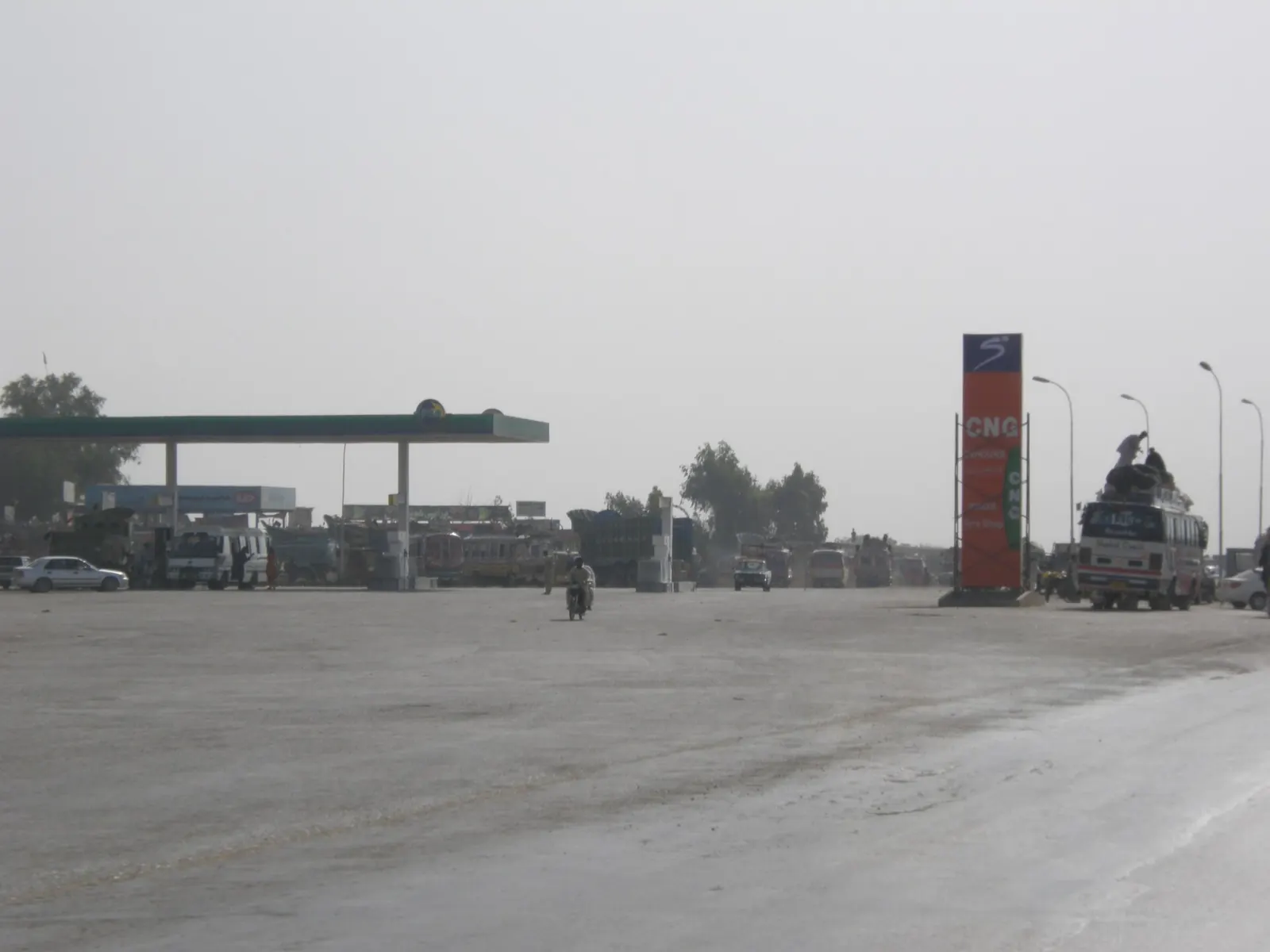
On 9 March 2026 Prime Minister Shehbaz Sharif announced a package of emergency austerity and fuel conservation measures in a televised address, warning that disruption to shipping through the Strait of Hormuz had placed Pakistan's economy under direct threat. Government employees moved to a four-day working week, with half of staff working from home on a rotating basis. Schools were closed for spring holidays from 16 March to the end of the month, universities moved classes online, in-person government meetings were banned, and the Cabinet Division's notification of the same date halved fuel provision for official vehicles for two months and grounded 60 per cent of the government fleet. Federal and provincial cabinet members gave up salaries and allowances for two months, legislators' pay was cut by a quarter, and weddings were capped at 200 guests with a single main dish. The private sector was encouraged to follow similar work-from-home arrangements, with exemptions for banking and other essential services.
The measures came as the war between the United States, Israel and Iran triggered the largest fuel price increase in Pakistan's history. The government raised petrol and diesel prices by Rs55 per litre, and Al Jazeera reported that petrol was costing about USD 1.15 a litre and diesel USD 1.20 by 10 March. Officials told a Senate committee on 16 March that Qatari LNG imports had been suspended since 2 March, with only two of eight March cargoes arriving. Our view is that the austerity package is sensible as a signal and as a fiscal gesture, but that it will save relatively little fuel. The episode shows, more clearly than any study, that Pakistan's oil vulnerability is fundamentally a transport problem, and that the long-term response must be electrification, freight reform and renewables.
How exposed Pakistan is
Pakistan imports more than 80 per cent of its oil needs. Between July 2025 and February 2026, oil imports cost USD 10.71 billion, and in calendar 2024 more than USD 15 billion, according to figures cited by Al Jazeera. Petroleum secretary Mirza Nasir-ud-Din Ahmad told the Senate committee that around 70 per cent of Pakistan's petroleum imports originate in the Middle East, and that diesel prices on world markets had risen from USD 88 to USD 187 a barrel and petrol from USD 74 to USD 130 since the crisis began.
Stocks are thin compared with East Asian economies. The secretary said Pakistan held crude oil reserves for 11 days, diesel for 21 days, petrol for 27 days and aviation fuel for 14 days. That compares with reserves of many months in Japan and South Korea. Pakistan has never built large strategic petroleum reserves, and the current crisis has made that gap visible.
Why austerity saves little fuel
Energy analyst Amer Zafar Durrani, quoted by Al Jazeera, made the central point: roughly 80 per cent of petroleum products in Pakistan are used in transport. Government offices, school runs and official vehicles are a small share of that. Salary cuts and travel restrictions improve public finances and show solidarity, but they do not change how goods move or how most people get to work.
Freight is the largest lever. Most of Pakistan's goods move by road, in diesel trucks, because the railway network has been neglected for decades. Shifting even a modest share of bulk freight, such as fuel, fertiliser, cement and imported coal, to rail would reduce diesel demand more than any office closure. That cannot happen in weeks, but the crisis should accelerate investment in rail freight capacity and in the terminals that connect it to ports.
The currency amplifier
Durrani also warned that the biggest risk is not oil prices alone but currency depreciation, which amplifies the impact of higher oil prices on inflation. Pakistan's foreign exchange reserves have recovered under its IMF programme but remain modest. A surge in the oil import bill, combined with weaker remittances from Gulf countries affected by the conflict, could put pressure on the rupee. A weaker rupee would raise the price of every imported barrel further. Managing the external account, including with support from the IMF and friendly countries, is therefore as important as managing fuel demand.
Gas and power
The LNG disruption hits the power sector directly. LNG supplies nearly a quarter of Pakistan's electricity, and Qatar is its main supplier. Officials told the Senate committee that gas supply to the power sector had fallen from 300 to 130 million cubic feet a day and that a fertiliser plant's supply had been halved, while domestic consumers would be protected. Replacement spot cargoes could cost around USD 24 per unit against about USD 9 under the Qatari contracts.
Here Pakistan's recent energy transition is an advantage. Energy Minister Awais Leghari noted that growing reliance on domestic sources, including solar, wind, nuclear, coal and hydropower, has reduced exposure to LNG disruption. The rapid growth of rooftop solar, which the power sector has often treated as a threat to its finances, is now a security asset: every rooftop panel is generation that does not depend on a tanker passing through Hormuz.
Who bears the cost
Fuel price increases of this size fall hardest on those with the least room to adjust. Motorcycle riders, rickshaw drivers, small transporters and farmers who rely on diesel for tube wells and tractors face immediate increases in their costs, which then pass through to food and transport fares. Salaried urban households can work from home; daily wage earners cannot. The government's relief should therefore be targeted at these groups, using the Benazir Income Support Programme database and other existing channels, rather than spread across all consumers through a general subsidy that would mostly benefit car owners.
What should come next
The immediate priorities are to secure fuel cargoes from alternative routes and suppliers, protect the most vulnerable through targeted relief, such as the support package for motorcycle and rickshaw users that officials say is being prepared, and avoid broad price caps that drain the budget. In the medium term, Pakistan should build strategic petroleum reserves, accelerate the electric two-wheeler and rickshaw programme, invest in rail freight and keep expanding domestic renewable generation.
Our assessment
The austerity package is a reasonable emergency response and an important political signal, but its direct effect on fuel use will be modest. The Hormuz shock has exposed how thin Pakistan's fuel stocks are and how dependent its transport system is on imported diesel and petrol. The lasting lesson is that energy security for Pakistan means electrifying mobility, moving freight to rail and building domestic generation. Those take years, which is why the work should start now, while the cost of dependence is plain to everyone.