
Since early March 2026, when Iran closed the Strait of Hormuz following the US and Israeli air strikes that began on 28 February, Japan and South Korea have faced the sharpest energy shock of any major industrial economies. Japan imports about 95 per cent of its crude oil from the Gulf and South Korea about 70 per cent, according to figures reported by The Straits Times. Oil prices rose from around USD 70 to 72 a barrel before the conflict to a peak of USD 119 on 9 March, before settling near USD 100. Stock markets in both countries fell by more than 5 per cent on 9 March.
Both governments moved quickly. On 11 March, as part of an International Energy Agency collective action to release 400 million barrels, South Korea announced a release of 22.46 million barrels, up to nine days of domestic demand, and Japan announced a release of 80 million barrels, about 15 days of consumption. South Korea imposed caps on wholesale petrol and diesel prices for the first time in nearly 30 years, set at 1,724 won and 1,713 won per litre respectively from 13 March and recalculated every two weeks. Japan's increase in fuel prices was smaller, buffered by its existing subsidy to refiners. Japanese utilities raised LNG stocks, and Reuters reported that the trade ministry had received no requests for emergency supply.
Our view is that both countries are physically well prepared for a closure lasting months, thanks to some of the largest strategic reserves in the world. Their real vulnerability is economic: the price of oil and LNG, the fiscal cost of shielding consumers and the impact on energy-intensive exporters. The policy priority should be to manage that price exposure without undermining the incentives to reduce consumption and to accelerate alternatives.
The reserve cushion
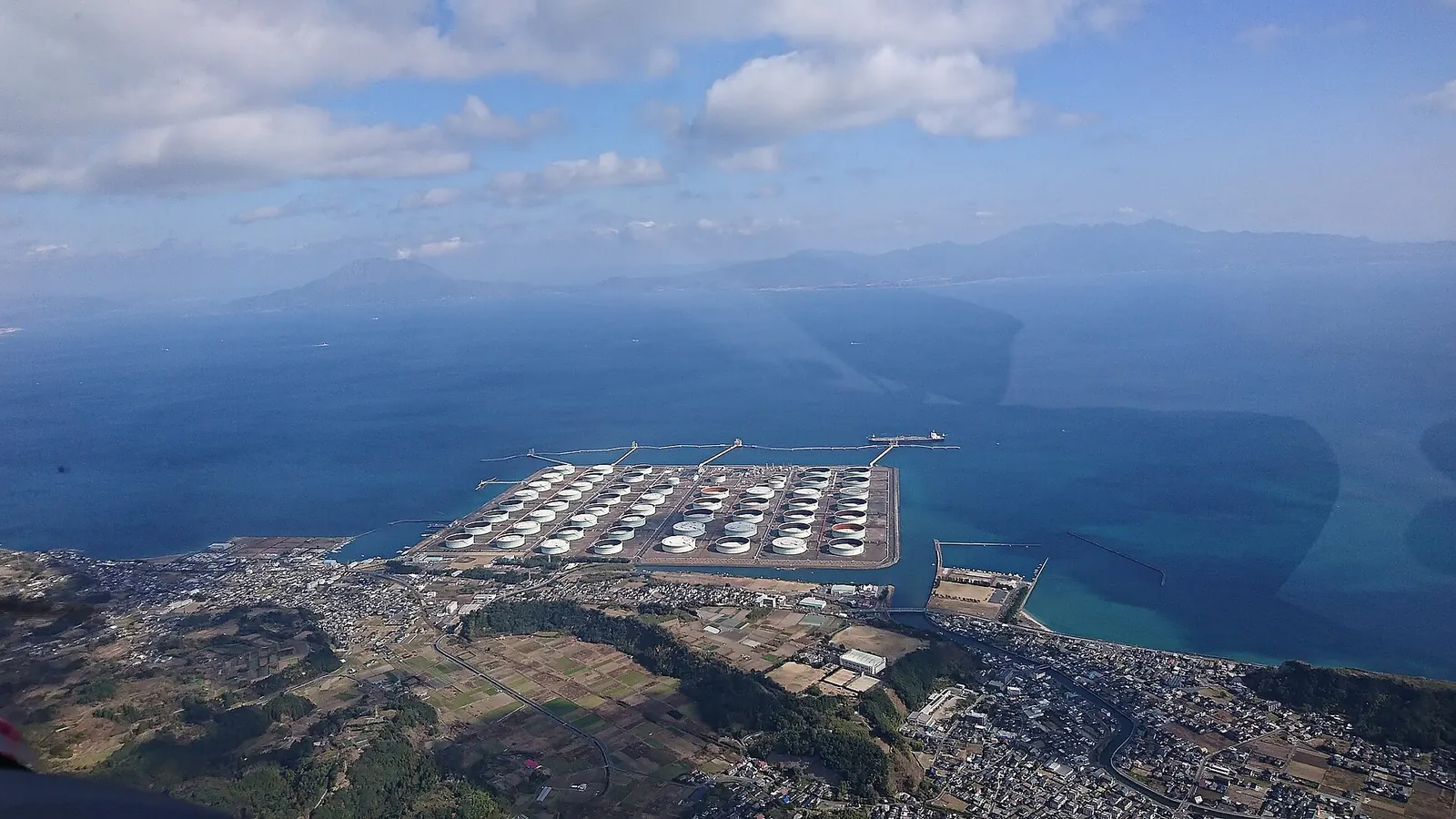
Japan holds oil reserves equivalent to around 254 days of consumption and South Korea around 207 days, combining government stocks, mandatory industry stocks and, in Japan's case, jointly held stocks with producer countries. These reserves were built precisely for a scenario like this, after the oil shocks of the 1970s. They mean that even a prolonged closure would not leave refineries without crude for many months.
The releases announced so far are a small fraction of total stocks. They are as much a signal to markets as a physical necessity. As one Korean analyst, Professor Kim In-wook of Sungkyunkwan University, told The Straits Times, the greater risk lies less in physical disruption than in governments' limited control over market sentiment. Releasing reserves can calm markets, but it can also be read as a sign that the crisis cannot be managed through normal channels.
LNG is the harder problem
Oil can be stored for long periods. LNG cannot be stored as easily, and Japan and South Korea hold only a few weeks of LNG in tanks. Both countries depend on LNG for a large share of their power generation, and Qatar is among their suppliers. Japan has diversified its LNG sources more than most, with large volumes from Australia, Malaysia, the United States and other suppliers, and its utilities have flexibility to resell or swap cargoes. That diversity has helped. Korean and Japanese buyers have also arranged swaps of cargoes to manage short-term gaps.
The bigger effect is on price. With Qatari volumes disrupted, Asian buyers compete harder for the remaining cargoes, pushing up spot LNG prices and the prices in oil-indexed long-term contracts. For both countries, higher LNG costs will flow through to electricity prices, either directly or through utility losses that governments eventually cover.
The fiscal choice
South Korea's price caps and Japan's subsidies protect consumers in the short term. But they have costs. They shift the burden to the budget or to refiners and utilities, and they blunt the price signal that encourages people and businesses to use less fuel. In 2022, many governments spent heavily on energy subsidies that went disproportionately to higher-income households, who consume more fuel.
A better approach targets support to vulnerable households and to firms facing severe hardship, while allowing prices to rise enough to encourage conservation. Temporary, transparent and targeted measures are more sustainable than broad caps, and easier to withdraw when the crisis eases.
Coordination between the two countries is also worth noting. Seoul and Tokyo agreed in mid-March to set up a regular communication channel on supply chain cooperation during the conflict. Joint management of crude and product flows, and of LNG swaps, can reduce the risk that the two neighbours bid against each other for the same cargoes, which would only raise prices for both.
The industrial impact
Both economies rely heavily on energy-intensive exports, including petrochemicals, steel, semiconductors and automobiles. South Korea's petrochemical sector, which depends on naphtha refined from Middle Eastern crude, is particularly exposed. Analysts cited by The Straits Times estimate that sustained high oil prices could reduce Korea's 2026 growth by up to 0.45 percentage points, and Japan's real GDP by around 0.18 per cent, while adding to inflation.
The longer lesson
The crisis reinforces a lesson that both countries have been slowly learning: the most durable protection against Gulf supply shocks is lower dependence on imported fossil fuels. Japan's renewed commitment to nuclear restarts and renewables in its Seventh Strategic Energy Plan, and South Korea's own nuclear and renewables expansion, are energy security policies as much as climate policies. Electrifying transport and improving efficiency reduce exposure to oil. The current crisis should accelerate those efforts rather than divert resources into open-ended subsidies.
Our assessment
Japan and South Korea are among the best-prepared countries in the world for a Hormuz closure in terms of physical supply, with reserves that can last many months. Their exposure is to price, and to the fiscal and industrial costs of high energy prices. The right response is targeted support, coordinated reserve releases, active LNG portfolio management and faster progress on domestic low-carbon supply. Broad price caps buy time but should not become a substitute for reducing the dependence that makes these economies so vulnerable.