
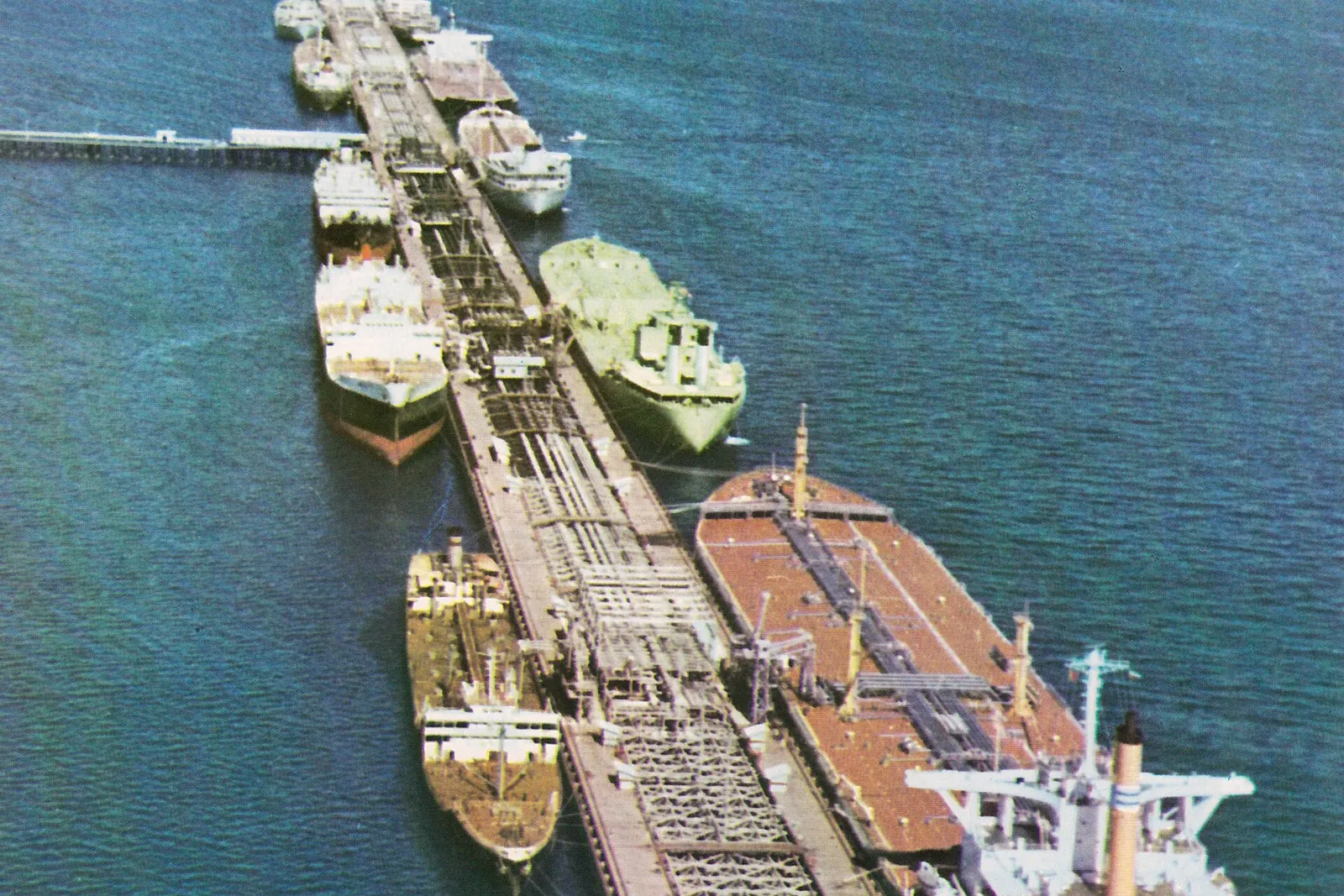
Iranian oil export volumes are among the most disputed numbers in the market because sanctions, ship-to-ship transfers, and opaque pricing complicate measurement. The most reliable picture comes from named trackers as the U.S. Energy Information Administration and the International Energy Agency publish them, read together with the caveats those agencies attach.
The EIA's 2026 Report on Iranian Petroleum and Petroleum Products Exports, prepared with Vortexa Analytics tanker-tracker estimates accessed in March 2026, reports crude oil and condensate exports from Iran at 1,445 thousand barrels per day in 2024 and 1,576 thousand barrels per day in 2025. The same report's China-destination table shows Vortexa estimates of 1,384 thousand barrels per day to China in 2024 and 1,567 thousand barrels per day in 2025. Exports to destinations outside China are reported at 60 thousand barrels per day in 2024 and 9 thousand barrels per day in 2025, with Vortexa confirming that the non-China residual includes shipments to destinations such as Syria, the United Arab Emirates, Brunei, Bangladesh, Russia, and Venezuela. EIA explicitly states that it does not have information on prices Iran charged to Chinese crude purchasers, and that it lacks reliable annual data on Iran's petroleum product export volumes since 2018. Those gaps are as important as the flow estimates.
Earlier EIA SHIP Act reporting for the 2025 edition, citing Vortexa accessed in March 2025, showed a similar China concentration pattern for 2024 with slightly different point estimates, underscoring that tanker-tracker series revise when re-accessed. Analysts should treat year-to-year comparisons within a single published table as more robust than mixing editions without noting the access date. The structural fact that survives across editions is concentration: the overwhelming majority of tracked Iranian crude and condensate exports in 2024 and 2025 are assessed as going to China.
IEA Oil Market Report material adds monthly colour with the same caution. In the 12 February 2026 Oil Market Report PDF, the IEA assessed Iran's crude supply as remaining broadly stable at 3.45 million barrels per day in January despite widespread political unrest, while crude exports fell by 180 thousand barrels per day to 1.4 million barrels per day and inventories increased sharply. The same note describes additional U.S. sanctions targeting officials, shadow-banking networks, digital-asset exchanges used to launder petroleum revenues, and further tankers associated with Iran's shadow fleet, and holds the year's forecast for Iranian crude at 3.3 million barrels per day. In the 15 April 2025 Oil Market Report PDF, the IEA noted that Iranian crude loadings dropped 290 thousand barrels per day to 1.5 million barrels per day in March while remaining within the prior year's export ranges as crude landing in China nearly doubled month-on-month to 1.4 million barrels per day. Those monthly moves illustrate volatility around a China-centred trade, and they do not change the annual averages in the EIA tables.
Conflict and sanctions interact with those flows. Oil and Gas Journal's summary of the EIA September 2026 Short-Term Energy Outlook states that a renewed U.S. blockade of Iranian exports after Iran's tanker attacks in Hormuz, plus OFAC sanctions against Iranian economic and oil interests, will cut Iran's exports and production. That is a forward-looking EIA assumption in a disruption STEO, not a realised annual number for 2026 exports. Separately, Reuters reporting on 30 September 2026 cited Middle East crude oil exports rebounding in September to 16.328 million barrels per day, the highest since the U.S.-Israeli war with Iran started in late February, while noting Strait of Hormuz flow recovery as a price factor. Regional export rebounds and Iranian bilateral export cuts are different series; they must not be conflated.
For market balances, Iranian barrels matter as a sanctioned but still material supply line into Chinese independent refining, and as a geopolitical risk factor when blockade or shadow-fleet enforcement tightens. They are not a substitute for Gulf OPEC+ crude that clears Hormuz under ordinary commercial terms. Losing or delaying Iranian barrels affects Chinese feedstock availability and opaque price discounts that EIA says it cannot observe. Losing or delaying Saudi, Iraqi, Kuwaiti, or UAE barrels through Hormuz affects the residual market that sets waterborne benchmarks. Scenario work that treats Middle East oil as one homogenous block will mis-state both channels.
Hormuz geography still frames Iranian exports even when cargoes use opaque routing. EIA chokepoint tables show total oil flows through the Strait of Hormuz at 20.7 million barrels per day in 2024 and 20.9 million in the first half of 2025, with crude and condensate at 14.6 and 14.7 million barrels per day respectively. Iranian loadings are a subset of Gulf maritime risk, not the whole. A blockade aimed at Iranian tankers and a general constriction of the strait for all flags are different shocks with different balance-sheet effects. Public STEO language about Iranian export cuts should be read beside the wider Hormuz flow series, not instead of it.
Inventory behaviour inside Iran, when IEA notes stocks rising as exports fall, is a buffer, not proof of spare export capacity that can be monetised under tighter enforcement. The February 2026 IEA reading that paired a flat 3.45 million barrel per day supply figure with a drop in exports to 1.4 million barrels per day and a sharp inventory build is a reminder that production and exports can diverge for months. Forecasts that assume every produced barrel is exported will overstate seaborne availability.
Much is still unknown. Average realised prices for Iranian crude to China are not published in the EIA SHIP Act tables reviewed here. Product export annual volumes since 2018 are not reliably available per EIA. Bilateral contract terms are not public. What is available are Vortexa-based EIA annual crude and condensate export estimates for 2024 and 2025, the China and non-China splits in those tables, IEA monthly production and export readings for selected months, EIA STEO language on blockade and sanctions as a downside to Iranian supply under conflict, and EIA Hormuz throughput history for context.
Policy readers in importing capitals should therefore watch three public dashboards: EIA and IEA Iranian flow estimates, Chinese independent refinery run rates where published, and Hormuz transit series for the wider Gulf. The Iran war's implication for Iranian oil is not a mystery novel. It is a measurement problem under sanctions and conflict, best handled with named trackers and explicit gaps. A single neat number for Iranian barrels offline would be convenient. It would also be misleading.
Making energy planning add up requires separating Iranian sanctioned barrels from OPEC+ Gulf barrels that normally clear commercial markets. Both can be disrupted by the same war. Only the public trackers say how much of each moved in the years before the worst of the fighting, and only EIA and IEA say how they are revising those readings as enforcement and routing change. That is enough for a think-tank note. It is not enough for false precision.
Sources
- 2026 Report on Iranian Petroleum and Petroleum Products Exports, U.S. Energy Information Administration
- Oil Market Report - 12 February 2026, International Energy Agency
- Oil Market Report - 15 April 2025, International Energy Agency
- EIA sees Brent near $90/bbl in second-half 2026 amid Middle East disruptions, Oil & Gas Journal
- World Oil Transit Chokepoints, U.S. Energy Information Administration