
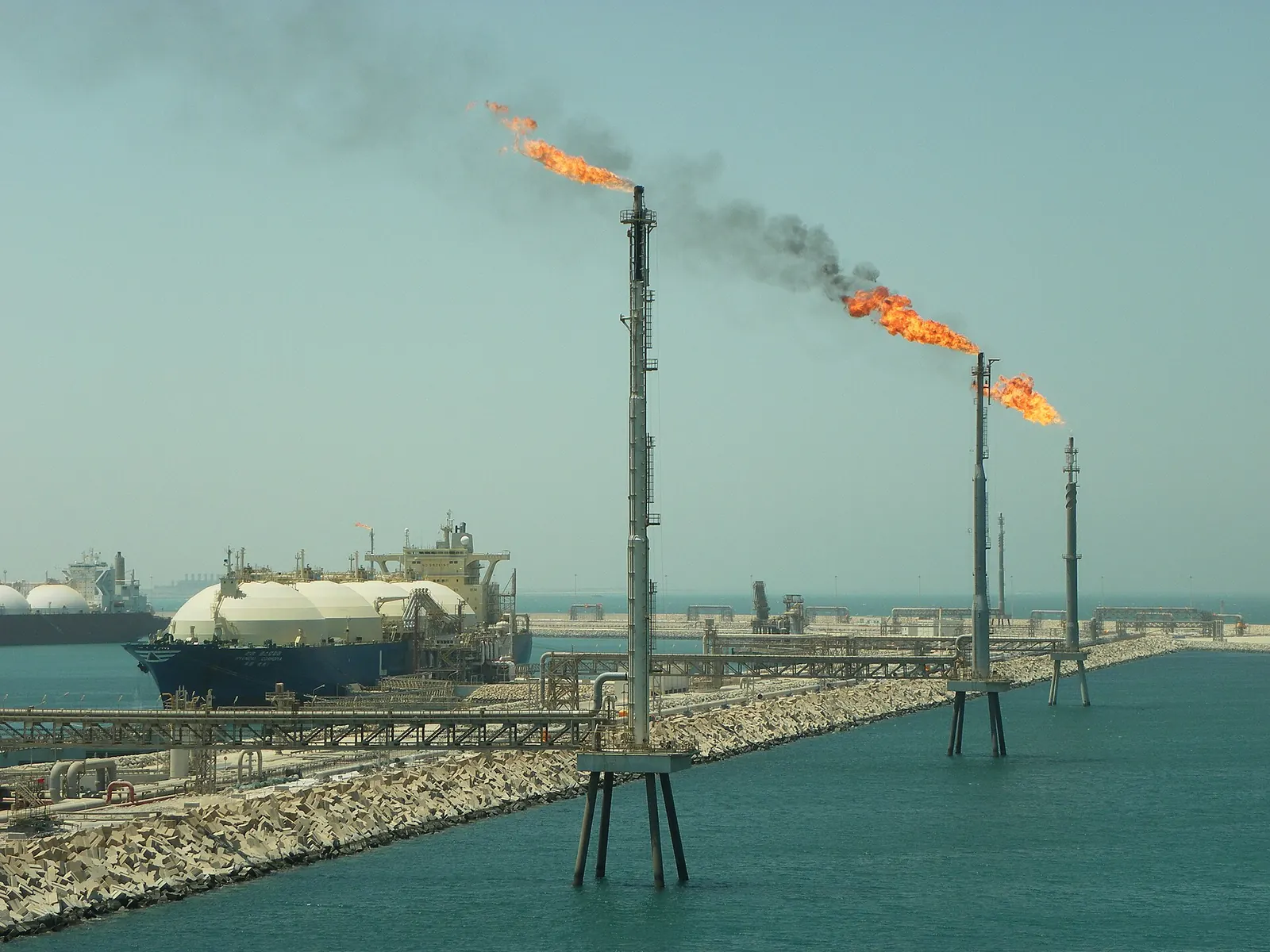
Qatar’s liquefied natural gas industry sits at the centre of the 2026 Middle East energy shock because every LNG tanker leaving the country must pass through the Strait of Hormuz. Unlike Saudi Arabia and the United Arab Emirates, which can move some crude oil through bypass pipelines, Qatar has no alternative seaborne export route for LNG. When transit through the Strait became unsafe after the war began on 28 February, Qatari cargoes largely stopped. The verified record from Euronews reporting in late September, drawing on ICIS cargo data, and from International Energy Agency assessments of Gulf gas losses, shows how severe that interruption has been and what physical damage at Ras Laffan means for the recovery path.
This article examines three linked facts. First, Qatar’s absolute dependence on Hormuz for LNG exports. Second, the collapse in cargo counts during the opening months of the war. Third, the damage to Ras Laffan liquefaction units and the repair timeline stated by Qatar’s energy minister. The figures are those reported by Euronews and the IEA.
The structural dependence is unambiguous. Euronews, citing ship tracking and industry sources, states that every LNG tanker leaving Qatar must pass through Hormuz because the country has no alternative export route. The IEA’s Middle East topic materials and Hormuz factsheet make the same strategic point at regional scale. Except for deliveries to Kuwait, the entirety of LNG exports from Qatar and the UAE transit the Strait. In 2025 the total volume of LNG transiting Hormuz was just over 112 billion cubic metres, equating to almost 20 per cent of global LNG trade. About 93 per cent of Qatar’s and 96 per cent of the UAE’s LNG exports moved through the waterway. Asian markets took almost 90 per cent of those volumes; Europe took just over 10 per cent. LNG delivered via the Strait accounted for around 27 per cent of Asia’s total LNG imports in 2025 and for around 7 per cent of Europe’s LNG inflows. When Hormuz traffic collapsed, that entire corridor was at risk.
The cargo collapse itself is quantified by ICIS data reported by Euronews. Qatar exported only 18 LNG cargoes during the first six months of the war, compared with 509 in the same period a year earlier. That is not a modest dip. It is a near halt in the seaborne channel that normally carries Qatari molecules to term and spot customers across Asia and Europe. The IEA’s parallel gas market assessment records that the disruption of transit via Hormuz reduced LNG supplies from Qatar and the UAE by over 300 million cubic metres per day since 1 March, translating into a loss of over 2 billion cubic metres of gas supply every week. Around three quarters of those losses since the beginning of March were offset by a very strong increase in LNG supply from other producing regions. Offset is not replacement of Qatari molecules under existing contracts; it is displacement of volumes by United States, African and other non Gulf suppliers willing and able to load more cargoes.
Physical damage compounded the transit problem. Euronews reports that attacks on Ras Laffan damaged two LNG production units, cutting Qatar’s production capacity by around 17 per cent. Qatar’s Energy Minister Saad Sherida Al Kaabi said repairs would take about three years, but that the country’s 12 undamaged units could return to normal operations within weeks once ships could pass through Hormuz safely and regularly. The IEA notes separately that the Ras Laffan facility, the world’s largest liquefaction plant, has been offline since an attack on 2 March, and that damage to Qatari LNG infrastructure is set to reduce projected supply growth and delay the anticipated global LNG supply wave. Cumulative LNG supply losses between 2026 and 2030 are estimated by the IEA at 140 billion cubic metres when near term disruptions and medium term infrastructure damage are combined. Those are IEA figures on the Gas Market Report executive summary and Middle East topic page; they are cited here as published, without further embellishment.
Al Kaabi also addressed a recurring policy suggestion: building a pipeline around the Strait. Euronews quotes him as saying that such a route would make no economic sense, because it would require a new plant outside Qatar to turn piped gas into LNG before it could be loaded onto tankers. That statement matters for transition planning. It closes off a popular but impractical bypass narrative and returns attention to the only levers that actually exist: safer Hormuz transit, repair of damaged trains, full use of undamaged trains, and non Gulf LNG supply growth.
Customer impacts are already visible in European and South Asian contracting. Euronews reports that QatarEnergy extended delivery suspensions for some customers in Europe and Asia. Edison said it had received a new notice extending force majeure until early December, with another six LNG cargoes due at Italy’s Adriatic LNG terminal undelivered. That brought the number of missed cargoes since April to 35. Edison replaced 23 of them, mainly with gas from the United States. Edison’s 25 year contract with QatarEnergy supplies 6.4 billion cubic metres of gas a year, equal to around 10 per cent of Italy’s total consumption. Some customers in Pakistan and Bangladesh were told that delivery suspensions would continue through November. Force majeure, as Euronews notes, allows a company to suspend contractual obligations when events outside its control prevent fulfilment. The legal mechanism does not erase the physical shortage; it reallocates risk along the contract chain.
Between March and June, according to the IEA Gas Market Report for the third quarter of 2026, LNG loadings from Qatar and the UAE declined by 35 billion cubic metres year on year. Non Gulf LNG production grew by almost 18 per cent, or around 27 billion cubic metres, offsetting around three quarters of the decline. Global LNG production still fell by 4 per cent, or 8 billion cubic metres year on year, over that period. Spot prices in Asia and Europe reacted swiftly. In March they reached their highest monthly averages since January 2023. In the second quarter, Europe’s TTF averaged near 16 United States dollars per million British thermal units, up 32 per cent year on year, while Asia’s Platts JKM averaged 17.5 dollars per million British thermal units, up 45 per cent. The JKM to TTF spread flipped from a European premium in January and February to an Asian premium averaging 2.1 dollars per million British thermal units from March to June, encouraging diversion of flexible cargoes toward Asia. Those price figures are reported by the IEA; they are included here because they are on the fetched page, and because they frame why power and industry buyers felt the Qatar shortfall even when they never booked a Ras Laffan cargo directly.
For Transition Economics Institute, the Qatar case illustrates a hard constraint in gas market design. Diversification of import sources can cushion a Hormuz closure for buyers that can access Atlantic Basin LNG. It cannot restore Qatari volumes while the Strait is unsafe or while damaged trains remain offline. The 18 versus 509 cargo comparison from ICIS, the over 300 million cubic metres per day IEA loss rate from Qatar and the UAE since 1 March, and the around 17 per cent capacity cut with a three year repair horizon at Ras Laffan together define a multi year vulnerability. Policy work should therefore separate three time horizons. The near term horizon is transit security and the return of the 12 undamaged units once regular shipping resumes. The medium term horizon is repair of the two damaged units over about three years. The long term horizon is whether buyers rewrite term portfolios to reduce concentration on a single chokepoint, accepting that Al Kaabi has already ruled out a Qatari pipeline bypass as uneconomic.
None of this requires speculation about war tactics beyond what sources state. Euronews records that the disruption began after joint United States Israeli strikes on Iran on 28 February, and that both the United States and Iran targeted commercial ships in and around the Strait. The IEA records the de facto closure of Hormuz after the outbreak of war at the end of February and the mid June interim agreement aimed at a full reopening. Those are the political facts needed to situate the energy numbers. The energy numbers themselves are severe enough.
Three indicators matter as diplomacy proceeds. Indicator one is monthly Qatari LNG cargo counts against the ICIS baseline of 509 cargoes in the comparable pre war six month window. Indicator two is IEA updates on whether the over 300 million cubic metres per day loss rate from Qatar and the UAE is narrowing as Hormuz crossings resume. Indicator three is official statements on Ras Laffan train availability, distinguishing the 12 undamaged units from the two damaged units facing roughly three years of repairs. Tracked plainly, those indicators will serve policymakers better than colourful estimates.
Qatar’s LNG system remains indispensable to global gas balances. Almost one fifth of world LNG trade moved through Hormuz in 2025, and Qatar was the dominant Gulf supplier in that corridor. The 2026 war has shown how quickly that corridor can close, how costly force majeure becomes for European and Asian buyers, and how long physical repairs at Ras Laffan may take even after ships sail again. Transition economics that ignore those facts will understate gas security risk in Asia and Europe for the rest of the decade.