
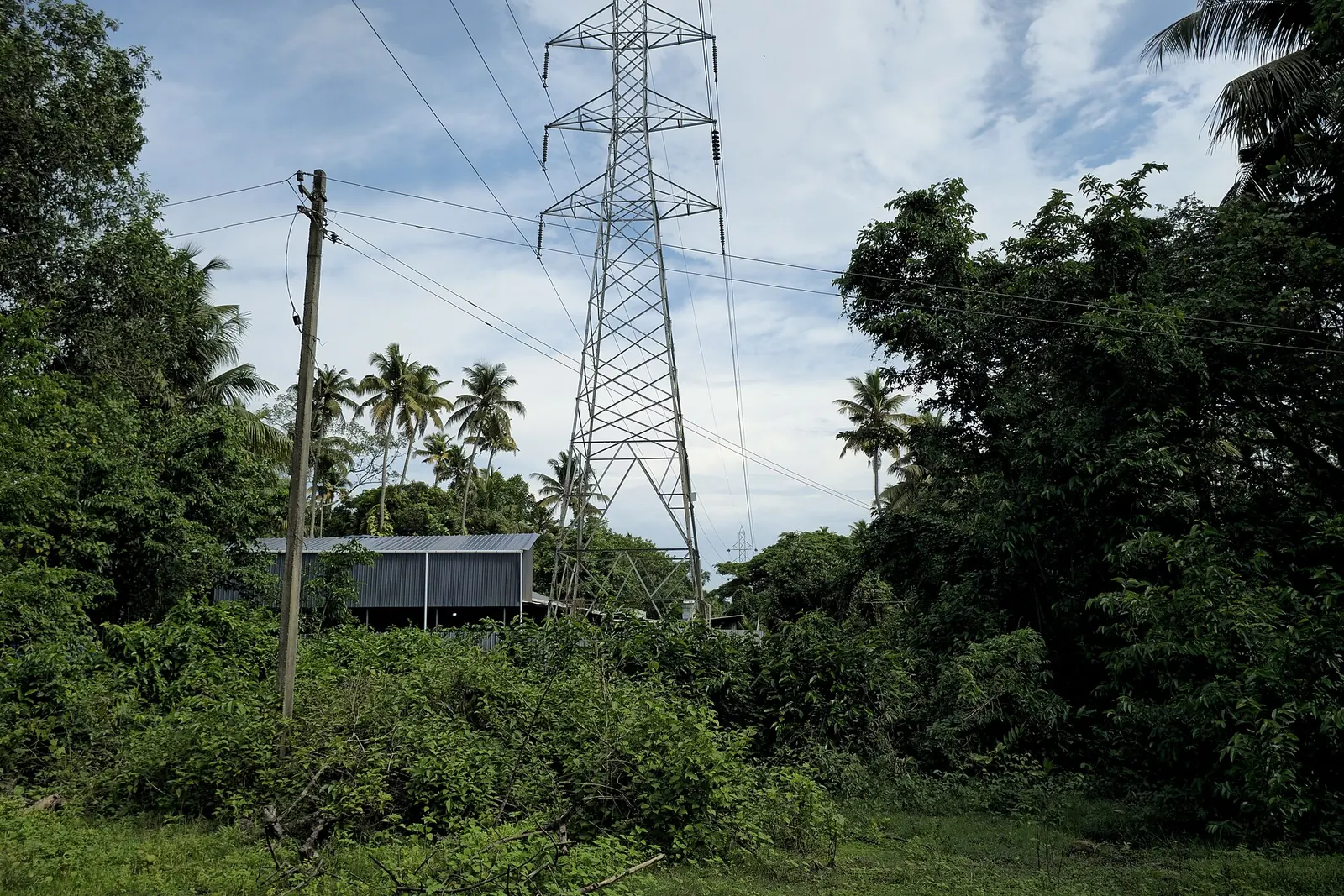
India met an all-time peak electricity demand of 270.8 GW in May 2026, the government told Parliament on 10 August. The Ministry of Power said peak demand had risen by around 12 per cent compared with the same period a year earlier, as El Niño conditions intensified the summer heat. Minister of State Shripad Naik said electricity supply had largely kept pace with demand and that India had adequate availability of power, but acknowledged that localised gaps persisted because of bottlenecks in state transmission and distribution networks.
Two years ago, India's record was 250 GW, set on 30 May 2024. In that summer, the evening peak was met only by directing imported-coal and gas plants to run at maximum output. The 2026 record was met with less drama at the national level. Our reading is that India's generation adequacy problem has eased, at least for now, and that the binding constraint has moved down the voltage ladder into state transmission and local distribution, where the investment and institutional capacity are weakest.
What the ministry said
Naik told Parliament that a mid-term review of the Electric Power Survey projected peak demand of 289 GW for 2026-27, and that installed capacity of 548.86 GW at the end of June was sufficient to meet it. Energy supplied had been commensurate with energy required, with only a marginal gap attributed to constraints in state networks. The ministry cited steps including network expansion, adoption of higher voltage systems, reactive power management and transmission modernisation. It also cited guidelines issued on 14 June 2024, 21 March 2025 and 15 December 2025 linking right of way compensation for transmission lines to prevailing market land rates, addressing a frequent cause of delay.
Generation data for April to June 2026 show thermal generation ranging between 68.3 and 72.7 per cent of the monthly total, nuclear just above 3 per cent, and renewable sources up to 28.11 per cent. Coal remained the backbone, with coal accounting for nearly 79 per cent of total domestic energy supplied in 2024-25.
From capacity to delivery
Installed capacity of nearly 549 GW against a peak of 271 GW looks comfortable, but the comparison is misleading. More than half of that capacity is solar and wind, which contribute little or nothing at the evening peak. The relevant comparison is firm capacity available after sunset. Even so, the absence of nationwide emergency measures of the kind used in 2024 suggests that the additions of the past two years, including record solar and wind in 2025, new thermal units and early battery projects, have improved adequacy.
The localised gaps tell a different story. A state can have sufficient contracted generation and still fail to deliver it if its intra-state transmission lines are overloaded or its distribution transformers fail in the heat. Those failures produce outages that consumers experience as shortages, even when the national grid has power to spare.
Why state networks lag
Inter-state transmission is planned and built largely through central agencies and competitive bidding, with costs pooled nationally. Intra-state transmission and distribution are the responsibility of state utilities, whose finances have only recently stabilised. The distribution sector recorded its first collective profit, of 2,701 crore rupees, in 2024-25, and aggregate technical and commercial losses fell to 15.04 per cent from 21.91 per cent in 2020-21, according to the minister. Those are improvements, but a sector barely breaking even cannot fund the scale of network investment that 12 per cent annual peak growth requires.
Right of way remains a persistent obstacle. Landowners resist lines crossing their property, and compensation rates set by state governments have often been well below market. The central guidelines linking compensation to market rates are a practical response. Their effect depends on adoption by states.
A metric worth publishing
The ministry describes the supply gap as marginal, but it does not publish a breakdown of unserved energy by cause. A monthly figure separating shortfalls caused by generation from those caused by state transmission and by distribution failures would show where money should go. It would also let consumers and regulators compare states. The national grid operator already collects much of the underlying data. Publishing it would turn a vague acknowledgement of bottlenecks into an accountable target, and would make the case for network investment far more persuasive to state finance departments.
The privatisation question
Rajya Sabha members also asked about privatising distribution in smart cities and the national capital region. Naik noted that privatisation is a matter for state governments, since electricity is a concurrent subject, and highlighted technologies adopted by private distribution utilities to improve energy accounting, grid monitoring and fault detection. That is a cautious answer, but the underlying point is clear. Where private or well-run public utilities operate, local reliability tends to be better. The case for franchise and privatisation models in urban areas with high losses is strengthening.
What 289 GW requires
If peak demand reaches 289 GW in 2026-27, another 18 GW above this year's record, the incremental load will be concentrated in cities and in the evening, driven by air conditioning. Meeting it reliably requires three things beyond generation: storage to shift solar output into the evening, intra-state transmission to move power from substations to load centres, and distribution transformers and feeders sized for higher loads.
Battery storage procurement has accelerated, but most of it is connected at transmission level. Distribution-level storage, placed at substations in congested urban networks, could defer transformer upgrades and relieve local peaks. It is barely used in India today.
Our position
India's 270.8 GW peak in May 2026 was met without the national emergency measures needed two years ago, which shows that the generation build of recent years, including the record 2025 additions, has improved adequacy. The government is right to say there is enough capacity.
But consumers experience the grid locally, and the localised gaps the ministry acknowledged are now the main reliability problem. State transmission and distribution networks need investment at a pace their owners cannot yet finance. Linking central support to measurable improvements in network capacity, extending market-rate right of way compensation to every state, and deploying storage at distribution level would address the constraint directly. Without those steps, India will keep setting demand records while some of its cities lose power on the hottest evenings.