
Seven months into the war with Iran, the crude oil numbers out of the Gulf look close to normal. Kpler data cited by BBC Verify show daily oil flow from the Middle East at 92 per cent of its pre-war baseline in the final week of September. Yet Brent ended the week above $102 a barrel, US diesel hit $6.50 a gallon, European diesel set a record and G7 leaders agreed on Friday to release 100 million barrels of stocks with diesel at the front of the queue. China, meanwhile, has stopped exporting refined fuels.
Those facts are consistent once the market is read correctly. The crude shortage has largely been routed around. The refined products shortage has not. For the next quarter, oil prices will be set by diesel, jet fuel and gasoline balances, by product tanker insurance and by government stock policy, far more than by OPEC+ quotas or headline crude transits. Policymakers and buyers who keep watching the crude number will misread the market.
1. The crude recovery is real, but how real depends on the baseline
Different trackers tell slightly different stories, and the differences are instructive. BBC Verify reports Kpler's estimate that an average of 12 million barrels a day passed through Hormuz in the week to 30 September, against a pre-war baseline of 17 million. HNGN, also citing Kpler, reports a seven-day average of 13.5 million barrels a day as of 28 September, matching its pre-war baseline. Argus, citing TankerTrackers.com, puts Hormuz crude flows at 12.34 million barrels a day in the week ending 30 September, around 80 per cent of the February level of about 15.14 million estimated by Vortexa, within total Middle East crude exports of 17.92 million barrels a day.
The common thread is that crude volumes have recovered strongly, through three channels. US forces have been supporting transits since at least mid-June. A shuttle system of more than 60 large tankers now moves crude across the strait for transfer to other ships in the Gulf of Oman, with more than four million barrels a day transferred ship to ship in the week to 30 September, according to Kpler via the BBC. And pipelines have taken a much larger role: about 40 per cent of the region's September oil exports bypassed the strait, against 17 per cent before the war. Saudi Arabia's East-West line to the Red Sea is carrying more than four million barrels a day.
That bypass share is the structural change. As Kpler's Naveen Das told the BBC, greater pipeline use is likely to become the "new normal".
2. Products are where the shortage sits
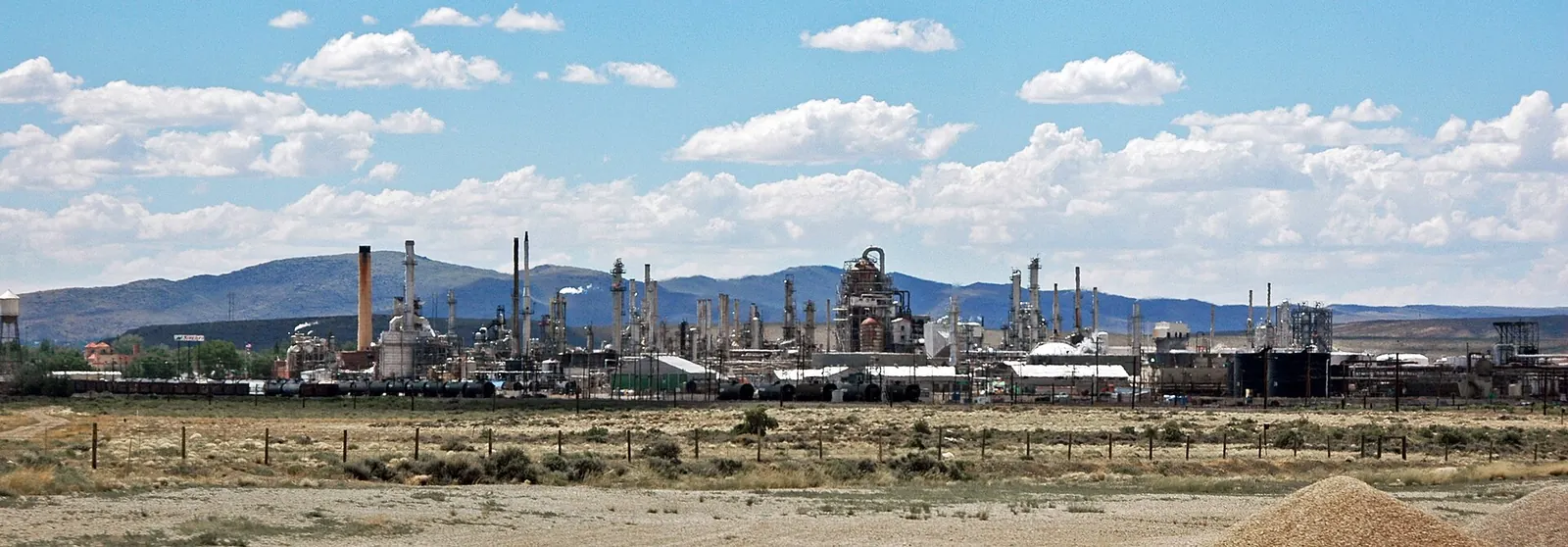
The product numbers are a different world. BBC Verify reports fewer than one million barrels a day of processed products passing through Hormuz in the last week, against 3.5 million before the war. HNGN cites Kpler at 677,000 barrels a day against 3.6 million. On either measure, Gulf product exports are running at roughly a fifth to just over a quarter of pre-war levels.
The reason is the fleet. Crude moves in very large carriers run by state-linked or long-term charter operators who have accepted escorts and war-risk premiums. Products move in smaller ships owned by a more fragmented set of operators, many unwilling to enter a strait where attacks continue. Argus counts six attacks in five days reported to the UK Maritime Trade Operations centre, and 31 of 48 projectile strikes since the start of July on the southern US-assisted transit lane. The Windward platform counted 17 vessels through the strait on one day this week, according to HNGN, against more than 100 a day before the war. A handful of escorted supertankers can move a peacetime volume of crude. They cannot replace hundreds of product, chemical and container voyages.
Freight confirms the strain. Argus has assessed the VLCC rate from the Middle East through Hormuz to Asia-Pacific at $34.31 a barrel since 18 September, the highest since it began assessing the route in 2016, and reports one charter of a 2004-built VLCC provisionally fixed at $2 million a day.
3. China's export halt removes a buffer
On 1 October China again suspended refined product exports, according to Energy Intelligence, citing market sources, a step that signals Beijing's concern over domestic gasoline and diesel supply. China has acted as a swing exporter of products into Asia. Removing those barrels when Gulf product exports are already depressed tightens Asian product markets directly and pushes buyers in South and Southeast Asia towards the same Atlantic Basin cargoes Europe needs.
The size of the effect was not quantified in reporting through Friday. The direction is not in doubt.
4. The G7 release targets the right barrel
The G7's response is aimed squarely at products. The National reports that leaders agreed to release 100 million barrels of diesel and other reserves through the International Energy Agency, beginning immediately and continuing over four months, including a front-loaded substantial diesel release within the first 20 days. Brent was trading 1.48 per cent lower, at $100.8, after the announcement. Leaders also reaffirmed that they would not impose energy export restrictions on each other.
That last commitment may matter as much as the barrels. The US had threatened a diesel export ban, and the IEA says the US supplied roughly half of the EU's diesel imports in August. Oxford Economics estimates that a full ban could have lifted European wholesale prices by 40 to 50 per cent. European diesel had already reached a record €2.24 a litre, against €1.59 before the war.
The constraint is depth. IEA members agreed in March to a record 400 million barrel release, and the IEA's Fatih Birol said this week that two thirds of it had been delivered. Each new release draws on smaller buffers, which is why the market reaction was measured.
5. OPEC+ is the least important meeting of the week
The seven OPEC+ countries that have been unwinding voluntary cuts meet on 4 October, and delegates expect November quotas to be held, according to Reuters reporting carried by IndexBox. The group held October steady on 6 September after unwinding 1.65 million barrels a day of cuts dating from 2023. Saudi Arabia's required production is 10.478 million barrels a day, within a seven-country total of about 31.01 million.
These targets have had little physical meaning since March. Gulf producers cannot export what the strait and the pipelines will not carry. OPEC data cited by IndexBox show OPEC+ crude production of 38.05 million barrels a day in August, roughly five million below pre-war levels. A hold on 4 October changes nothing physical. The discussion of 2027 baselines, which the group is reported to be turning towards, matters more for the post-war market than for this winter.
What follows for buyers and governments
Three conclusions follow.
First, track the right indicators. Product transits through Hormuz, product tanker war-risk premiums and Chinese export policy will move diesel and jet prices more than crude export counts. Crude normalisation is necessary for lower prices but no longer sufficient.
Second, the refining gap will outlast the shooting. Even after a truce, product tankers and their insurers will return on the schedule of incident reports, not naval escorts. HNGN's point that they will come back when the UKMTO stops issuing bulletins is a fair summary.
Third, import-dependent economies should prioritise product cover over crude cover. For countries in South Asia with limited refining flexibility, strategic stocks of diesel and jet fuel and term supply contracts with non-Gulf refiners are worth more this winter than additional crude.
The market is pricing a negotiation rather than a blockade, as traders quoted by HNGN put it. That is true for crude. For the products that run trucks, farms and aircraft, it is still pricing a shortage.